
A remote work visa is a residence permit that lets you legally live in a foreign country while working for employers or clients based elsewhere. Unlike a tourist visa, it gives you a clear legal framework for remote work abroad, without requiring a local employer to sponsor you. More than 60 countries now offer dedicated programs, with stays typically ranging from 6 to 24 months. Understanding how remote work visas work before you apply saves you from costly legal mistakes and sets you up for a genuinely smooth relocation.
How do remote work visas work?
A remote work visa, also called a digital nomad visa, functions as a residence permit rather than a traditional work authorization. You live legally in the host country, but your income comes from a foreign employer or clients. The host country does not require you to find local work, and your employer does not need to set up a local entity to sponsor you.
Tourist visas prohibit gainful employment, so working remotely on one carries real legal risk. A remote work visa removes that ambiguity. You get a documented, compliant status that lets you rent an apartment, open a bank account, and live like a resident rather than a visitor passing through.

Most programs run for 12 months with the option to renew. Some countries, like Portugal and Spain, offer paths toward longer residency. The core idea is the same across all programs: you bring your income from abroad, spend it locally, and contribute to the host country's economy without competing with local workers for jobs.
What are the eligibility requirements and application steps?
Remote work visa requirements follow a consistent pattern across most countries, even though specific thresholds differ. Meeting these requirements before you apply is the single biggest factor in a fast, successful outcome.
Core documents you need
Standard application paperwork includes the following:
- Passport validity: Your passport must be valid for at least 6 months beyond your intended visa period.
- Proof of remote income: Bank statements covering 3–6 months, employment contracts, or client invoices showing consistent earnings.
- Health insurance: Comprehensive coverage with a minimum of €30,000 in benefits. Many countries require international plans rather than domestic ones.
- Criminal background check: A clean record from your home country, often apostilled or notarized.
- Proof of accommodation: A signed lease or confirmed booking for your initial stay.
Health insurance is one of the most commonly overlooked requirements. Understanding what coverage qualifies for visa applications saves you from last-minute scrambles and rejected applications.
The application process
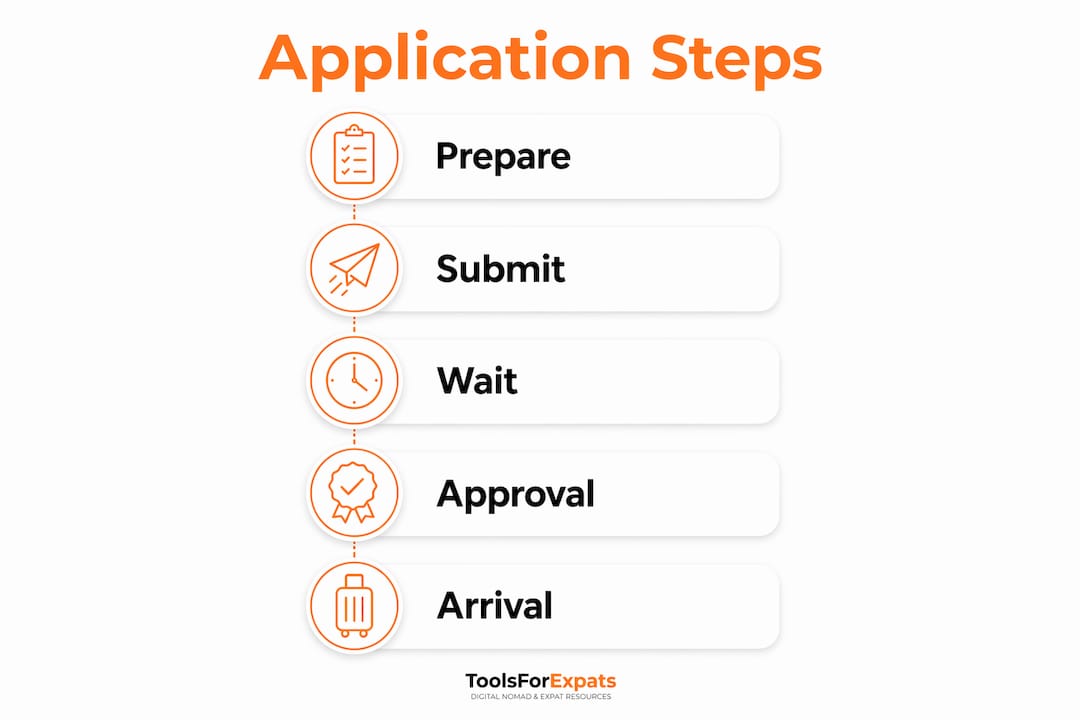
Most applications go through the host country's consulate or embassy in your home country. You submit documents, pay a fee, and wait for approval. The typical processing time runs around 2–3 months, so plan well ahead of your intended move date.
- Research the specific requirements for your target country.
- Gather and authenticate all documents (apostilles can take several weeks).
- Submit your application at the relevant consulate or online portal.
- Attend any required in-person appointments or biometric sessions.
- Receive your visa and arrange your travel.
Pro Tip: Apply at least 4 months before your planned departure. Document authentication, apostilles, and consulate appointment slots all take longer than most people expect.
Which countries offer remote work visas and what are the differences?
Over 60 countries had active remote work visa programs as of mid-2026. The differences between them come down to four main factors: income thresholds, visa duration, family inclusion, and renewal options.
Income thresholds vary widely
Income requirements range from roughly €1,350 per month in Montenegro to €4,500 per month in Estonia. That gap is significant. A freelancer earning $2,500 per month qualifies for many programs in Southeast Asia, the Balkans, and Latin America, but would not meet the bar for Estonia's program. Knowing your income level before researching destinations saves time.
Estonia's program is one of the most established in Europe. For a detailed breakdown of how it works, the Estonia digital nomad visa guide covers eligibility, costs, and timelines in full.
Key program comparisons
| Country | Min. Monthly Income | Visa Duration | Family Included | Renewal Available |
|---|---|---|---|---|
| Montenegro | ~€1,350 | 12 months | Varies | Yes |
| Portugal | ~€3,040 | 12 months | Yes | Yes |
| Estonia | ~€4,500 | 12 months | Yes | Yes |
| Costa Rica | ~$3,000 | 24 months | Yes | Yes |
| Indonesia (Bali) | ~$2,000/month | 5 years | Yes | Yes |
Many countries allow dependents to join visa holders, but the rules vary. Some require separate applications for each family member. Others include dependents automatically. Always verify the family policy before committing to a destination.
Key differences to compare across programs:
- Duration: Programs range from 6 to 24 months, with some offering multi-year options.
- Renewal: Not all programs allow renewal. Portugal and Spain offer paths to long-term residency.
- Application fees: Costs range from under $100 to several hundred dollars depending on the country.
- Regional access: European programs often grant Schengen area travel benefits.
For a curated list of top destinations, the best countries for digital nomads guide covers lifestyle, cost, and visa quality together.
How do taxes and legal rules affect remote work visa holders?
Tax is the area where most remote workers get caught off guard. A remote work visa does not automatically exempt you from local taxes. The rules depend on how long you stay and what the host country's laws say about tax residency.
The 183-day rule
Staying more than 183 days in a country often triggers tax residency, which can expose your global income to local tax obligations. That threshold is not universal, but it is the most common benchmark. Crossing it without planning can mean filing taxes in two countries simultaneously.
Double taxation treaties between your home country and the host country can prevent you from paying tax twice on the same income. Not every country pair has a treaty, though. Checking treaty status before you choose a destination is a practical step that most applicants skip.
Key tax considerations to review before applying:
- Does the host country offer a tax exemption for digital nomads?
- Does your home country tax worldwide income regardless of where you live?
- Is there a double taxation treaty in place between the two countries?
- Will your visa duration push you past the 183-day residency threshold?
Remote work visa holders often assume their visa status protects them from local tax obligations. It does not. Tax residency is determined by how long you stay, not by what type of visa you hold. Researching tax rules for your specific destination before you apply is not optional. It is the step that determines whether your move is financially sound.
Employers also carry risk here. Companies can unintentionally create permanent establishment in a foreign country if their employees work there long enough. That can expose the company to local corporate taxes and compliance requirements. If you are an employee rather than a freelancer, loop in your HR or legal team before applying.
Pro Tip: Consult a tax professional who specializes in expat or cross-border taxation before you finalize your destination. A one-hour consultation can prevent months of compliance headaches.
For a deeper look at how residency rules interact with visa status, the digital nomad tax residency guide breaks down the specifics by country and scenario.
What practical steps should you take to choose and apply?
Choosing the right remote work visa comes down to matching your income, lifestyle preferences, and legal situation to the right program. A structured approach makes the process far less stressful.
Start with these steps:
- Check your income eligibility first. Calculate your average monthly income over the past 6 months. Compare it against the thresholds for your target countries.
- Decide on your desired length of stay. If you want more than 12 months, filter for programs with renewal options or multi-year permits.
- Factor in lifestyle and cost of living. A lower income threshold country may have a higher cost of living than you expect. Use a cost of living calculator to model your actual monthly budget.
- Get your health insurance sorted early. Selecting the right international health plan for remote workers takes time. Many insurers need 2–4 weeks to issue policy documents.
- Prepare your documents in parallel. Do not wait for one document before starting the next. Background checks, bank statements, and apostilles can all be processed at the same time.
- Build in buffer time. Applications typically take 2–3 months to process. Starting late is the most common reason people miss their planned move date.
- Plan for compliance during your stay. Track your days in country. Know your renewal deadlines. Set calendar reminders 60 days before your visa expires.
For a full overview of setting up remote work abroad, including country-specific setup steps, that guide covers the practical side of arriving and getting established.
Key Takeaways
Remote work visas are legal residence permits that let you work for foreign employers or clients from abroad, but they require careful planning around income, documentation, and tax obligations.
| Point | Details |
|---|---|
| Legal framework matters | Remote work visas replace risky tourist visa workarounds with a compliant, documented status. |
| Income thresholds vary widely | Requirements range from €1,350/month in Montenegro to €4,500/month in Estonia. |
| Apply 4 months early | Processing takes 2–3 months; document authentication adds more time on top of that. |
| Tax residency is separate | Staying over 183 days can trigger local tax obligations regardless of your visa type. |
| Family inclusion varies | Many programs allow dependents, but each country's rules differ and require separate verification. |
Why most remote work visa applicants get the tax part wrong
I have seen a consistent pattern among people planning their first remote work visa move: they research income thresholds and visa duration carefully, then completely overlook the tax side until it becomes a problem. The visa approval feels like the finish line. It is not. It is the starting line for a new set of legal obligations.
The 183-day rule catches people off guard more than any other issue. Someone moves to Portugal on a digital nomad visa, loves it, stays the full year, and then discovers they owe Portuguese income tax on their global earnings. That is not a bureaucratic technicality. It can mean thousands of dollars in unexpected liability.
My honest advice: treat tax research as part of your destination selection, not an afterthought. Some countries offer genuine tax exemptions for digital nomads. Others treat you as a full tax resident from day one. That difference should influence where you choose to go, not just how you file afterward.
The other thing most guides understate is the employer side. If you are an employee, your company carries risk too. Permanent establishment exposure is real, and some employers will not allow remote work from certain countries for exactly that reason. Have that conversation with your HR team before you get attached to a specific destination.
The good news is that with the right preparation, a remote work visa is genuinely one of the most practical ways to live abroad legally. The legal framework exists. The countries want you. You just need to go in with clear eyes about what compliance actually requires.
— Jay
Plan your remote work visa with ToolsForExpats
Figuring out which remote work visa fits your income, lifestyle, and budget takes real research. ToolsForExpats makes that process faster with a suite of free tools built specifically for expats and digital nomads.
The visa eligibility checker lets you check your eligibility across 20+ countries in minutes, without creating an account. Pair it with the cost of living comparison tool to see how far your income actually goes in your target destination. If you want a full picture of your relocation budget, the moving abroad budget calculator covers one-time and ongoing costs side by side. All tools are free, no sign-up required, and built to give you clear answers fast.
FAQ
What is a remote work visa?
A remote work visa is a residence permit that allows you to live legally in a foreign country while working for employers or clients based elsewhere. It does not require local employer sponsorship.
How long does a remote work visa last?
Most remote work visas last 12 months, with durations ranging from 6 to 24 months depending on the country. Many programs offer renewal options or paths to longer residency.
What income do you need for a remote work visa?
Income requirements vary by country, from around €1,350 per month in Montenegro to €4,500 per month in Estonia. Most programs require 3–6 months of bank statements as proof.
Do remote work visas affect your taxes?
Yes. Staying more than 183 days in a country often triggers tax residency, which can create local tax obligations on your global income. Double taxation treaties between your home and host countries can reduce the risk of paying tax twice.
Can your family join you on a remote work visa?
Many countries allow dependents to join remote work visa holders, but the rules vary widely by destination. Always check the specific family inclusion policy for your target country before applying.