
Estonia's Digital Nomad Visa is a long-stay D-visa that lets remote workers live in Estonia for up to 365 days while working for employers or clients registered outside Estonia. Understanding how Estonia's digital nomad visa works is the first step to planning a legal, stress-free stay in one of Europe's most connected countries. The visa targets location-independent professionals: freelancers, employees of foreign companies, and business owners whose operations are based abroad. You need to meet a firm income threshold, gather the right documents, and apply through an Estonian embassy or consulate.
How estonia's digital nomad visa works: core eligibility
The Estonia Digital Nomad Visa is officially classified as a long-stay D-visa, not a tourist visa or a work permit tied to a local employer. That distinction matters. You are permitted to live in Estonia and work remotely, but your income must come from a source outside Estonia.
Qualifying remote work falls into three categories:
- Employment by a foreign-registered company, where you work remotely from Estonia
- Business ownership of a company registered outside Estonia, from which you draw income
- Freelancing for clients based outside Estonia, with contracts or invoices to prove it
The income requirement is firm. Applicants must earn at least €4,500 net per month to qualify. That figure is net, not gross. Many applicants trip up here by submitting payslips that show gross earnings. If your net income falls below €4,500, the application will be rejected regardless of your other qualifications.
One common misconception worth clearing up: the Digital Nomad Visa and Estonia's e-Residency program are completely separate. The visa allows physical residence in Estonia; e-Residency only enables digital business operations and does not grant the right to live there. If you want to actually move to Tallinn and work from a café, you need the visa, not e-Residency.

Pro Tip: Focus on your contract structure and where your employer or clients are registered, not just whether your job is remote. Estonian immigration officers assess the legal relationship, not just the work setup.
How to apply for the estonia digital nomad visa
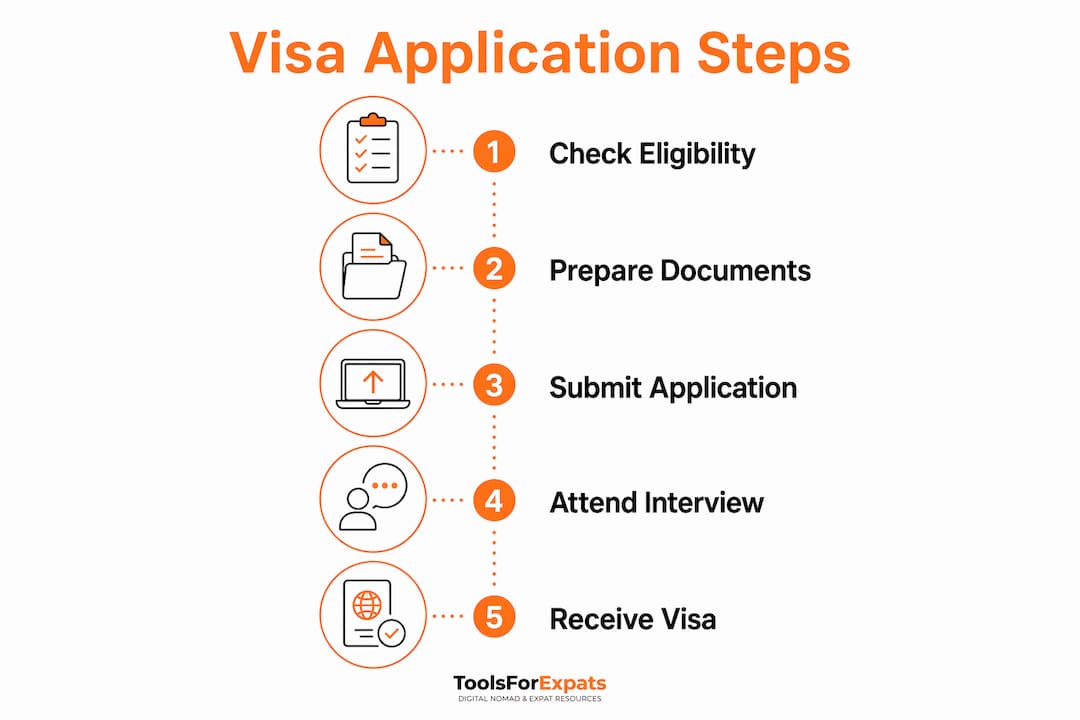
The application process is straightforward once you know what to prepare. Every step requires in-person involvement, so plan your timeline carefully.
- Locate your nearest Estonian embassy or consulate. Applications must be submitted in person. If no Estonian embassy exists in your country, check the FAQ for alternative submission options, which may include designated partner representation offices.
- Book your appointment early. Embassy appointment slots fill up weeks in advance in many countries. Build in at least 4–6 weeks before your intended travel date to account for scheduling and processing.
- Gather your documents. The standard document package includes:
- A valid passport with at least 6 months of remaining validity
- A completed visa application form
- Proof of remote work: an employment contract, freelance contracts, or business registration documents
- Proof of income: bank statements or payslips showing net earnings of at least €4,500/month
- Proof of accommodation in Estonia (a lease agreement or hotel booking)
- Valid travel health insurance covering the full duration of your stay
- Submit your application and biometric data. You will provide fingerprints and a photograph at the embassy. This step cannot be done online.
- Wait for processing. Processing takes up to 30 days from the date of submission. Plan your travel dates around this window, not before it closes.
- Pick up your visa in person. The visa is issued at the same embassy where you applied. You cannot redirect it to another location.
Pro Tip: Align your income documentation with the official net income definition before you apply. Many nomads rely on blog posts that reference gross figures. Pull your official bank statements and payslips, confirm the net amounts, and submit those. One wrong document can add weeks to your timeline.
Visa types, fees, and duration options
Estonia offers two visa categories relevant to remote workers, and choosing the right one depends on how long you plan to stay.
| Visa Type | Duration | Fee | Schengen Travel |
|---|---|---|---|
| Long-stay D-visa | Up to 365 days | Approx. €120 | Allowed within Schengen rules |
| Short-stay C-visa | Up to 90 days within 180-day period | Approx. €90 | Standard Schengen access |
The long-stay D-visa is the right choice for most digital nomads who want a full year in Estonia. The short-stay C-visa suits those testing the country for a season before committing to a longer stay.
A few important points on duration and renewal:
- The D-visa does not automatically convert to a residence permit. If you want to stay beyond 365 days, you must apply for a separate permit under a different category.
- The visa does not lead directly to permanent residency, though time spent in Estonia on the visa can count toward future residency applications under different immigration categories.
- Schengen travel is permitted while holding the D-visa, but standard Schengen rules apply. You cannot exceed 90 days in other Schengen countries within any 180-day window.
The €120 fee for the D-visa is a one-time payment at the time of application. It is non-refundable if your application is denied.
Living in estonia as a nomad: taxes, family, and travel
Once you have the visa, the practical realities of living in Estonia as a nomad come into focus. Three areas deserve close attention: taxation, family inclusion, and Schengen travel planning.
Tax residency is the most consequential factor for long-term stays. Spending 183 or more days in Estonia within a 12-month period triggers Estonian tax residency. That means your worldwide income becomes subject to Estonian taxation. Estonia's flat income tax rate is currently 20%, which is competitive by European standards, but you need to factor this into your financial planning before you commit to a full-year stay.
Bringing family is possible. Dependents can accompany a Digital Nomad Visa holder, but each family member requires their own supporting documentation. Planning your family's travel and understanding what documents each person needs is part of assembling a complete application package. Spouses and children do not automatically receive the same visa status; they apply separately under dependent or family reunification categories.
Schengen travel adds flexibility to your stay. Holding the Estonian D-visa lets you travel freely across the Schengen Area, which includes 27 countries. You can take a weekend in Helsinki, a week in Berlin, or a month in Portugal without losing your Estonian visa status. Just track your days carefully to avoid breaching the 90-in-180 rule in other Schengen countries.
Pro Tip: Use a cost of living calculator to map your monthly budget in Tallinn before you arrive. Estonia is affordable by Western European standards, but costs vary significantly between the capital and smaller cities like Tartu or Pärnu.
Key takeaways
The Estonia Digital Nomad Visa is a long-stay D-visa requiring at least €4,500 net monthly income, in-person embassy application, and proof of location-independent work for a foreign employer or client.
| Point | Details |
|---|---|
| Income threshold is net | You must prove €4,500/month net income, not gross. Submit bank statements, not payslips showing pre-tax figures. |
| Application is in-person only | Submit and collect your visa at an Estonian embassy. Budget 30 days for processing plus appointment lead time. |
| Two visa types available | The D-visa covers up to 365 days for approx. €120; the C-visa covers 90 days for approx. €90. |
| Tax residency kicks in at 183 days | Staying longer than 183 days triggers Estonian tax residency and worldwide income taxation at 20%. |
| Visa and e-Residency are separate | e-Residency does not allow physical residence. The Digital Nomad Visa is required for an actual stay in Estonia. |
What i've learned after watching dozens of nomads apply for this visa
The single most common mistake I see is the gross vs. net income confusion. Applicants read a blog post that says "you need €4,500 a month" and submit their payslip without checking whether that figure reflects their take-home pay. The official requirement is net, and embassies are strict about it. If your gross salary is €5,500 but your net is €4,100, you do not qualify. Know your numbers before you book your embassy appointment.
The second mistake is underestimating the document assembly timeline. Health insurance, accommodation proof, and income documentation all have expiration windows. A bank statement that is three months old when you submit it may be rejected. Coordinate your documents so they are current at the time of submission, not at the time you started gathering them.
My honest take on the visa vs. e-Residency question: most nomads who ask about Estonia are actually asking the wrong question. They want to know which one to get, when the answer is almost always the visa if they want to physically live there. e-Residency is a digital identity tool for running an EU-based company remotely. It has real value, but it does not put you in Tallinn. If you want to set up remote work abroad and base yourself in Estonia, the Digital Nomad Visa is the right path.
Estonia is genuinely one of the best-organized countries in Europe for remote workers. The digital infrastructure is excellent, the bureaucracy is manageable, and Tallinn's old town is a genuinely pleasant place to spend a year. The application process rewards preparation. Get your documents right the first time, and the rest follows.
— Ceyhun
Plan your estonia move with free tools from ToolsForExpats
Applying for the Estonia Digital Nomad Visa is much less stressful when you know your numbers before you start. ToolsForExpats offers a suite of free calculators and checkers designed specifically for remote workers planning a move abroad.
Use the visa eligibility checker to confirm whether you qualify for Estonia's Digital Nomad Visa alongside 20+ other countries. Then run your monthly budget through the nomad cost calculator to see exactly what living in Tallinn will cost you. No account needed, no fees, and no guesswork. Head to ToolsForExpats to start planning your Estonia move today.
FAQ
What is the minimum income for estonia's digital nomad visa?
The minimum income requirement is €4,500 net per month. This figure is net income, meaning after taxes and deductions, not gross salary.
How long does the estonia digital nomad visa application take?
Processing takes up to 30 days from the date of submission at the embassy. Factor in additional time for booking your appointment, which can take several weeks in countries with limited embassy access.
Can i bring my family on the estonia digital nomad visa?
Yes, family members can join you, but each person must apply separately with their own supporting documents. The FAQ on family inclusion outlines the specific requirements for dependents.
Does the estonia digital nomad visa lead to permanent residency?
The visa does not lead directly to permanent residency. Time spent in Estonia on this visa may count toward future residency applications, but a separate application under a different category is required.
What is the difference between the digital nomad visa and e-residency?
The Digital Nomad Visa grants the right to physically live in Estonia for up to 365 days. e-Residency is a digital identity that allows you to run an EU-registered business online but does not permit physical residence in Estonia.