Picking where to base yourself as a remote worker in 2026 feels deceptively simple until you start weighing the details. Visa legality, internet reliability, cost of living, time zones, community, and lifestyle compatibility all pull you in different directions at once. To choose the best nomad destination 2026 has to offer, you need a clear framework, not just a list of pretty cities. This guide walks you through every factor that matters, profiles the strongest contenders right now, and gives you a repeatable process to make a confident decision without second-guessing yourself for months.
Table of Contents
- Key Takeaways
- How to choose your best nomad destination for 2026
- Top nomad destination profiles for 2026
- A practical framework for comparing destinations
- Common pitfalls when choosing a nomad base
- What to expect after choosing your destination
- My honest take on picking a 2026 nomad base
- Plan your move with free tools from ToolsForExpats
- FAQ
Key Takeaways
| Point | Details |
|---|---|
| Visa access shapes everything | Check long-stay visa options early; they often require months of bank statement history to qualify. |
| Cost alone is a poor compass | Budget-friendly cities without strong coworking ecosystems can hurt productivity and career growth. |
| Community accelerates success | Strong nomad communities in cities like Chiang Mai and Medellín meaningfully reduce isolation and speed up settling in. |
| Use a scoring matrix | Weighting your priorities with a simple decision matrix prevents gut-feel decisions you'll regret later. |
| Iterate, don't over-commit | Your first destination doesn't need to be permanent. Plan for 3 to 6 month trials before locking in long-term. |
How to choose your best nomad destination for 2026
The single biggest mistake remote workers make is treating destination selection as a one-step process. "Where do I want to live?" is actually the last question you should ask. Start with your constraints, then work forward.
Visa and legal residency options
This is non-negotiable. Without a legal path to stay, every other factor is irrelevant. In 2026, your main options are digital nomad visas, standard tourist visas with periodic exits, long-term retirement or freelancer visas, and visa-free stays. Each carries its own requirements, costs, and renewal rules. Use a visa eligibility checker to understand which programs apply to your passport before falling in love with a destination.
Cost of living and budget fit
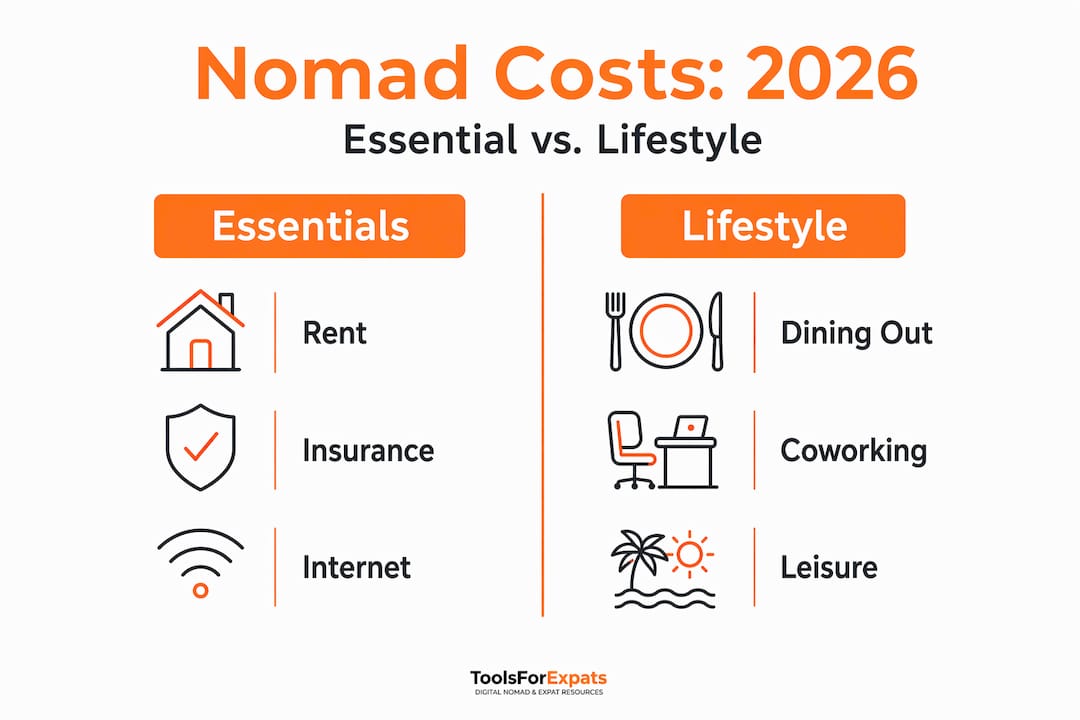
Cost matters, but not in the way most people think. You need to consider rent, coworking memberships, food, health insurance, local transport, and any visa fees. A city can look cheap on paper but drain your budget once you factor in reliable high-speed internet or imported groceries. Run a city cost comparison before you commit.
Internet quality and coworking infrastructure
Nomads in 2026 are prioritizing coworking density and reliable connectivity over cheap rent. A $400/month apartment with spotty internet is a productivity killer. Always verify actual ISP speeds through community forums, not just official statistics.

Safety, healthcare, and infrastructure
Research crime rates by neighborhood, not by country average. Understand what health coverage you need as a foreign resident and whether local hospitals accept international insurance. Infrastructure basics like reliable electricity, public transport, and banking access matter more than you expect after month two.
Community and cultural fit
- Nomad community size: Larger communities mean more events, coworking meetups, and peer support.
- English proficiency: High in Lisbon, Medellín, and Tbilisi; varies significantly in rural Southeast Asia.
- Cultural openness: Some cities actively welcome remote workers; others tolerate them without integrating them.
- Time zone alignment: If your clients are in New York, Southeast Asia's 11-hour gap requires serious schedule discipline.
Pro Tip: Check Facebook groups, Reddit threads, and Meetup pages for your shortlisted cities. An active, recent community feed is a stronger signal of nomad-friendliness than any "best of" ranking.
Top nomad destination profiles for 2026
These six cities represent the strongest choices across different budgets, regions, and lifestyles right now.
Quick comparison
| City | Visa Access | Monthly Budget | Internet | Nomad Community |
|---|---|---|---|---|
| Lisbon, Portugal | Digital Nomad Visa | $2,000–$3,000 | Excellent | Very large |
| Chiang Mai, Thailand | DTV (5-year) | $1,200–$1,800 | Very good | Very large |
| Da Nang, Vietnam | 90-day tourist | $900–$1,400 | Good | Growing fast |
| Tbilisi, Georgia | Visa-free 365 days | $800–$1,300 | Good | Mid-size |
| Medellín, Colombia | Tourist/digital nomad | $1,200–$1,700 | Good | Large |
| Bali, Indonesia | Social/tourist visa | $1,100–$1,700 | Variable | Very large |
Lisbon, Portugal tops the 2026 expat livability rankings with a score of 83, making it the #1 European choice for nomads who want safety, English proficiency, and straightforward access to Schengen travel. Costs are lower than Amsterdam or Vienna while lifestyle quality remains high. The formal digital nomad visa is available, though it requires income documentation and patience with bureaucracy.
Chiang Mai, Thailand holds the #3 spot among top global nomad cities in 2026 for its coworking ecosystem and affordability. Thailand's Destination Thailand Visa (DTV) offers a 5-year multiple-entry stay with relatively low annual income requirements of around $6,000. If you're considering Thailand long-term, check the broader context in this Thailand visa guide for remote workers.
Da Nang, Vietnam ranks #4 globally and is growing fast as an emerging hub. Internet infrastructure is improving steadily, and the cost of living sits well under $1,500/month for most nomads. Visa options are still primarily tourist-based with 90-day stays, so plan your exit strategy before arrival.
Tbilisi, Georgia is one of the most underrated picks in any remote work travel guide for 2026. Citizens of 95+ countries enter visa-free for up to 365 days without needing a work permit for remote work. Monthly costs in neighborhoods like Vake run $800 to $1,300, with coworking memberships at $77 to $173 and internet speeds reaching 500 Mbps. Foreign income is untaxed if you stay under 183 days per year, which many nomads use to their advantage without needing the formal "Remotely from Georgia" program at all.
Medellín, Colombia punches above its weight on community and climate. The city sits at 5,000 feet elevation, so it stays spring-like year-round. Timezone alignment with the U.S. East Coast makes client calls painless. English proficiency is lower than Tbilisi or Lisbon, but the nomad community is large enough that day-to-day life is manageable without fluent Spanish.
A practical framework for comparing destinations
Feeling overwhelmed by options is normal. A decision matrix cuts through the noise and gives you something concrete to act on.
- List your non-negotiables. Write down three to five factors you absolutely cannot compromise on. Common ones include visa legality, internet speed above 50 Mbps, budget under a specific figure, and proximity to a time zone.
- Score each destination. Rate every shortlisted city from 1 to 5 on each criterion.
- Apply weights. Multiply each score by how much that factor matters to you on a scale of 1 to 3. Add the totals.
- Cross-check with real data. Use a nomad cost calculator to validate your budget assumptions before trusting your scores.
- Shortlist to two cities. Research those two deeply with current community forums, recent YouTube vlogs, and nomad-specific subreddits.
Visa comparison at a glance
| Destination | Visa Type | Max Stay | Income Requirement |
|---|---|---|---|
| Portugal | Digital Nomad Visa | 1 year (renewable) | ~$3,200/month |
| Thailand | DTV | 5 years (multi-entry) | ~$6,000/year |
| Georgia | Visa-free | 365 days | None |
| Vietnam | Tourist visa | 90 days | None |
| Colombia | Digital Nomad Visa | 2 years | ~$800/month |
Pro Tip: When preparing for Thailand's DTV application, maintain consistent bank balances for at least six months rather than making a single large deposit before applying. Embassies look for financial stability over time, not a lump sum.
Common pitfalls when choosing a nomad base
Even well-researched decisions go sideways when certain things get overlooked. Watch out for these.
- Underestimating visa documentation: Thailand's DTV requires financial proof and remote work contracts. Many applicants are surprised by the paperwork depth required.
- Ignoring internet variability by neighborhood: A city might average 100 Mbps nationally while your specific apartment building runs on aging copper wiring at 10 Mbps. Always test before signing a lease.
- Romanticizing cheap destinations: A $700/month city with no reliable coworking space and a thin nomad community often costs more in lost productivity and mental energy than you saved on rent.
- Skipping healthcare planning: Private health insurance that works internationally costs $100 to $200/month for most nomads under 40. Skipping it in cheap cities is one of the most expensive mistakes you can make.
- Missing visa renewal windows: In countries like Vietnam, overstaying even one day results in fines and potential bans. Set calendar reminders for every exit or renewal date.
"Your first destination sets the tone for your entire nomad experience. Choose one where the infrastructure supports your work, not just your Instagram feed."
What to expect after choosing your destination
Getting on a plane is just the beginning. Setting yourself up properly in the first two weeks makes the difference between thriving and constantly troubleshooting.
- Accommodation: Start with a furnished short-term rental for the first month. This gives you time to visit neighborhoods before signing a longer lease. Platforms like Airbnb or locally focused sites work well for this.
- Connectivity: Buy a local SIM card at the airport for mobile data immediately. Research the best local ISP options through nomad Facebook groups before your fixed internet setup is installed.
- Coworking: Join a coworking space in your first week, even if you could work from home. The community access alone is worth the membership fee.
- Healthcare and taxes: Register with a local clinic or hospital and confirm your international health insurance is accepted. Understand whether your home country requires you to report foreign income regardless of where you live.
- Reassessment: At the 60-day mark, honestly evaluate whether the destination is delivering what you expected. Adjust your next move accordingly.
My honest take on picking a 2026 nomad base
I've seen a lot of people choose a destination based on a single viral blog post and then struggle when reality doesn't match the hype. My biggest lesson from watching this play out repeatedly: visa accessibility is the floor, not the ceiling. Georgia is wonderful precisely because it removes the legal friction entirely, letting you focus on whether you actually like living there. But visa-free doesn't mean problem-free.
What I've found actually separates great nomad cities from mediocre ones is the ecosystem density. Chiang Mai and Medellín have accumulated years of nomad infrastructure: reliable coworking chains, peer networks, local experts who know how to help foreigners navigate bureaucracy. That compounding community effect is genuinely hard to replicate in an "emerging" hotspot that hasn't earned its reputation yet.
I also think people underestimate how much their productivity depends on who they're surrounded by. In 2026, nomad priorities have shifted toward cities that support business building, not just cheap living. That shift is real, and it reflects something important: most serious remote workers eventually want more than a low-cost base. They want a place that helps them grow.
Don't agonize over making the perfect first choice. Pick a city that checks your top three criteria, commit to three months, and stay honest with yourself about what's working and what isn't. Iteration is the actual strategy.
— Ceyhun
Plan your move with free tools from ToolsForExpats
Choosing a city is one thing. Running the actual numbers before you book a flight is another. ToolsForExpats gives you a full suite of free calculators and quizzes built specifically for digital nomads making this exact decision.
Start with the best nomad city quiz to get a personalized recommendation based on your lifestyle preferences, budget, and visa situation. Then use the expat tools hub to compare living costs across your shortlisted cities, check visa eligibility for your passport, and calculate your full relocation budget. No account needed, no paywalls. Every tool is free and ready to use right now. When you're ready to take the next step, the numbers will already be sorted.
FAQ
What is the easiest nomad destination to enter visa-free in 2026?
Georgia allows citizens from 95+ countries to stay up to 365 days with no work permit required, making it the most accessible option for most passport holders.
How much money do I need per month as a nomad in 2026?
It depends on your destination. Budgets range from under $1,000/month in Da Nang or Tbilisi to $2,500 or more in Lisbon. Use a city cost calculator to model your specific lifestyle.
How do I qualify for Thailand's Destination Thailand Visa?
The DTV requires roughly THB 500,000 in bank savings, proof of remote work through contracts or invoices, and consistent bank statements over several months.
Which city has the best coworking scene for nomads in 2026?
Chiang Mai and Da Nang rank at the top globally for coworking ecosystem quality and connectivity in 2026, with Lisbon and Medellín close behind in their respective regions.
How do I know if a destination is right for my lifestyle?
Score each city against your non-negotiables using a weighted decision matrix, validate costs with real data tools, and test it with a 30 to 90 day trial stay before committing to a long-term lease or visa application.