
The best countries for digital nomads in 2026 are those that combine accessible visas, affordable living costs, reliable internet, and active remote work communities. These four factors separate a destination that works from one that drains your savings and your patience. Portugal's D8 visa, Thailand's Digital Nomad Visa, and Croatia's Nomad Visa have set a new standard for legal, long-term stays. This guide covers the top 10 destinations, breaks down real monthly costs, and explains what each country actually delivers for location-independent workers. ToolsForExpats calculators can help you run the numbers before you book a flight.
1. What are the best countries for digital nomads in 2026?
The top 10 destinations for remote workers this year span three continents and cover every budget level. Each country below is evaluated on visa access, cost of living, internet quality, and community maturity.

2. Portugal
Portugal remains one of the most popular nomad-friendly countries in Europe. The D8 Digital Nomad Visa allows remote workers to live legally for up to two years, with a path to residency. Lisbon and Porto both offer strong digital infrastructure alongside cultural amenities, though rent has climbed steadily. Budget for $2,000–$2,800 per month in Lisbon for a comfortable lifestyle.
- Visa: D8 Digital Nomad Visa, up to 2 years
- Best for: Freelancers and contractors working with European clients
- Watch out for: Higher rent compared to Southeast Asia
3. Thailand
Thailand introduced its Digital Nomad Visa (DTV) with a 5-year validity, making it one of the most flexible long-stay options in Asia. Chiang Mai consistently ranks among the top digital nomad cities for its mature coworking ecosystem and low cost of living. A comfortable monthly budget in Chiang Mai runs $800–$1,500, which is roughly half what you would spend in Lisbon.
- Visa: Digital Nomad Visa (DTV), 5-year validity
- Best for: Budget-conscious nomads and those building a remote business
- Watch out for: Time zone gap with North American and European clients
Pro Tip: Use the ToolsForExpats nomad cost calculator to compare your current city expenses against Chiang Mai before committing to a move.
4. Spain
Spain offers the Non-Lucrative Visa and a dedicated Digital Nomad Visa that covers Barcelona, Madrid, and Valencia. European cities like Lisbon, Madrid, and Barcelona combine strong digital infrastructure with cultural amenities but come with higher rent. Spain suits nomads who want EU access, a large expat network, and a high quality of life.
- Visa: Spain Digital Nomad Visa, up to 5 years
- Best for: Nomads who want EU residency and a large English-speaking community
- Watch out for: High cost of living in Barcelona and Madrid
5. Mexico
Mexico City is one of the best cities for remote workers on a North American schedule. It sits at UTC-6, giving you near-perfect overlap with US East and West Coast teams. Monthly costs in Mexico City range from $1,200 to $2,200 depending on neighborhood. The city has a fast-growing coworking scene and a large community of American and Canadian expats.
- Visa: Temporary Resident Visa, up to 4 years
- Best for: US and Canadian remote workers who need real-time collaboration
- Watch out for: Air quality and traffic in central neighborhoods
6. Vietnam
Vietnam offers two standout cities: Ho Chi Minh City and Da Nang. Da Nang ranks among the leading digital nomad cities in 2026 according to Forbes, driven by its growing coworking infrastructure and beachside lifestyle. Monthly costs in Da Nang sit well below $1,500 for most nomads. Vietnam does not yet offer a dedicated digital nomad visa, so most remote workers use a 90-day e-visa and plan renewals carefully.
- Visa: E-visa, 90 days; no dedicated nomad visa yet
- Best for: Nomads who want low costs and a beach lifestyle
- Watch out for: Visa renewal logistics and no long-stay nomad visa
7. Colombia
Medellín has transformed from a cautionary tale into one of the most recommended travel destinations for freelancers in Latin America. It sits at UTC-5, making it ideal for US time zone overlap and real-time collaboration with North American clients. Monthly costs in Medellín average $1,000–$1,800. Colombia's Digital Nomad Visa allows stays of up to 2 years.
- Visa: Digital Nomad Visa, up to 2 years
- Best for: Nomads working with US clients who want Latin American culture
- Watch out for: Safety varies significantly by neighborhood
8. Croatia
Croatia launched one of Europe's first dedicated digital nomad visas and remains a strong option for EU-adjacent living. The Croatian Nomad Visa allows stays of up to one year. Split and Dubrovnik attract nomads who want Mediterranean scenery without Lisbon's price tag. Monthly costs in Split run $1,500–$2,200.
- Visa: Digital Nomad Visa, up to 1 year
- Best for: Nomads who want European lifestyle at a mid-range budget
- Watch out for: Seasonal crowds in coastal cities during summer
9. Georgia
Georgia (the country) is one of the most underrated affordable countries for expats. Tbilisi offers a comfortable nomad lifestyle from around $800–$1,500 per month, similar to Chiang Mai. The Remotely from Georgia program allows stays of up to one year with a simple application process. Internet quality in Tbilisi is reliable, and the coworking scene has grown quickly since 2022.
- Visa: Remotely from Georgia program, up to 1 year
- Best for: Budget nomads who want European culture without European prices
- Watch out for: Limited English outside Tbilisi
10. Argentina
Argentina offers an unusual combination: a low cost of living, a vibrant Buenos Aires culture, and a Digital Nomad Visa valid for up to 6 months. The peso exchange rate has historically favored dollar and euro earners, stretching budgets further. Buenos Aires has a mature coworking scene and a large community of international remote workers.
- Visa: Digital Nomad Visa, up to 6 months
- Best for: Nomads earning in USD or EUR who want a cosmopolitan city
- Watch out for: Economic instability and currency fluctuations
11. UAE
Dubai and Abu Dhabi attract premium-budget nomads who want zero income tax and world-class infrastructure. The UAE Virtual Working Program allows remote workers to live in Dubai for one year. Monthly costs are high, typically $3,000–$5,000, but the tax advantages can offset expenses for high earners.
- Visa: Virtual Working Program, 1 year
- Best for: High-earning nomads who want tax efficiency and luxury amenities
- Watch out for: High cost of living and cultural restrictions
Pro Tip: Before choosing a destination, run your numbers through the ToolsForExpats cost comparison tool to see exactly how your income stretches in each city.
How cost of living compares across top nomad destinations
Monthly living costs vary dramatically across the best places to work remotely in 2026. The table below shows realistic budget ranges for three spending levels across six popular cities.
| City | Budget ($/month) | Mid-Range ($/month) | Premium ($/month) |
|---|---|---|---|
| Chiang Mai | $800 | $1,200 | $1,800 |
| Tbilisi | $800 | $1,200 | $1,800 |
| Medellín | $1,000 | $1,500 | $2,200 |
| Da Nang | $900 | $1,300 | $1,900 |
| Lisbon | $2,000 | $2,500 | $3,500 |
| Dubai | $3,000 | $4,000 | $6,000 |
Budget hubs like Chiang Mai and Tbilisi support a comfortable lifestyle from around $800–$1,500 per month. That gap compared to Lisbon's $2,000–$2,800 range is significant when you are planning a 6-month or 12-month stay. Housing drives most of the difference, followed by coworking memberships and dining habits.
Regional purchasing power also matters. Your $1,500 in Medellín covers a private apartment, daily restaurant meals, and a coworking membership. The same budget in Lisbon covers a shared apartment and home cooking. Plan your runway based on your actual spending category, not the lowest published figure.
Pro Tip: Nomads often underestimate costs beyond rent. Build a full expense runway that includes emergencies, coworking fees, health insurance, and one-time setup costs before you relocate.
Visa options and legal work considerations
Portuguese D8, Thailand's DTV, and Croatia's Nomad Visa are among the most accessible dedicated visa options for digital nomads in 2026. Each one allows legal remote work without requiring a local employer. That legal clarity matters more than most nomads realize until they face a problem.
Working on a tourist visa can violate local tax and labor laws, exposing both you and your employer to legal risk. Many companies now require employees to hold a valid work authorization before approving remote work from abroad. The risk is not theoretical: tax authorities in Portugal, Spain, and Germany have increased scrutiny of long-stay tourists who appear to be working.
Key visa categories to know:
- Dedicated digital nomad visas: Portugal D8, Thailand DTV, Croatia Nomad Visa, Colombia Digital Nomad Visa, UAE Virtual Working Program
- Temporary resident visas: Mexico, Argentina (with income requirements)
- E-visa with renewal strategy: Vietnam, Georgia (Remotely from Georgia program)
Use the ToolsForExpats visa eligibility checker to confirm which visas you qualify for based on your nationality and income level. The checker covers more than 20 countries and updates regularly as visa rules change.
Why time zone and community matter as much as cost
Time zone alignment is one of the most underrated factors in the digital nomad lifestyle in 2026. Mexico City at UTC-6 and Medellín at UTC-5 offer the best overlap for nomads working with North American teams. That overlap reduces the late-night calls and early-morning standups that cause burnout over months.
Remote workers increasingly prioritize visa clarity, digital infrastructure, and community size over rent affordability alone. A cheap city with no coworking spaces and no peer network gets isolating fast. Chiang Mai, Da Nang, and Lisbon all have mature nomad communities with regular meetups, Slack groups, and shared office culture.
"Professional isolation is the silent productivity killer for remote workers. The cities that solve it are the ones with real ecosystems, not just cheap rent." — Remote work researcher, cited in Forbes 2026 digital nomad rankings
Use the ToolsForExpats time zone calculator to map your working hours against your target city before you commit to a lease.
Key takeaways
The best countries for digital nomads in 2026 balance legal visa access, realistic living costs, reliable internet, and a productive community.
| Point | Details |
|---|---|
| Visa legality is non-negotiable | Working on a tourist visa risks legal penalties for you and your employer. |
| Budget hubs offer real value | Chiang Mai and Tbilisi deliver a comfortable lifestyle from $800 per month. |
| Time zone alignment reduces burnout | Mexico City and Medellín are the top picks for North American team overlap. |
| Community matters beyond cost | Mature ecosystems in Lisbon, Chiang Mai, and Da Nang support long-term productivity. |
| Plan a full financial runway | Budget $3,000–$7,200 for budget hubs and $6,000–$15,000 for European cities before relocating. |
My honest read on picking your 2026 base
After reviewing dozens of destinations, I keep coming back to the same conclusion: most nomads pick a country based on Instagram photos and pick the wrong one for their actual work life. The cities that look best on a feed are often the worst for focused work and visa stability.
If you are on a tight budget, Tbilisi or Chiang Mai give you the most runway per dollar. If you need EU residency or want to build toward long-term stability, Portugal's D8 is still the gold standard despite the higher cost. For North American remote workers who need real-time collaboration, Medellín is the most underrated option on this list.
The one thing I see nomads consistently get wrong is underestimating their full expense runway. Rent is the number you see. Health insurance, coworking memberships, visa fees, and the inevitable emergency are the numbers that catch you off guard. Secure 3–6 months of full living expenses before you relocate, not just your first month's rent.
Employer compliance is the other blind spot. If your company has not approved your remote location in writing, you are taking a legal risk that could end your job. Sort that out before you book the flight.
— Jay
Plan your 2026 move with ToolsForExpats
Choosing the right country is only the first step. The real work is running your numbers, checking your visa eligibility, and building a budget that accounts for every expense.
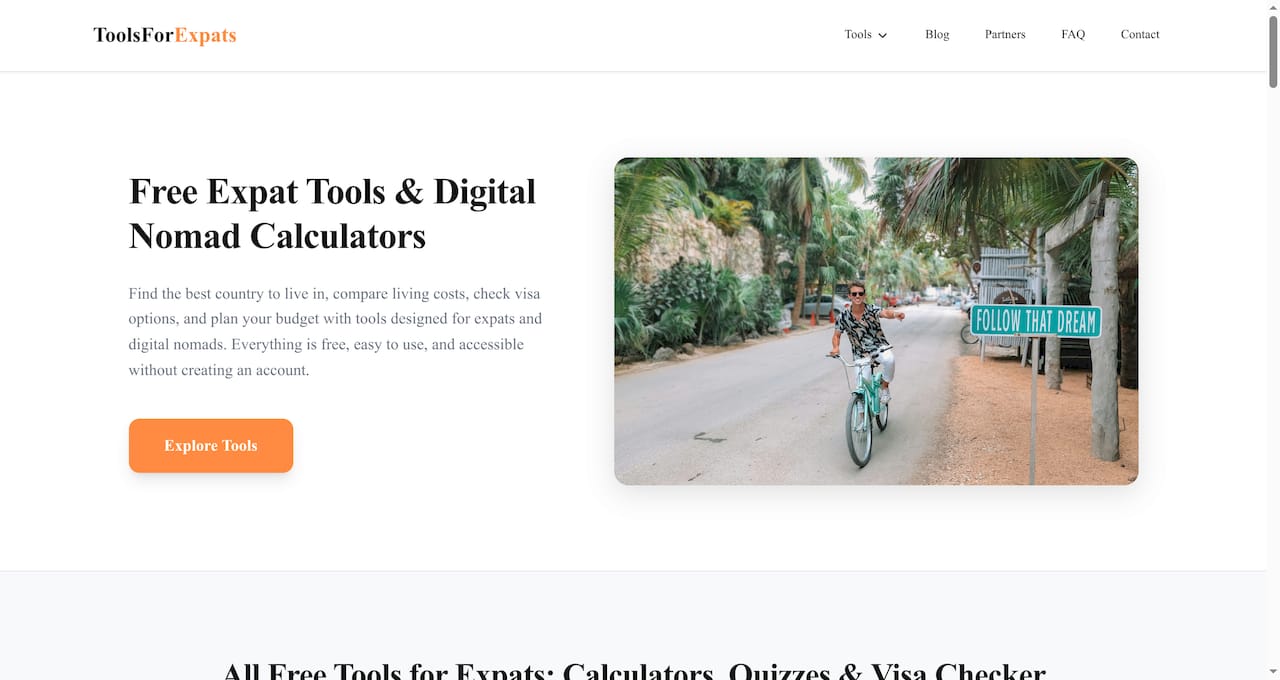
ToolsForExpats offers a free suite of calculators and tools built specifically for digital nomads and expats. Compare living costs across cities, check your visa eligibility for 20+ countries, and build a full relocation budget before you commit. No account required, no paywalls. Start with the free expat tools and know exactly what your move will cost before you pack a bag. You can also take the best nomad city quiz to find your ideal destination based on your budget, work schedule, and lifestyle preferences.
FAQ
What is a digital nomad visa?
A digital nomad visa is a legal permit that allows remote workers to live in a country while employed by a foreign company or working as a freelancer. Portugal's D8, Thailand's DTV, and Croatia's Nomad Visa are among the most popular options in 2026.
Which countries have the lowest cost of living for digital nomads?
Chiang Mai and Tbilisi are the most affordable top destinations, with comfortable lifestyles available from $800–$1,500 per month. Vietnam's Da Nang is also a low-cost option, typically under $1,500 monthly.
Can I work remotely on a tourist visa?
Working on a tourist visa can violate local tax and labor laws, creating legal risk for both you and your employer. A dedicated digital nomad visa or temporary resident visa is the legally sound option for stays longer than a few weeks.
Which country is best for US remote workers?
Mexico City and Medellín are the top picks for US-based remote workers due to their UTC-5 and UTC-6 time zones, which align closely with North American business hours and reduce scheduling friction.
How much money should I save before relocating abroad?
Financial planning experts recommend securing 3–6 months of full living expenses before relocating. That means $3,000–$7,200 for budget destinations like Chiang Mai or Tbilisi, and $6,000–$15,000 for mid-range European cities like Lisbon.