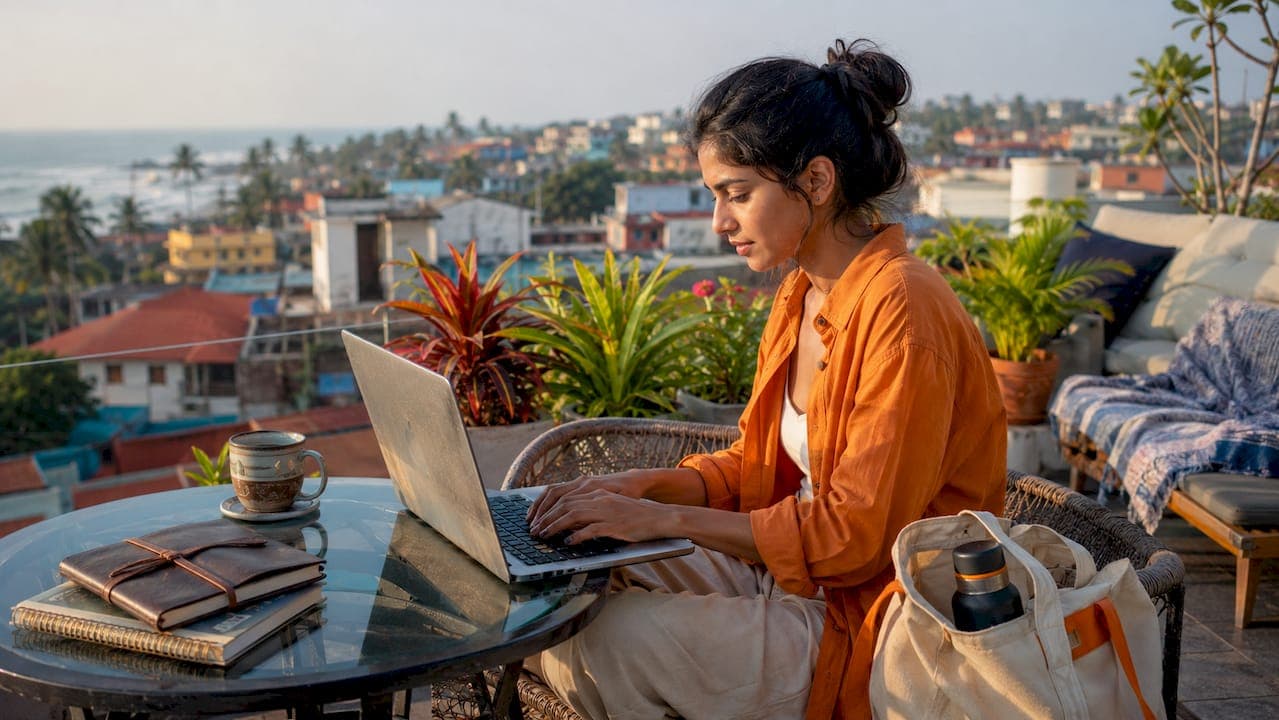
The digital nomad lifestyle is a location-independent work model where individuals use internet-connected technology to perform their jobs remotely while traveling or living temporarily in various locations around the world. According to the US Chamber of Commerce, typical work setups include hotels, cafés, coworking spaces, and public libraries, all connected through Wi-Fi or mobile hotspots. This lifestyle attracts freelancers, remote employees, and entrepreneurs who prioritize flexibility over a fixed address. If you are considering this path, understanding the full picture, from income realities to visa requirements, will help you decide whether it genuinely fits your goals.
What is the digital nomad lifestyle, and who lives it?
The digital nomad lifestyle combines remote work with travel or temporary residence, and it covers a much wider range of people than the café-with-a-laptop stereotype suggests. Digital nomads are a diverse group: some are perpetual travelers with no fixed home base, others blend stationary periods with occasional travel, and some try it temporarily before settling down. This sliding scale of nomadism means the lifestyle is not a single fixed arrangement but a spectrum you can adapt to your own needs.
What unites all digital nomads is location independence enabled by technology. A stable internet connection is the single most critical resource, more important than the destination itself. Digital nomads cluster in locations with dependable infrastructure and affordable cost of living rather than selecting destinations purely for scenery. That is a practical reality most newcomers underestimate.
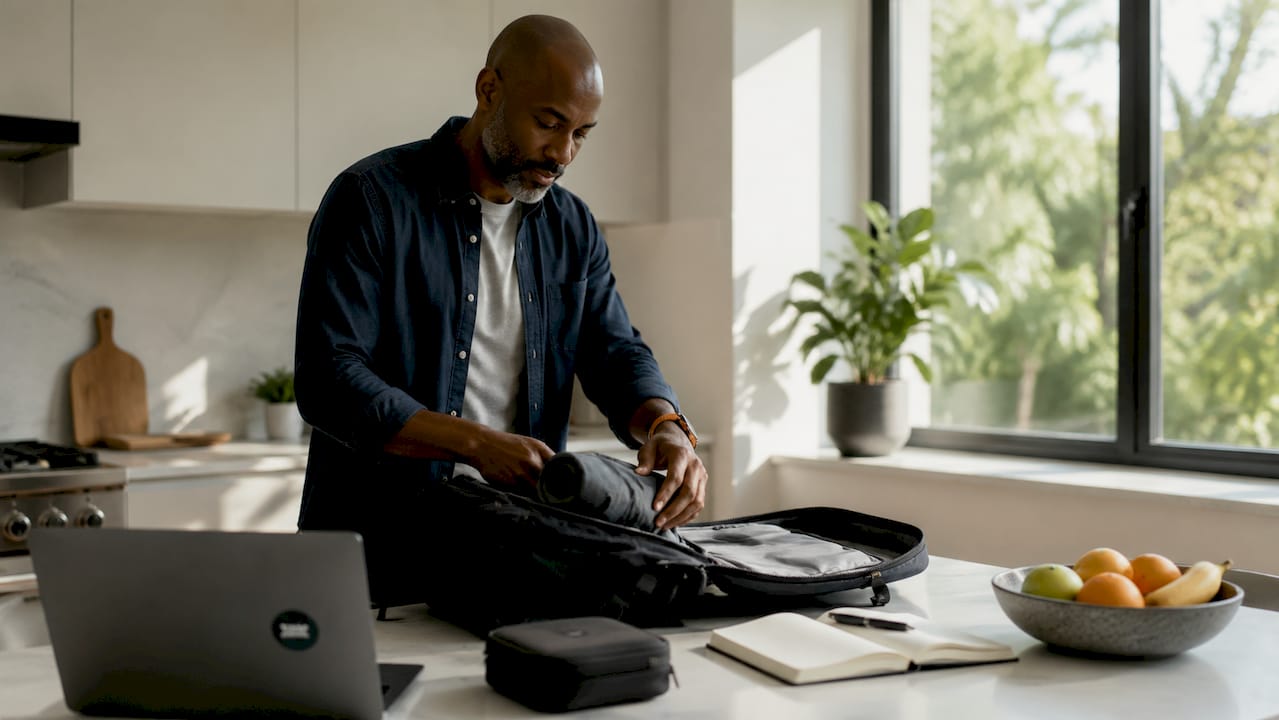
The lifestyle also requires minimal fixed possessions. You carry what fits in a bag, rent furnished apartments or stay in coliving spaces, and build routines that travel with you rather than depend on a specific place. That constraint is both a freedom and a discipline.
What do digital nomads actually do for work?
Popular digital nomad jobs include writing, digital marketing, social media content creation, graphic design, UI/UX design, online tutoring, software development, and virtual business administration. These roles share one defining trait: the output is delivered digitally, so the physical location of the worker is irrelevant to the client or employer.
Digital nomad income, or what is sometimes called remote work earnings, varies significantly. About 35% of digital nomads report earning $100,000 or more annually, while many others earn in the $50,000 to $75,000 range. That spread reflects the difference between a senior software engineer contracting for a U.S. tech firm and a freelance writer building a client base from scratch.
Common income models include:
- Freelance contracts: Project-based work for multiple clients, offering flexibility but requiring consistent business development
- Remote employment: A salaried position with a company that allows full remote work, providing stability with less location freedom
- Self-employment and consulting: Selling expertise directly, often at higher rates but with variable demand
- Multiple income streams: Combining active work with passive income sources like digital products, affiliate revenue, or online courses
Building a nomad income backup plan from the start is one of the smartest moves you can make. Relying on a single client or employer while traveling creates real financial risk if that income disappears unexpectedly.
How do digital nomads manage connectivity and productivity?
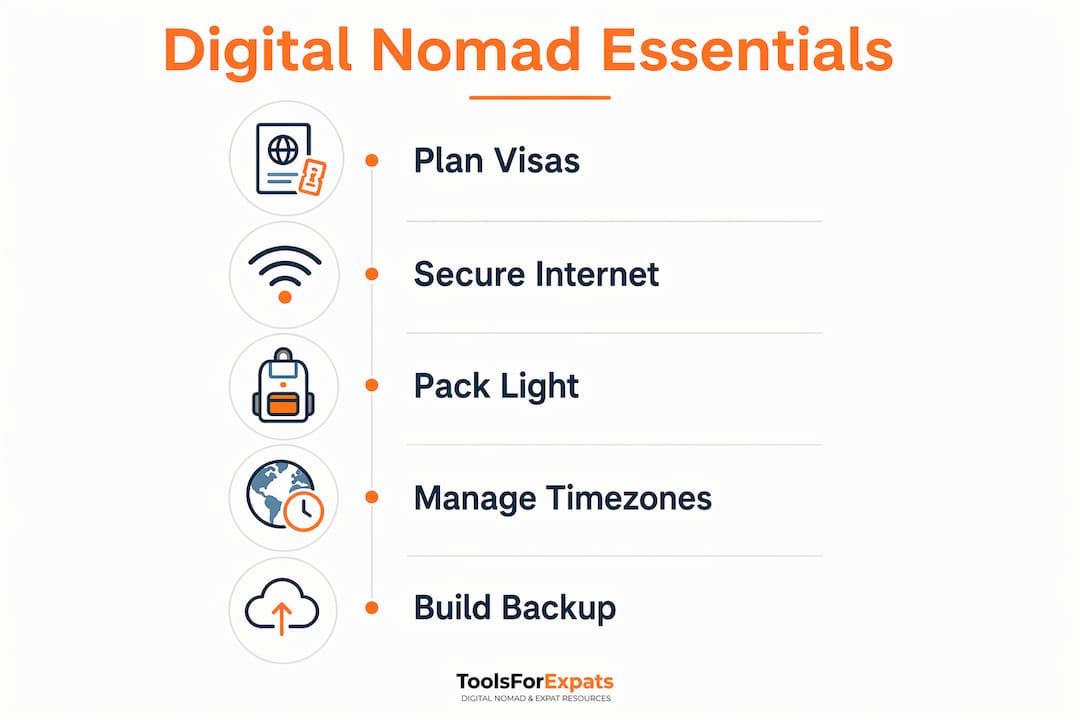
Connectivity and productivity are the core hurdles every digital nomad must plan for, and they are the reasons this lifestyle does not suit everyone. Spotty internet in a new city, a café that cuts off Wi-Fi after an hour, or a time zone that puts your client calls at midnight are not minor inconveniences. They are structural challenges that require deliberate systems.
The most effective approach is building redundancy into your setup before you need it. That means:
- A primary connection (local SIM with a data plan or a fixed broadband connection in your accommodation)
- A backup connection (a portable mobile hotspot device like a Skyroam Solis or a secondary SIM from a different carrier)
- A Wi-Fi finder app such as WiFi Map to locate reliable spots in unfamiliar cities
- A VPN like NordVPN or ExpressVPN for secure connections on public networks
Pro Tip: Set a non-negotiable rule: never start a critical work day without testing your backup connection. Discovering your hotspot has no signal five minutes before a client call is avoidable with a two-minute check the night before.
Creating repeatable systems for time-zone coordination is equally important. Tools like Slack, Zoom, Notion, and Toggl Track help you stay aligned with teams across multiple time zones without constant back-and-forth. Coworking spaces, available in nearly every major city through networks like WeWork or Selina, solve both the connectivity and the focus problem at once. They provide reliable internet, a professional environment, and often a community of other remote workers.
What legal and administrative factors do digital nomads need to consider?
"Digital nomad" is a lifestyle description, not a formal legal status. That distinction matters enormously when you cross borders to work. Working while on a tourist visa is legally ambiguous in most countries, and some actively prohibit it. Getting this wrong can result in fines, deportation, or future visa bans.
Here is how to think through the legal side:
- Understand your visa options. Many countries now offer dedicated digital nomad visas, which allow remote workers to live legally while working for foreign employers or clients. Portugal, Spain, Costa Rica, and Indonesia are among the most popular options in 2026.
- Check income requirements. Digital nomad visas typically require proof of employment or freelance income, a minimum monthly income threshold, valid health insurance, and proof of accommodation.
- Research tax obligations. Depending on your citizenship and the length of your stay, you may owe taxes in your home country, your host country, or both. A tax advisor with international experience is worth the cost.
- Arrange health insurance before you leave. Standard domestic health plans rarely cover you abroad. International health insurance providers like SafetyWing or Cigna Global offer plans designed specifically for long-term travelers.
The ToolsForExpats visa checker covers eligibility requirements for over 20 countries, which makes it a practical starting point before you commit to a destination.
What are the real benefits and honest trade-offs?
The benefits of the digital nomad lifestyle are genuine, but so are the trade-offs. Understanding both sides helps you set realistic expectations rather than discovering the downsides after you have already quit your job and booked a one-way flight.
The real advantages:
- Geographic arbitrage: Earning in a strong currency like USD or EUR while living in a country with a lower cost of living stretches your income significantly. A $60,000 annual salary goes much further in Chiang Mai, Thailand than in New York City.
- Schedule flexibility: Many remote roles allow you to structure your day around your most productive hours rather than a fixed 9-to-5 schedule.
- Cultural exposure: Living in a place, even temporarily, gives you a depth of experience that tourism cannot replicate.
- Work-life integration: When your office can be a terrace overlooking the ocean, the line between work and life shifts in ways that many nomads find genuinely energizing.
The honest trade-offs are just as real. Loneliness is one of the most commonly reported challenges, particularly for nomads who move frequently and struggle to build lasting friendships. Relationships, both personal and professional, require sustained effort when you are always in transit. Maintaining work-life balance nomadically is a skill that takes time to develop, not something that happens automatically because your surroundings are beautiful.
| Benefit | Trade-off |
|---|---|
| Geographic arbitrage lowers living costs | Income instability without a backup plan |
| Schedule flexibility and autonomy | Loneliness and transient social connections |
| Cultural immersion and new experiences | Visa complexity and legal gray areas |
| Freedom to choose your environment | Connectivity challenges in remote locations |
What tools and resources help digital nomads succeed?
The right digital nomad productivity tools list is not long, but each item on it needs to be reliable. Here is what actually matters in practice:
- Connectivity: Skyroam Solis or GlocalMe hotspot devices, WiFi Map app, NordVPN
- Communication and collaboration: Slack for team messaging, Zoom for video calls, Loom for async video updates
- Task and project management: Notion, Trello, or Asana to organize work across time zones
- Finance and budgeting: Wise (formerly TransferWise) for international transfers, a cost of living calculator to compare cities before committing
- Travel logistics: Google Flights for fare tracking, Airbnb or Booking.com for flexible accommodation, Nomad List for city ratings based on connectivity and cost
The digital nomad gear checklist for 2026 covers hardware and physical tools in detail, from laptop stands to noise-canceling headphones. Getting your physical setup right reduces friction on every single workday.
Key takeaways
The digital nomad lifestyle succeeds when location independence is backed by reliable connectivity, legal preparation, and a diversified income strategy.
| Point | Details |
|---|---|
| Location independence requires infrastructure | Choose destinations based on connectivity and cost, not just scenery. |
| Income varies widely | About 35% of nomads earn $100k or more; diversifying income reduces financial risk. |
| Legal status is not automatic | Tourist visas rarely permit remote work; research digital nomad visa options before traveling. |
| Productivity needs systems | Build redundant connectivity and use tools like Slack, Notion, and Zoom to stay consistent. |
| Benefits and trade-offs are both real | Geographic arbitrage and flexibility are genuine, but loneliness and instability require active management. |
What I have learned after years of watching people try this
The most common mistake I see from people exploring the digital nomad lifestyle is treating it as an escape plan rather than a deliberate work arrangement. They focus entirely on the destination and almost nothing on the infrastructure. Then they arrive in a beautiful city, discover the apartment Wi-Fi drops every hour, and spend their first week stressed and behind on deliverables.
The nomads who thrive are the ones who treat connectivity as a non-negotiable, the same way an office worker treats having a desk. They research coworking spaces before they land. They carry a backup hotspot. They pick their first few destinations based on known nomad hubs like Lisbon, Medellín, or Chiang Mai, where the infrastructure is tested and the community is already there.
The other thing most articles miss: the social side is genuinely hard. Freedom is real, but so is the isolation that comes from being a stranger in every city. Building a network of other remote workers, through coworking spaces, online communities, or events, is not optional if you want this to be sustainable long-term. The digital nomad networking benefits for both career and personal wellbeing are significant, and they do not happen by accident.
Start with a destination that has strong infrastructure. Build your systems before you leave. And treat the social side of nomad life with the same intentionality you give your work setup.
— Ceyhun
Plan your nomad life with free tools from ToolsForExpats
Deciding to go nomadic is exciting, but the planning stage is where most people get stuck. How much will it actually cost to live in Lisbon versus Bangkok? Do you qualify for a digital nomad visa in Portugal or Costa Rica? What should your monthly budget look like?
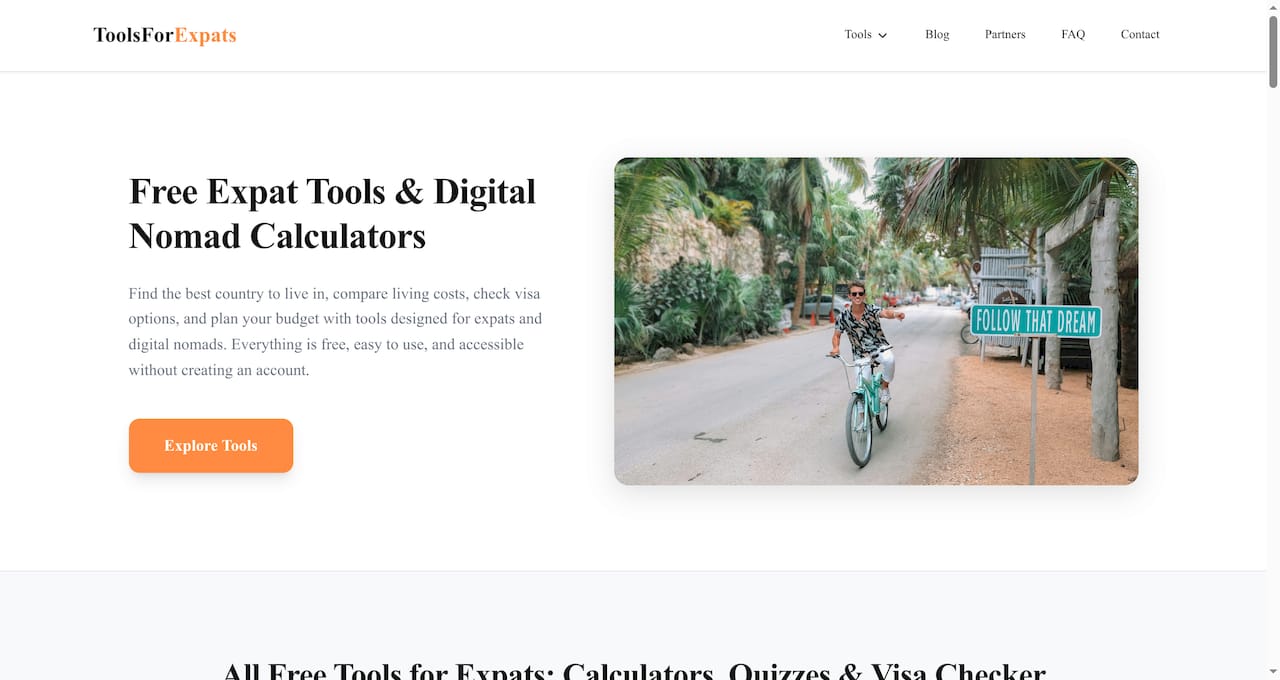
ToolsForExpats answers all of those questions with free, no-account-required tools built specifically for digital nomads and expats. Use the nomad cost calculator to compare living expenses across cities, check your visa eligibility for over 20 countries, and explore the full suite of free expat tools to build a budget you can actually trust. No subscriptions, no sign-ups, just the numbers you need to make a confident decision.
FAQ
What is a digital nomad in simple terms?
A digital nomad is someone who works remotely using the internet and lives or travels in various locations rather than staying in one fixed place. The work is location-independent, meaning it can be done from a café in Bali or a coworking space in Berlin.
What types of digital nomad visas exist in 2026?
Most digital nomad visas are long-stay permits that allow remote workers to live legally in a country while employed by a foreign company or working as a freelancer. Common requirements include proof of income, valid health insurance, and a minimum monthly earnings threshold, which varies by country.
How much do digital nomads typically earn?
Digital nomad income varies widely by profession and experience. About 35% of digital nomads earn $100,000 or more annually, while many others fall in the $50,000 to $75,000 range, with freelancers and newer nomads often earning less at the start.
What is a digital nomad hub?
A digital nomad hub is a city or neighborhood with strong infrastructure for remote workers, including reliable internet, affordable coworking spaces, and an established community of other nomads. Cities like Lisbon, Chiang Mai, and Medellín are widely recognized as top hubs.
Is the digital nomad lifestyle right for everyone?
Not everyone is suited to this lifestyle. It requires strong self-discipline, comfort with uncertainty, and proactive planning around connectivity, legal status, and finances. People who thrive tend to be those who treat it as a deliberate work arrangement rather than an extended vacation.