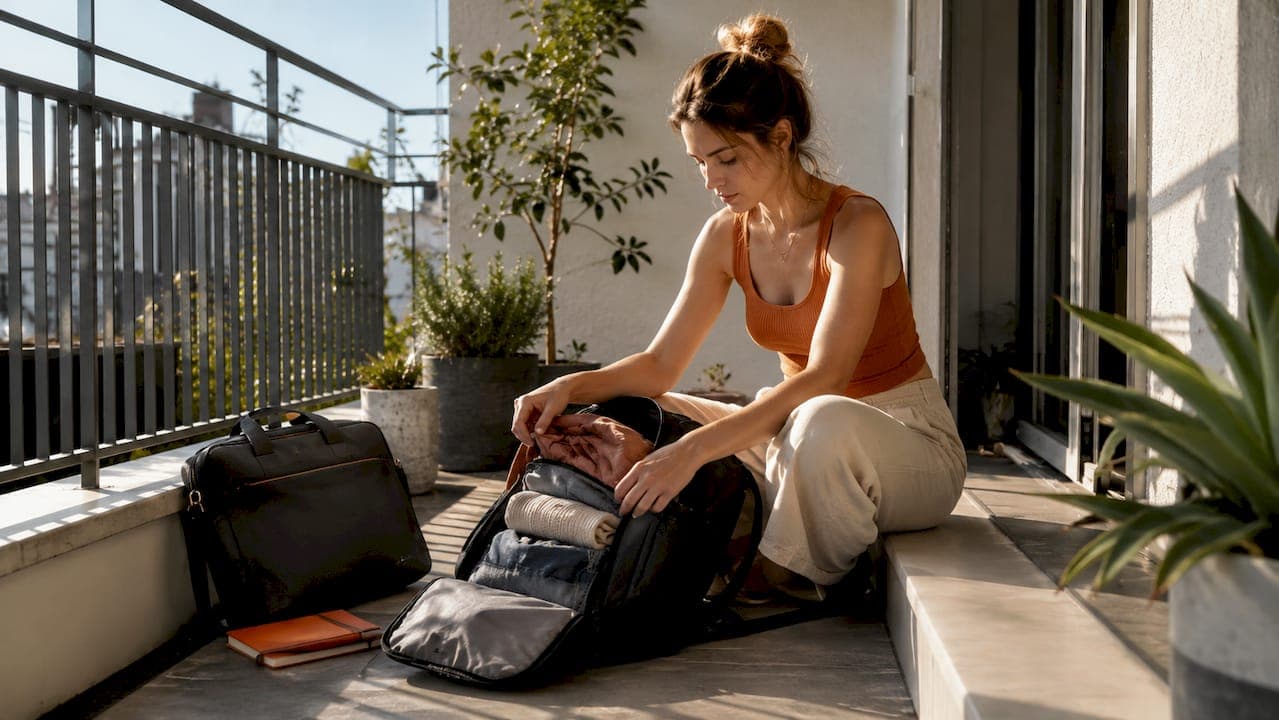
Minimalism is the single most practical lifestyle strategy for anyone living and working across borders. For digital nomads, it is not a design aesthetic or a trend. It is the operating system that makes frequent relocation feel manageable rather than exhausting. Understanding why minimalism suits nomads means looking at three interconnected benefits: physical mobility, mental clarity, and long-term sustainability on the road. This article breaks down each one with research, real frameworks, and direct advice you can apply before your next move.
Why minimalism suits nomads: mobility starts with what you carry
The most immediate benefit of a minimalist lifestyle for nomads is physical. Every item you own must be transported, tracked, and managed across airports, hostels, co-working spaces, and rental apartments. The fewer items you carry, the faster and cheaper every transition becomes.
The carry-on only approach has grown significantly among frequent travelers in 2026, and the reason is straightforward: skipping baggage claim alone saves 20–45 minutes per flight. Multiply that across a year of monthly moves, and you recover days of productive time.
Beyond time, there is the reliability factor. Avoiding checked baggage reduces missed connection risks and eliminates the emotional burden of lost luggage. When your entire life fits in one bag, a delayed flight is an inconvenience, not a crisis.
Here is what a practical carry-on setup looks like for a nomad:
- Bag size: 20–40 liters, fitting most airline overhead bin requirements
- Clothing: 5–7 versatile pieces that layer and mix across climates
- Footwear: Two pairs maximum, one casual and one activity-specific
- Electronics: Laptop, universal adapter, compact charger, and noise-canceling earbuds
- Toiletries: Travel-size liquids under 100ml, solid alternatives where possible
- Documents: Digital copies on cloud storage, physical passport and cards in a slim wallet
Pro Tip: Pack for your confirmed itinerary, not every possible scenario. If you need something specific in one city, buy it there and leave it behind. Local solutions beat overpacking every time.
This "always ready to leave" mindset is one of the most underrated benefits of minimalism in a nomadic life. You are not just packing lighter. You are building a system that removes friction from every departure.

How does minimalism reduce cognitive load for nomads?
Physical weight is only half the story. The mental weight of managing too many possessions is equally draining, and neuroscience backs this up.
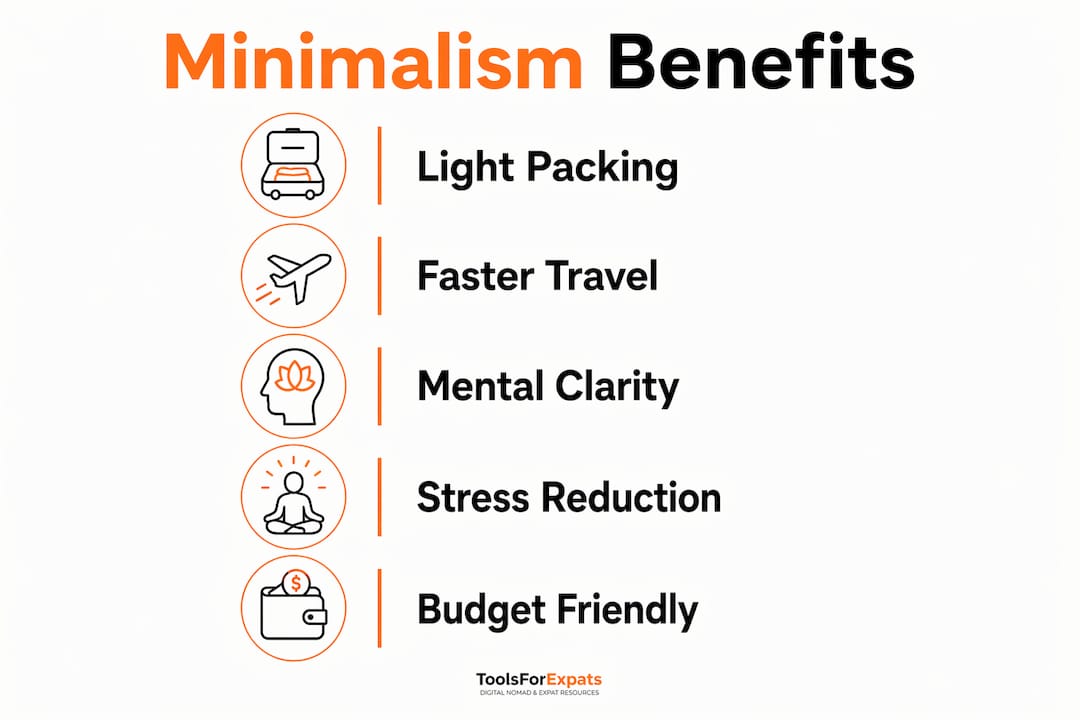
Clutter harms working memory and degrades cognitive focus. This means a cluttered workspace or overstuffed bag does not just feel stressful. It actively reduces your ability to think clearly and make good decisions. For a nomad juggling client deadlines, time zones, and logistics, that mental tax is a real productivity cost.
The research on choice overload makes this even clearer. The jam experiment showed that shoppers presented with 24 jam varieties were far less likely to make a purchase than those shown just 6 options. Fewer structured choices lead to faster, more satisfying decisions. The same principle applies to your wardrobe, your gear, and your daily routine.
"Minimalism reduces choice friction by limiting and organizing options, freeing cognitive capacity for work and engagement rather than repeated micro-decisions."
Reducing daily choices reduces willpower drain. Every small decision, from what to wear to which charger to grab, depletes the same mental resource pool you need for focused work. Nomads who pre-decide defaults for clothing, charging setups, and document organization reclaim that bandwidth for things that actually matter.
Pro Tip: Build a default outfit rotation using 3–4 interchangeable pieces. When you stop deciding what to wear each morning, you redirect that mental energy toward your work and your surroundings.
The connection between a simpler physical setup and sharper mental performance is not theoretical. It shows up in how quickly you can start working after arriving in a new city, how calmly you handle a flight delay, and how present you feel during experiences rather than mentally cataloging what you need to do next.
Is minimalism a sustainable system for long-term nomadic living?
Minimalism works best when you treat it as a repeatable system, not a one-time decluttering session. The right bag size enforces deliberate choices every time you pack. A bag that is too large invites overpacking. A bag that is too small creates anxiety. The constraint itself becomes the discipline.
Slow travel amplifies this benefit. When you stay in one city for 2–4 weeks instead of moving every few days, you can pack for roughly 7 days and do laundry mid-stay. This cuts your clothing needs nearly in half without sacrificing comfort or variety. Slow travel and minimalism reinforce each other naturally.
The one-bag framework used by experienced nomads typically organizes everything into six categories. Here is how that breaks down in practice:
| Category | Purpose | Example Items |
|---|---|---|
| Clothing | Daily wear and layering | 5 tops, 2 bottoms, 1 light jacket |
| Footwear | Versatile movement | Sneakers, sandals or dress shoes |
| Toiletries | Hygiene and grooming | Solid shampoo, toothbrush, SPF |
| Electronics | Work and connectivity | Laptop, phone, adapter, cables |
| Documents | Identity and access | Passport, cards, SIM, backup drive |
| Day bag | Daily carry and flexibility | Packable tote or small daypack |
This six-category packing system removes guesswork from every future pack. You are not starting from scratch each time. You are running the same reliable process with minor adjustments for climate or trip length.
The sustainability of this system also shows up in your budget. Fewer possessions mean fewer things to replace, repair, or store. For nomads who want to understand the full financial picture of their lifestyle, the nomad budget breakdown on ToolsForExpats covers how minimizing possessions directly reduces monthly expenses.
What nomads get wrong about minimalism
The most common misconception about minimalism is that it means going without. It does not. Minimalism is a strategy to carry only items that reliably solve common travel problems, while handling rare edge cases locally. That distinction matters.
Here is what minimalism actually looks like in practice versus what people assume:
-
Assumption: You sacrifice comfort and preparedness. Reality: You carry what you use consistently and buy what you need occasionally.
-
Assumption: You need to own the least possible amount. Reality: You need to own the right amount for your confirmed itinerary.
-
Assumption: Minimalism means cheap gear. Reality: Minimalists often invest more in fewer, higher-quality items that last longer.
-
Assumption: It only works for short trips. Reality: Long-term nomads find it more valuable the longer they travel, not less.
One of the subtler benefits is what you might call reduced "time-to-repair." When travel disruptions happen, and they will, a nomad with one bag can respond faster and with fewer emergencies. Rebooking a flight, switching accommodations, or pivoting your itinerary is far less stressful when everything you own is already on your back.
Minimalism also supports emotional freedom in a way that is hard to quantify but easy to feel. When you are not managing, worrying about, or replacing excess stuff, you have more mental space for the experiences that made you choose this lifestyle in the first place. That is the real return on investment.
For nomads who want to think through gear choices before committing, the digital nomad gear checklist on ToolsForExpats is a solid starting point for building a minimalist kit without missing the essentials.
Key takeaways
Minimalism suits nomads because it reduces physical friction, mental overhead, and logistical complexity across every stage of travel and remote work.
| Point | Details |
|---|---|
| Carry-on travel saves real time | Skipping baggage claim saves 20–45 minutes per flight, adding up across frequent moves. |
| Fewer choices protect mental energy | Pre-decided defaults for clothing and gear free cognitive capacity for work and experiences. |
| Minimalism is a repeatable system | Tying packing to bag size and laundry cycles creates a reliable, low-effort process every trip. |
| It is not deprivation | Carry what you use consistently and solve edge cases locally rather than overpacking for every scenario. |
| Disruptions become manageable | Keeping essentials in one mobile setup reduces stress and recovery time when plans change. |
The part nobody talks about enough
I have spent time working through the one-bag system on multi-week trips, and the shift that surprised me most was not logistical. It was psychological. The moment I stopped managing excess stuff, I started noticing where I actually was.
Most nomads I talk to start minimalism as a packing strategy and end up treating it as a life philosophy. That progression makes sense. Once you realize that 90% of what you packed "just in case" never gets used, you stop packing it. Then you start applying the same logic to commitments, subscriptions, and routines.
The hardest part for new nomads is tech gear. Laptops, external monitors, backup drives, and camera equipment add up fast. My honest advice: start with what you know you need for your current work setup, then subtract one item per trip until you find the floor. You will almost always find it lower than you expected.
One mistake I see constantly is treating minimalism as an all-or-nothing identity. You do not need to own 33 items or fit your life in a 20-liter bag to benefit. Even moving from two checked bags to one carry-on changes your travel experience meaningfully. Start there. The rest follows naturally.
Balancing work-life demands nomadically gets easier when your physical environment stops competing for your attention. That is the real reason minimalism suits this lifestyle so well.
— Ceyhun
Plan your minimalist nomad life with free tools
Living with less is easier when your finances are just as lean and clear as your bag.
ToolsForExpats offers a full suite of free nomad calculators built specifically for digital nomads and expats who want data-driven decisions without the guesswork. Use the cost of living comparison tool to find cities where your budget stretches furthest, or run your numbers through the nomad cost calculator to see exactly what a minimalist lifestyle costs in your next destination. No account required, no fees, and no fluff. Just the numbers you need to move with confidence.
FAQ
What is the core reason minimalism suits nomads?
Minimalism reduces the physical and mental load of frequent relocation. Fewer possessions mean faster transitions, lower travel costs, and more cognitive bandwidth for work and experiences.
How many items should a minimalist nomad carry?
Most experienced nomads use a 20–40 liter bag organized into six categories: clothing, footwear, toiletries, electronics, documents, and a day bag. The exact count matters less than fitting everything in one carry-on.
Does minimalism work for nomads who need a lot of tech gear?
Yes, with intentional editing. Start with your confirmed work requirements and remove anything you have not used in the last two trips. High-quality, multi-purpose gear reduces total item count without reducing capability.
How does minimalism reduce stress during travel disruptions?
Keeping all essentials in a single mobile setup means you can rebook, reroute, or pivot your plans without waiting for checked luggage or managing multiple bags. Recovery from disruptions is faster and calmer.
Is minimalism only useful for short-term travel?
The opposite is true. Long-term nomads benefit more from minimalism because the cumulative time and mental energy saved across months of travel is far greater than on a two-week vacation.