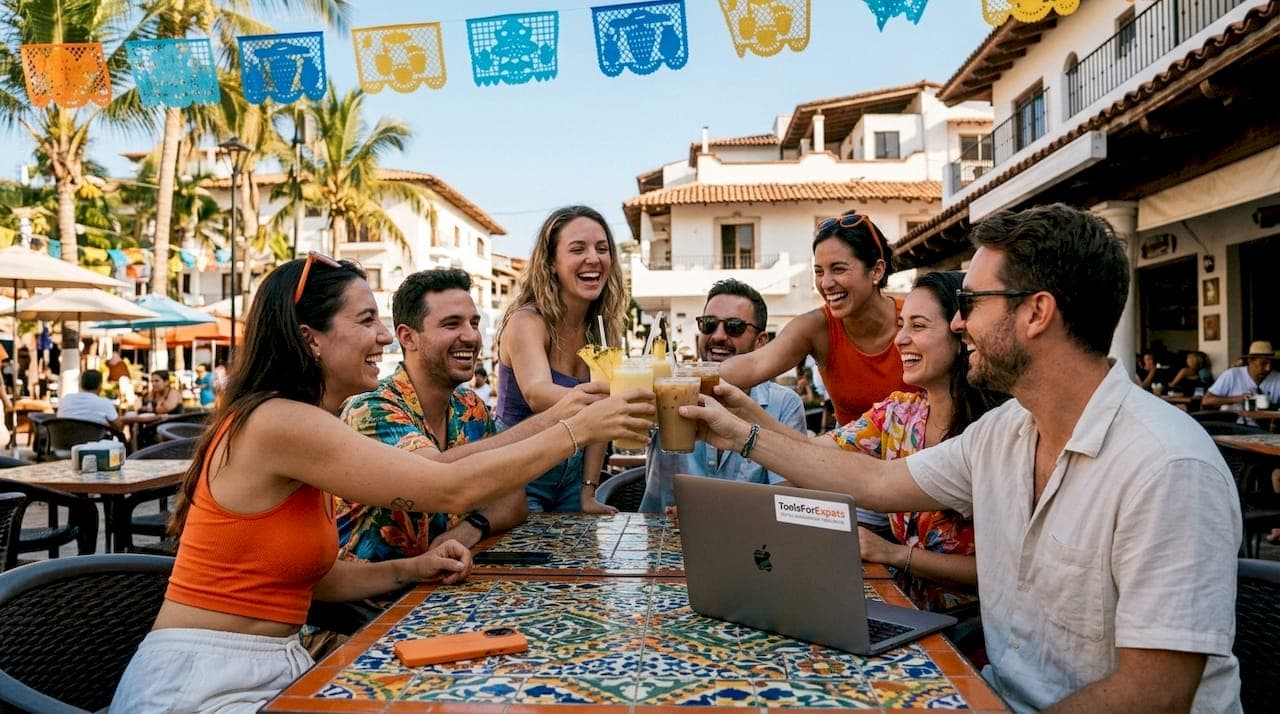
The best countries for nomad social life are defined by three measurable factors: local friendliness, expat community density, and social infrastructure like coworking spaces and organized meetups. Mexico, Panama, Colombia, and Portugal consistently top the rankings because they combine warm local cultures with active nomad networks. Whether you prioritize quick integration, budget-friendly socializing, or a structured international community, the right destination makes a real difference in how fast you build meaningful connections abroad.
1. Best countries for nomad social life: warm cultures that welcome you fast
Local friendliness is the single biggest predictor of how quickly you build a real social life abroad. Cities with lower social friction consistently rank higher for overall expat happiness, which means choosing a warm culture is not just a comfort preference. It is a practical strategy.
Mexico leads the pack. According to the InterNations 2025 Ease of Settling In Index, Mexico ranks 1st for Culture and Welcome, 2nd for Finding Friends, and 3rd for Local Friendliness. Expats in Mexico are more likely to feel at home than the global average. That is a remarkable result for a country that also offers low living costs and a growing nomad infrastructure.
Panama holds 2nd place in the same index, with over 80% of expats reporting satisfaction with their social life. Panama City has a compact, walkable expat zone in Casco Viejo where meeting people happens organically. The Philippines and Brazil round out this tier, both known for natural warmth and a culture that treats strangers as potential friends rather than outsiders.
- Mexico City and Playa del Carmen offer the densest nomad populations in Latin America, with weekly meetups and Spanish language exchanges.
- Panama City rewards nomads who show up consistently. The expat scene is smaller but tight-knit, and locals are genuinely curious about newcomers.
- Brazil (São Paulo and Florianópolis) brings high energy and a social culture built around shared meals, music, and outdoor life.
- The Philippines (Cebu and Manila) offers English as a first language, which removes the single biggest barrier to making local friends fast.
Pro Tip: Attend one local cultural event in your first week, not just a nomad meetup. Festivals, neighborhood markets, and sports events put you in contact with locals who are not already in an expat bubble.
2. Countries with coworking communities that double as social hubs
Coworking spaces are the fastest social infrastructure a nomad can use. Regular attendance at coworking events builds a local social network within one to two weeks, which outpaces social media groups and app-based networking by a wide margin.

Colombia, specifically Medellín, is the global benchmark for this model. Medellín's coworking scene is rated a premier destination for digital nomads because its spaces do not just provide desks. They organize weekly socials, skill-sharing sessions, and city tours that pull nomads into a real community. The city's moderate cost of living means you can afford to participate in paid events without stretching your budget.
Bali, Indonesia and Chiang Mai, Thailand operate on a similar model. Both cities have coworking ecosystems that function as social calendars. Spaces like those in Canggu and Nimman Road host regular community nights, surf trips, and group dinners. The social life in these cities is largely self-organizing because the nomad population is large enough to sustain it year-round.
"The coworking space is not where you work. It is where you meet the people you will work, travel, and build friendships with. Show up every day for two weeks and your social calendar fills itself."
This insight captures why coworking spaces serve as a primary social anchor in cities like Medellín and Bali. The key is consistency. Nomads who drop in once and leave rarely build lasting connections. Those who treat the space as a base, not just a desk, integrate far faster.
- Medellín has neighborhoods like El Poblado and Laureles with dense coworking clusters and nightly social options.
- Bali (Canggu) combines surf culture with a nomad scene that is unusually welcoming to newcomers. Blending into local surf culture is one of the most effective ways to connect with both locals and long-term nomads.
- Chiang Mai offers the most affordable coworking memberships in Southeast Asia, making daily attendance financially easy.
Pro Tip: Book a coworking day pass before committing to a monthly membership. Use that first day to identify which space has the most active community calendar, not just the fastest Wi-Fi.
3. How European nomad hubs compare for social integration
European cities offer a different social experience than Latin America or Southeast Asia. Expats in Latin America report easier social integration and higher warmth from locals compared to many European and Nordic countries. That does not make Europe a poor choice. It means you need a different approach.
Lisbon and Barcelona are the most socially accessible European cities for newcomers, thanks to their diverse populations and established expat communities. Both cities combine high livability scores with genuine international friendliness. European nomad hubs require higher proactivity in social engagement, and joining clubs and language groups is often necessary to move beyond surface-level connections.
Here is how to build a real social life in European nomad cities:
- Join a language exchange. Tandem and local Meetup groups in Lisbon and Madrid attract both locals and expats. These events create natural, recurring contact, which is how friendships actually form.
- Sign up for a sports club or fitness class. CrossFit boxes, running clubs, and football leagues in Barcelona and Lisbon are genuinely mixed communities. You will meet locals who have no interest in the expat scene.
- Attend structured nomad events. Cities like Lisbon host regular nomad-specific gatherings through coworking spaces and expat organizations. These are lower-friction entry points than cold social situations.
- Use neighborhood-level socializing. Smaller neighborhoods in Lisbon (Mouraria, Intendente) and Barcelona (Gràcia, Poblenou) have tight local communities. Becoming a regular at a local café or market accelerates social integration faster than any app.
- Give it 30 days. European social culture rewards consistency. The first two weeks feel slow. By week four, you will have a recognizable face in your neighborhood and a growing contact list.
Madrid deserves a specific mention. Its social culture is later and louder than Lisbon's, with a nightlife scene that genuinely mixes locals and internationals. If your social style leans toward evening energy, Madrid outperforms most European alternatives.
4. Budget and lifestyle factors that shape your social opportunities
Budget directly determines how fully you can participate in social life abroad. Nomads with budgets of $1,800–$2,500 per month benefit from expanded social integration opportunities in countries like Colombia, where that range covers housing, coworking, dining out regularly, and paid community events.
Ecuador, Georgia, and Vietnam offer emerging social scenes at lower price points. Tbilisi, Georgia has developed a fast-growing nomad community with low costs and a surprisingly active arts and nightlife culture. Hanoi and Ho Chi Minh City in Vietnam offer dense expat communities and a social culture built around food, which makes casual socializing cheap and frequent.
| Country | Social Friendliness | Monthly Budget | Community Size |
|---|---|---|---|
| Mexico | Very High | $1,500–$2,500 | Large |
| Panama | High | $2,000–$3,000 | Medium |
| Colombia | High | $1,500–$2,500 | Large |
| Portugal | Moderate (proactive) | $2,500–$3,500 | Large |
| Georgia | Moderate | $1,000–$1,800 | Growing |
| Vietnam | Moderate | $1,200–$2,000 | Medium |
| Indonesia (Bali) | High | $1,500–$2,500 | Large |
Climate and language also shape social integration in ways nomads often underestimate. Warm climates push social life outdoors, which creates more casual, spontaneous contact. English proficiency in the Philippines and parts of Southeast Asia removes a real barrier. In contrast, countries with lower English proficiency, like Brazil or Georgia, reward nomads who invest even basic effort in the local language with disproportionate social returns.
5. Matching your social style to the right destination
Not every nomad wants the same social life. Your personality, budget, and work schedule should drive your destination choice as much as any ranking.
- For fast integration and inclusive local culture: Mexico and Panama are the top picks. Both rank in the top two of the Ease of Settling In Index and deliver social results within days, not months.
- For coworking-centered communities and active nightlife: Medellín and Bali are the global leaders. Both cities have self-sustaining nomad ecosystems where your social calendar fills without much effort. The networking benefits in hubs like Medellín extend beyond friendship into career and collaboration opportunities.
- For structured international communities: Lisbon, Barcelona, and Madrid offer diverse, multilingual social environments with strong institutional stability. These cities suit nomads who prefer organized events and a slower-building but deeper social network.
- For unique cultural immersion: Brazil and Oman offer social experiences that fall outside the standard nomad circuit. Brazil's social culture is intense and communal. Oman offers a quieter but genuinely warm local culture that rewards curiosity and respect.
- For budget-conscious socializing: Georgia and Vietnam deliver active social scenes at the lowest cost per interaction of any destination on this list.
Pro Tip: Before you book, take the nomad city quiz on ToolsForExpats to match your social preferences, budget, and lifestyle to specific cities. It takes five minutes and surfaces destinations you may not have considered.
You can also use the expat happiness test on ToolsForExpats to measure how well a destination aligns with your specific social and wellbeing priorities before you commit to a move.
Key takeaways
The countries with the strongest nomad social life combine local warmth, active coworking communities, and a budget that lets you participate fully in social activities.
| Point | Details |
|---|---|
| Local friendliness drives integration speed | Mexico and Panama rank highest for welcoming cultures and ease of finding friends. |
| Coworking spaces are social infrastructure | Regular attendance at coworking events builds a network within one to two weeks. |
| Europe requires proactive effort | Joining language exchanges and clubs is necessary to build deep connections in European hubs. |
| Budget shapes social participation | A monthly budget of $1,800–$2,500 unlocks full social engagement in mid-cost destinations. |
| Match destination to social style | Fast integrators thrive in Latin America; structured community seekers do better in Europe. |
What I've learned about building a real social life as a nomad
The most common mistake I see nomads make is treating social life as something that happens automatically once they land in a "friendly" country. It does not. Even in Mexico, which tops every friendliness index, the nomads who build lasting connections are the ones who show up consistently to the same places and events.
The expat community abroad is not a monolith. There is a surface layer of people passing through, and a deeper layer of people who have committed to a place for at least three months. The second group is where real friendships form. Getting into that layer requires time, not just presence.
I have also noticed that nomads who learn even 50 words of the local language in Latin America get treated completely differently by locals. In Brazil, a basic attempt at Portuguese signals respect and opens doors that stay closed for English-only travelers. The social return on that small investment is enormous.
The biggest risk to nomad social life is not an unfriendly country. It is isolation by comfort. Working from your apartment, ordering delivery, and scrolling social media is available everywhere. The countries on this list give you the best conditions to break that pattern. But you still have to walk out the door.
— Jay
Plan your social life abroad with ToolsForExpats
Choosing the right destination for your social life is easier when you have the right data behind your decision.
ToolsForExpats offers a free suite of tools built specifically for nomads and expats at every stage of planning. Use the cost of living comparison tool to see exactly how much social activities, coworking memberships, and dining out will cost in your target city. Check your digital nomad visa eligibility across 20+ countries to confirm you can legally stay long enough to build real connections. All tools are free, require no account, and give you results in minutes. Start with the full tool suite at ToolsForExpats and plan your next move with confidence.
FAQ
Which country has the best social life for digital nomads?
Mexico ranks 1st for Culture and Welcome and 2nd for Finding Friends in the InterNations 2025 Ease of Settling In Index, making it the top country for nomad social integration.
How do I meet people quickly as a digital nomad abroad?
Regular attendance at coworking space events is the fastest method, building a local network within one to two weeks and outperforming social media groups in effectiveness.
Is Europe or Latin America better for nomad social life?
Latin America offers easier and faster social integration due to warmer local cultures, while European hubs like Lisbon and Barcelona require more proactive effort through clubs and language exchanges.
What budget do I need to have an active social life abroad?
A monthly budget of $1,800–$2,500 covers housing, coworking, dining, and paid community events in mid-cost destinations like Colombia, giving you full access to the social scene.
Does the community atmosphere in surf camps in Portugal work for nomads?
Yes. Portugal's surf camp communities offer a structured, welcoming social environment that integrates nomads quickly, particularly in coastal towns like Ericeira and Peniche.