
The fastest internet countries for digital nomads are defined by three factors: broadband speed above 100 Mbps, reliable 5G mobile coverage, and visa policies that let remote workers stay legally for months at a time. South Korea leads global fixed broadband with 290 Mbps fiber speeds and near-complete urban 5G coverage. Singapore delivers 310 Mbps average broadband alongside coworking options from $25–40 per day. The UAE tops every ranking for mobile download speed. If you are planning your next base, these three countries set the benchmark that every other destination is measured against.
1. Which countries have the fastest internet for digital nomads?
South Korea, Singapore, and the UAE consistently rank at the top for remote workers who need speed and reliability. South Korea leads fixed broadband worldwide, with 97% urban 5G coverage making dropped calls and buffered video a non-issue. That level of coverage means you can work from a café in Seoul just as confidently as from a fiber-connected apartment.
The UAE takes the mobile crown. UAE median mobile download speed sits at 652.87 Mbps according to the Speedtest Global Index 2026. That figure is not a theoretical peak. It is the median, meaning half of all connections in the country are faster than that.
Singapore's fixed broadband averages 310 Mbps, supported by a dense 5G network across the entire island. Portugal rounds out the top tier in Europe, with Lisbon broadband speeds ranging from 100–300 Mbps. Eastern European countries including Poland, Czech Republic, and Romania also deliver urban fiber speeds exceeding 100 Mbps at some of the lowest data costs in the world.
Key high-speed destinations at a glance:
- South Korea: 290 Mbps fiber, 97% urban 5G coverage
- Singapore: 310 Mbps average broadband, island-wide 5G
- UAE: 652.87 Mbps median mobile speed
- Portugal: 100–300 Mbps in Lisbon, dedicated nomad visa
- Poland, Czech Republic, Romania: 100+ Mbps urban fiber, low data costs
2. Why infrastructure stability matters more than peak speed
Raw speed numbers tell only part of the story. A connection that peaks at 500 Mbps but drops to 20 Mbps during business hours is worse for remote work than a steady 100 Mbps fiber line. Latency, the time it takes data to travel between your device and a server, directly affects video calls and cloud-based tools. High latency makes calls choppy even when download speeds look fine.
Residential fiber in apartments consistently outperforms coworking space networks because it avoids peak-hour contention. When you share a coworking connection with 40 other people, everyone's speed drops at 10 a.m. when calls start. A private fiber line in your apartment does not have that problem.
Coworking spaces that advertise ultra-fast internet often share bandwidth among dozens of workers, which negatively impacts stability during business hours. This is one of the most common surprises nomads face when they arrive at a highly rated space. The advertised speed is the maximum, not what you actually get at peak time.
Pro Tip: Run a speed test using Speedtest by Ookla immediately upon arrival at any new rental or coworking space. Check both download speed and latency. If latency exceeds 50ms for video calls, look for a backup connection before your first client meeting.
3. How digital nomad visas in fast-internet countries support remote work
Speed without legal status is a short-term fix. The best high-speed internet destinations also offer clear visa pathways for remote workers who want to stay for six months or more.
- Portugal: A dedicated one-year digital nomad visa with straightforward income requirements. Lisbon's fiber network and mild climate make it the most popular European base for nomads.
- Singapore: The EntrePass visa supports tech-focused nomads for up to one year. The city-state's infrastructure is world-class, and English is the working language.
- UAE: Dubai offers multiple residency options for remote workers, including freelancer visas. Combined with the world's fastest mobile speeds, it is a serious option for high-output professionals.
- Greece: The Greek digital nomad visa allows stays of up to two years. Athens has seen major coworking investment, and fiber coverage in the city center is solid.
Visa duration and income thresholds vary significantly by country. Portugal and Greece set income minimums that are accessible for most full-time remote workers. Singapore and the UAE target higher earners. Checking your eligibility before you book flights saves a lot of frustration.
4. Best cities for fast internet and quality of life
Speed rankings tell you which countries lead. City-level data tells you where to actually live. The cities below combine strong connectivity with affordable costs and active nomad communities.
| City | Fiber strength | Typical monthly cost | Nomad community |
|---|---|---|---|
| Seoul, South Korea | Very high | Moderate | Large, tech-focused |
| Lisbon, Portugal | High | Moderate | Very large, diverse |
| Singapore | Very high | High | Large, professional |
| Dubai, UAE | Very high | High | Growing, international |
| Tbilisi, Georgia | Moderate-high | Low | Large, budget-friendly |
| Medellín, Colombia | Moderate | Low | Large, creative |
| Chiang Mai, Thailand | Moderate | Very low | Very large, established |
Seoul and Singapore deliver the fastest connections but come with higher living costs. Tbilisi and Medellín offer surprisingly strong urban fiber at a fraction of the price. Chiang Mai remains one of the most established nomad hubs in the world, though rural coverage in Thailand drops off sharply outside major cities.
Pro Tip: In Southeast Asia, urban connectivity is strong but rural coverage gaps are real. If you plan to travel between cities frequently, prioritize a high-data eSIM over relying on accommodation Wi-Fi.
Eastern European cities deserve more attention than they get. Warsaw, Prague, and Bucharest all have fast urban fiber and low data costs. The cost of living is significantly lower than Western Europe, and the nomad communities in all three cities have grown steadily since 2022.
5. Connectivity tools that keep you online anywhere
The right gear closes the gap between a great destination and a frustrating one. No single connection type covers every situation, so the most productive nomads use a layered approach.
A hybrid connectivity strategy combines a local fiber subscription for primary work and a high-data eSIM for backup and travel days. This failover setup means a router restart or ISP outage does not cost you a deadline. Experts consistently recommend this combination as the most reliable setup for full-time remote workers.
Practical tools to have in your kit:
- Local SIM or eSIM with a high data allowance: Get one on arrival. Local data is almost always cheaper than roaming. eSIM technology lets you switch carriers without a physical SIM swap, which is useful when crossing borders.
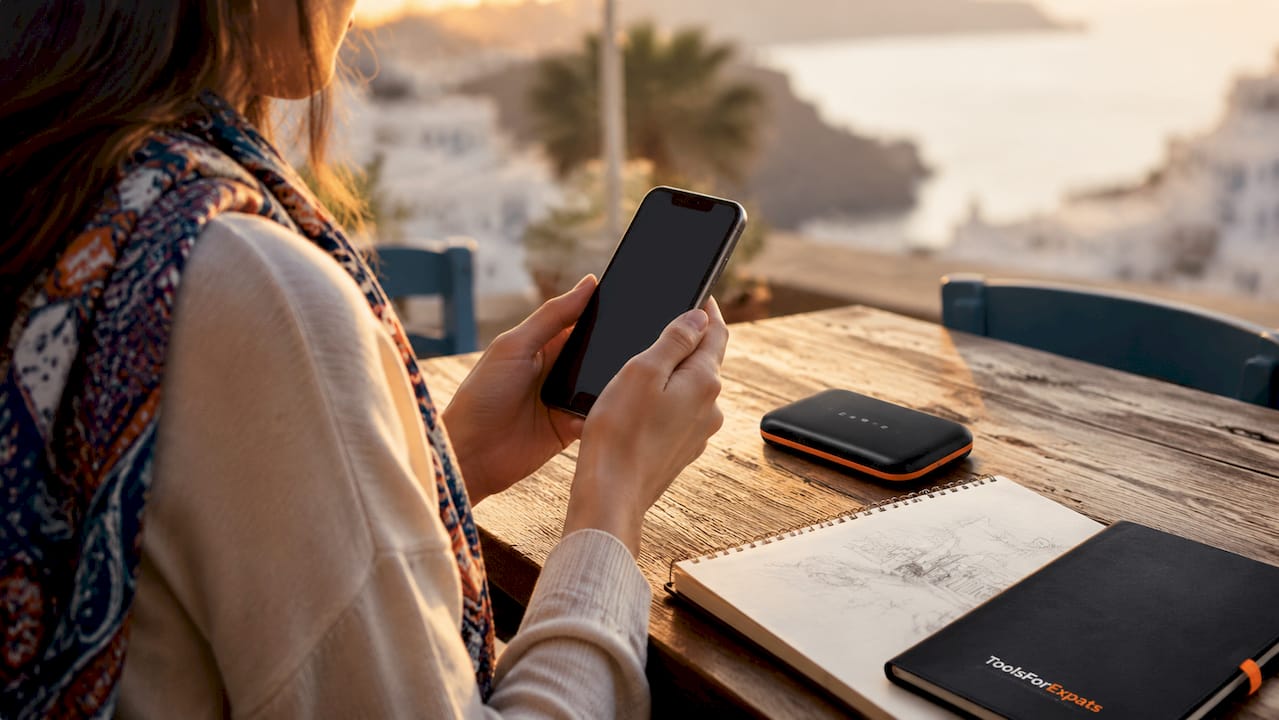
- Portable Wi-Fi device (MiFi): Useful as a backup when apartment Wi-Fi fails. Connects to mobile data and shares it as a private Wi-Fi network.
- Speedtest by Ookla: Test speed upon arrival at every new location. Verify both download speed and latency before committing to a workspace.
- VPN with a kill switch: Protects your connection on shared networks and prevents data exposure if the VPN drops.
Coworking memberships are useful for community and meeting rooms, but do not rely on them as your primary connection. Treat coworking Wi-Fi as a secondary option and keep your eSIM active as a fallback.
Key takeaways
The fastest internet countries for digital nomads combine measured broadband speeds above 100 Mbps, stable fiber infrastructure, and visa policies that support stays of six months or longer.
| Point | Details |
|---|---|
| Top speed leaders | South Korea (290 Mbps), Singapore (310 Mbps), and UAE (652.87 Mbps mobile) lead all global rankings. |
| Stability beats peak speed | Residential fiber avoids peak-hour congestion that slows shared coworking connections. |
| Visa access matters | Portugal, Greece, Singapore, and UAE all offer nomad-friendly visas alongside fast internet. |
| City selection | Seoul, Lisbon, and Tbilisi balance strong connectivity with varied cost-of-living options. |
| Use hybrid connectivity | Combine local fiber with a high-data eSIM to maintain uptime regardless of location. |
Speed is only half the equation
I have worked remotely from more than a dozen countries, and the one lesson that took me too long to learn is this: chasing the fastest speed ranking is the wrong goal. I spent three months in a city with genuinely impressive broadband numbers and had some of my worst work weeks because the apartment building shared a single fiber line among 30 units.
The nomads I know who are most productive are not in the fastest internet countries. They are in cities where the infrastructure is mature enough that a private fiber line is easy to get, affordable, and actually delivers what it promises. Lisbon fits that description. So does Seoul. Tbilisi is catching up fast.
Visa flexibility changes the calculus too. A country with 600 Mbps mobile speeds is useless if you can only stay 90 days on a tourist visa and spend the rest of your time worrying about overstays. Portugal's nomad visa is not the most exciting option on paper, but it gives you a year of legal certainty, solid fiber, and a city with one of the best nomad communities in Europe.
My honest recommendation: pick a city where you can get a private fiber line, verify the speed yourself on arrival, carry an eSIM as a backup, and make sure your visa situation is sorted before you land. The best nomad city quiz at ToolsForExpats is a good starting point if you are still narrowing down your options.
— Jay
Plan your next move with ToolsForExpats
Picking the right destination means more than finding fast Wi-Fi. You need to know what your monthly costs will look like, whether you qualify for a local visa, and how your budget compares across cities.
ToolsForExpats offers a full suite of free nomad planning tools built for exactly this kind of research. Use the cost of living calculator to compare monthly expenses in Seoul, Lisbon, Tbilisi, and dozens of other cities. Check your eligibility for nomad visas in 20+ countries with the visa eligibility checker. No account required, no paywalls. Just the data you need to make a confident decision about where to work next.
FAQ
Which country has the fastest internet for remote work?
The UAE ranks first for mobile internet with a median download speed of 652.87 Mbps. Singapore leads for fixed broadband reliability at 310 Mbps average, while South Korea tops fiber broadband at 290 Mbps.
Is Portugal a good country for digital nomads with fast internet?
Portugal offers broadband speeds of 100–300 Mbps in Lisbon and a dedicated one-year digital nomad visa. It is one of the few European countries that combines reliable fiber with a clear legal pathway for remote workers.
Why does coworking Wi-Fi feel slow even when speeds are advertised as fast?
Coworking spaces share bandwidth among many users, which causes congestion during peak business hours. Residential fiber on a private line avoids this problem and delivers more consistent speeds throughout the day.
What is the best backup internet solution for digital nomads?
A high-data eSIM paired with a portable Wi-Fi device gives you a reliable failover when apartment or coworking Wi-Fi fails. This hybrid approach covers most connectivity gaps regardless of destination.
Do I need a digital nomad visa to work remotely abroad?
You do not need a nomad visa for short stays, but working on a tourist visa for extended periods creates legal risk. Countries like Portugal, Greece, and Singapore offer dedicated visas that provide legal certainty for stays of one year or more.