
An expat community is defined as a group of people living outside their home country who share experiences, resources, and support to navigate life abroad. The formal term used by researchers and relocation professionals is "expatriate community," though "expat community" is the widely accepted shorthand. These networks exist in nearly every major city worldwide, from the American expat groups in Berlin to the Filipino communities in Dubai. Understanding how they work, what types exist, and how to tap into them is one of the most practical steps you can take before or after your move.
What is expat community abroad and why does it matter?
An expat community functions as a support network that helps people adapt to new environments and build a genuine sense of belonging. That definition covers a lot of ground. At its core, the community is a group of people who understand exactly what you are going through because they are going through it too. That shared experience creates trust faster than most other social bonds.
The practical value is just as real as the emotional one. Members share tips on local doctors, reliable landlords, visa renewal processes, and which government office to avoid on a Monday morning. For someone newly arrived in Lisbon, Tokyo, or Medellín, that kind of insider knowledge cuts weeks off the learning curve. Expat communities, at their best, are living databases of local knowledge maintained by people who were once in your exact position.
What types of expat communities exist worldwide?
Expat communities exist in both online and offline formats, and the differences between them matter for how you use them. Online groups on platforms like Facebook, WhatsApp, and Reddit give you access before you even land. Offline meetups, coworking spaces, and cultural clubs build the deeper relationships that online groups rarely produce on their own.
The types of expat communities worldwide also vary significantly by demographic. Here is a breakdown of the most common formats:
| Community Type | Format | Best For |
|---|---|---|
| General expat groups | Online forums, Facebook groups | Newcomers seeking broad local info |
| Professional networks | LinkedIn groups, coworking events | Career-focused expats and freelancers |
| Digital nomad hubs | Coworking spaces, Slack communities | Remote workers moving frequently |
| Family and parent groups | WhatsApp, school networks | Expat parents navigating schooling |
| Retiree communities | In-person clubs, local associations | Older expats seeking social connection |
| Nationality-specific groups | Cultural centers, social clubs | Expats seeking cultural familiarity |
Community fit varies by life stage and daily schedule. A retiree in Alicante has very different availability and social needs than a remote worker in Chiang Mai. Recognizing which type of community matches your current life stage saves you time and gets you to the right people faster.
Pro Tip: Join at least two different types of groups: one broad expat group for practical local knowledge and one niche group aligned with your profession or family status. The combination gives you both wide reach and deeper connection.
How do expat communities support emotional well-being?
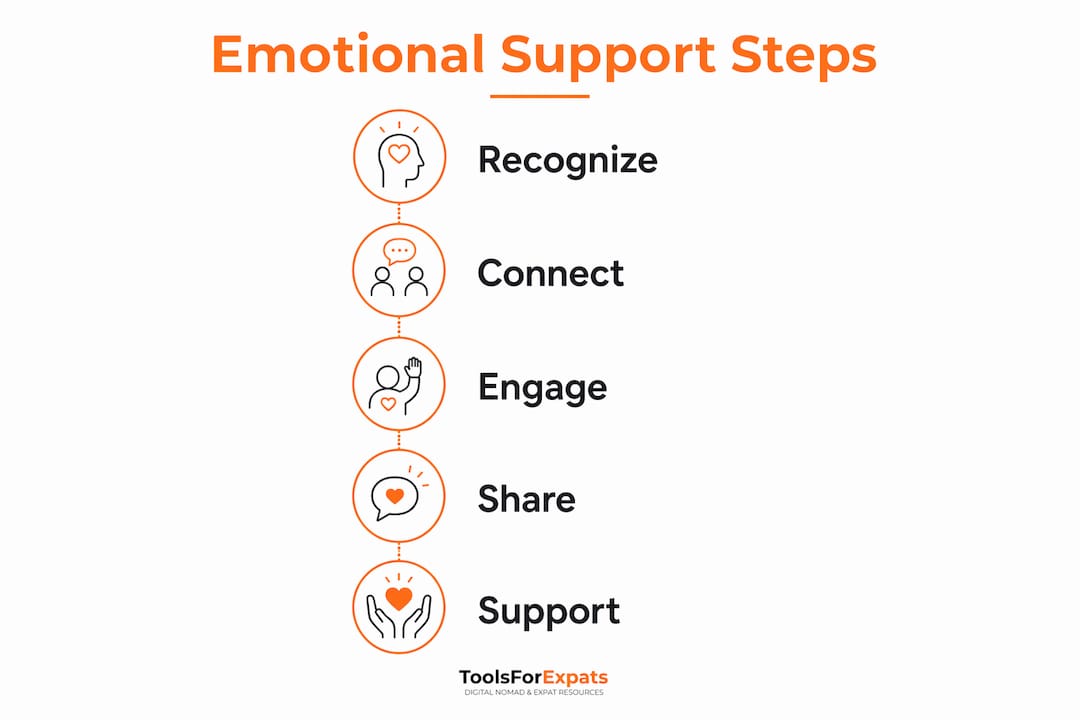
Social support networks buffer isolation and acculturative stress, which is the psychological strain that comes from adapting to a new culture. Research on international students and refugees consistently shows that access to social networks improves mental health outcomes for people living abroad. That finding applies directly to expats, who face many of the same adjustment pressures.
Loneliness is one of the most underestimated risks of living abroad. You can be surrounded by a new city and still feel completely cut off. Expat groups address this directly by providing regular social contact, shared humor about cultural confusion, and the reassurance that your struggles are normal and temporary.
The format of participation matters too. Passive membership in an online group provides some benefit, but active participation produces significantly better outcomes. Attending in-person events, responding to questions in group chats, and following up with people you meet all build the kind of social capital that actually reduces stress.
- Emotional validation: Hearing others describe the same frustrations normalizes your experience.
- Practical reassurance: Getting a recommendation for a trusted local doctor removes a major source of anxiety.
- Sense of progress: Watching newer arrivals struggle with things you have already figured out confirms your own growth.
- Accountability: Regular meetups give structure to weeks that can otherwise feel unmoored.
You can also check your own loneliness risk level with ToolsForExpats' free calculator, which helps you assess how socially connected you are in your current location.
What practical functions do expat communities serve?
Institutionalized settlement programs link newcomers to healthcare, education, and community services, making social participation far easier. Government-funded settlement services in countries like Canada and Australia provide confidential support, integration plans, and direct connections to public resources. Expat communities often serve a similar function informally, filling gaps that official programs do not cover.
The practical support expat groups provide covers a wide range of daily needs:
- Healthcare navigation: Finding English-speaking doctors, understanding local insurance, and knowing which clinics accept walk-ins.
- Schooling: Identifying international schools, understanding local enrollment processes, and connecting with other expat parents.
- Banking and finance: Recommendations for expat-friendly banks, advice on international transfers, and tax filing tips.
- Housing: Landlord reviews, neighborhood safety assessments, and lease negotiation advice.
- Government services: Guidance on residency permits, visa renewals, and local registration requirements.
Early orientation to local systems produces quick wins that build social confidence. When you sort out your bank account and health registration in the first two weeks, you free up mental energy for actual community participation. Expat groups accelerate that process by pointing you directly to what works, skipping the trial and error that solo arrivals endure.
| Settlement Area | How Expat Communities Help |
|---|---|
| Healthcare | Doctor recommendations, clinic reviews, insurance tips |
| Education | School comparisons, enrollment guidance, parent networks |
| Housing | Neighborhood advice, landlord reviews, lease tips |
| Legal and visa | Permit timelines, document checklists, lawyer referrals |
| Daily logistics | Transport, grocery, and utility setup guidance |

For planning the financial side of your move, ToolsForExpats offers a free moving abroad budget calculator that pairs well with the local knowledge you will gather from your expat network.
How to effectively connect with expats in your new city
Deliberate participation is the difference between having a list of contacts and having a real support network. Casual membership in a Facebook group rarely produces meaningful relationships. Building genuine community ties requires consistent, intentional effort across multiple touchpoints.
Here is a practical sequence that works:
- Start online before you arrive. Join city-specific Facebook groups, Reddit communities like r/expats, and WhatsApp groups for your destination. Ask questions. Introduce yourself. You will arrive with warm contacts rather than starting from zero.
- Attend your first in-person event within two weeks of landing. The first meetup is always the hardest. Go anyway. Recurring attendance is what builds recognition and trust.
- Follow up with specific people. After a meetup, message two or three people you connected with. Suggest a coffee or a walk. This step is what most expats skip, and it is the most important one.
- Diversify your community involvement. Balancing expat-only groups with local cultural activities accelerates deeper integration. Language exchanges, volunteering, and neighborhood events connect you with locals in ways that expat-only groups cannot.
- Give before you take. Answer questions from newer arrivals. Share what you have learned. Communities reward contributors with trust and reciprocal support.
Community functions best as a pipeline: early online engagement, recurring in-person contact, and active follow-up build the trust that turns acquaintances into dependable connections. Skipping any stage slows the process considerably.
Pro Tip: Set a recurring calendar reminder for one expat event per week during your first three months. Consistency matters more than the specific event. Showing up repeatedly is what makes people remember you.
For digital nomads moving between cities, ToolsForExpats' best nomad city quiz can help you identify destinations with strong existing expat networks before you commit to a location.
Key takeaways
Expat communities are structured support networks that reduce isolation, accelerate local integration, and provide practical knowledge that no guidebook can fully replace.
| Point | Details |
|---|---|
| Core definition | An expat community is a group living abroad that shares support, knowledge, and social connection. |
| Community types | Online forums, professional networks, family groups, and retiree clubs each serve different life stages. |
| Mental health benefit | Active participation in expat groups reduces acculturative stress and loneliness significantly. |
| Practical support | Communities provide guidance on healthcare, housing, banking, and visa processes that speeds settlement. |
| Connection strategy | Start online before arrival, attend in-person events consistently, and follow up with specific contacts. |
Why I think most expats underestimate their community
Most people treat expat communities as a backup plan. They join a Facebook group, lurk for a few weeks, and then wonder why they still feel disconnected six months in. The mistake is treating community as a passive resource rather than an active practice.
What I have observed, talking with expats across dozens of cities, is that the people who thrive abroad are almost always the ones who gave something to their community before they needed anything from it. They answered questions, organized meetups, or simply showed up consistently. That investment paid back in trust, referrals, and genuine friendship.
There is also a real tension between comfort and growth. Expat-only groups are comfortable because everyone speaks your language and shares your cultural references. But staying exclusively in that bubble slows your actual integration into the country you chose to live in. The expats who feel most at home abroad are the ones who used their expat network as a launchpad into local life, not as a substitute for it.
The practical tools matter too. Knowing your budget, understanding your visa options, and having a clear financial plan removes the background anxiety that makes community-building feel like a luxury. When the basics are sorted, you show up to social events with more energy and openness.
— Jay
Plan your move with ToolsForExpats
Building a strong expat community starts before you land. Knowing your budget, comparing living costs, and checking your visa eligibility gives you the confidence to focus on connection rather than logistics once you arrive.
ToolsForExpats offers a full suite of free expat tools built specifically for people planning or living abroad. Use the cost of living comparison tool to see how your target city stacks up financially, or run your numbers through the digital nomad cost calculator to build a realistic monthly budget. Every tool is free and requires no account. The less time you spend on logistics, the more time you have for the people who make living abroad worth it.
FAQ
What is an expatriate community?
An expatriate community is a group of people living outside their home country who share experiences, practical knowledge, and social support. These groups exist in both online and offline formats and serve emotional as well as logistical functions for members.
How do I find expat communities near me?
Search Facebook for city-specific expat groups, check Reddit communities like r/expats or city-specific subreddits, and look for local meetup events through community networking platforms. Arriving with online contacts already established makes in-person connection much faster.
What are the main benefits of joining an expat group?
Expat groups reduce loneliness, provide trusted local recommendations, and help newcomers navigate healthcare, housing, and visa processes faster than solo research allows. Active participation produces stronger outcomes than passive membership.
Do expat communities help with cultural integration?
Yes, but only when you combine expat-only groups with local cultural activities. Relying solely on expat networks slows deeper integration. Language exchanges, volunteering, and neighborhood events build connections with locals that expat groups alone cannot provide.
Are there different expat communities for different life stages?
Community fit varies significantly by life stage. Retirees, working professionals, digital nomads, and expat families each have different schedules, priorities, and social needs that shape which community formats work best for them.