
Furnished apartments are move-in ready rentals that include furniture, appliances, utilities, and internet access under one monthly payment. Digital nomads prefer furnished apartments because they eliminate setup time, bundle every essential into a single cost, and offer flexible lease terms that match a location-independent lifestyle. The standard industry term for these rentals is "mid-term furnished rentals," covering stays from one to six months. This guide breaks down the real reasons why nomads prefer furnished apartments, what they cost, how they compare to alternatives, and how to book one without getting burned.
Why nomads prefer furnished apartments for productivity and flexibility
Furnished apartments are built around one goal: letting you work the moment you arrive. Work-ready features like high-speed fiber internet (50+ Mbps), ergonomic chairs, and dedicated desk setups replace the makeshift arrangements you find in short-term vacation rentals. That matters when your income depends on a stable connection and a functional workspace.

Lease flexibility is the other major draw. Mid-term rental platforms like Flatio and RentRemote host over 10,000 properties globally with month-to-month contracts, avoiding the 6–12 month commitments that unfurnished apartments typically require. Instant booking options on these platforms cut negotiation time significantly.
Key features that make furnished apartments work for nomads:
- High-speed internet guaranteed: Listings specify minimum speeds, so you know what you are getting before you sign.
- Dedicated workspace: A real desk and ergonomic chair replace dining tables and laptop stands.
- Utilities bundled: Electricity, water, and internet arrive as one line item, not three separate bills.
- Flexible lease terms: Month-to-month contracts let you move when your plans change, without penalties.
- Instant booking: Many platforms confirm your stay within hours, not days.
Pro Tip: Before booking, ask the host to share a speed test screenshot taken during peak hours, not just the advertised package speed. Real-world performance often differs from the plan.
Treating housing as a bundled utility service simplifies every city transition. Instead of setting up separate accounts for electricity, internet, and furniture rental, you pay one amount and focus on your work.
What does a furnished apartment actually cost for nomads?
Furnished apartments cost 30–60% more than comparable unfurnished rentals in the same city. That premium is real, but it covers furniture, utilities, internet, and the flexibility to leave without a long notice period.
A practical example makes this concrete. A one-bedroom apartment in Lisbon might rent for around €800 per month on the local unfurnished market. The same unit on a global mid-term rental platform runs €1,200–€1,400 per month. The difference funds your furniture, your bills, and your freedom to leave after 30 days.
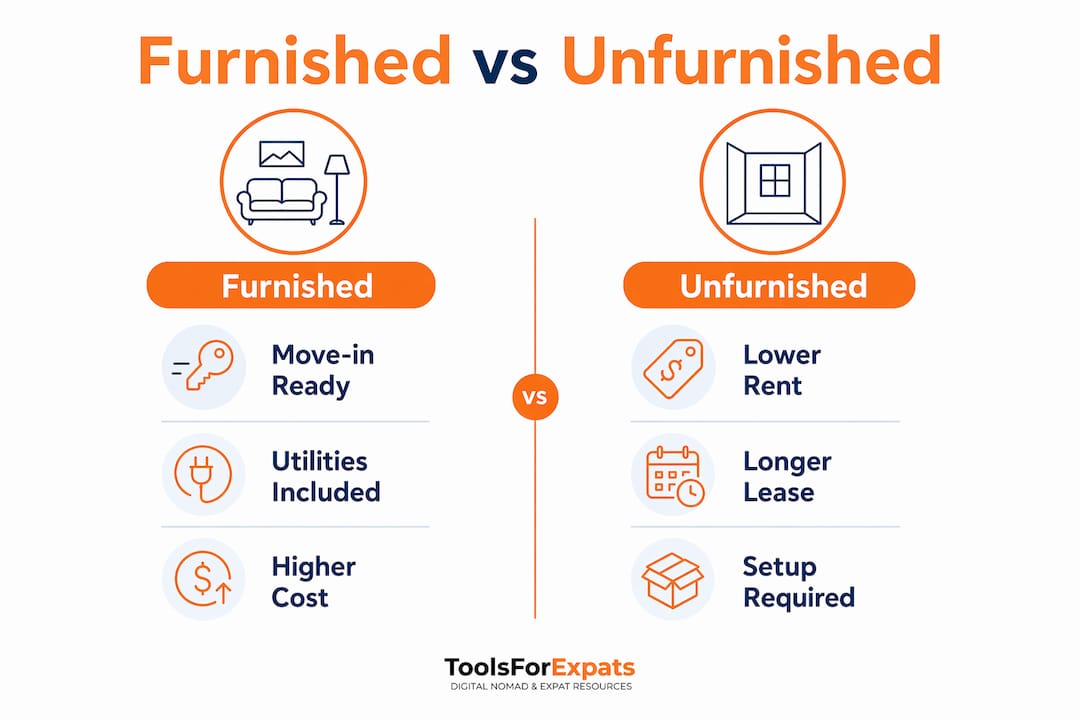
| Cost factor | Unfurnished rental | Furnished mid-term rental |
|---|---|---|
| Monthly rent | Lower base rate | 30–60% premium |
| Furniture | You buy or rent separately | Included |
| Utilities setup | Multiple accounts, deposits | Bundled in rent |
| Internet | You arrange and pay separately | Included, speed guaranteed |
| Lease commitment | Typically 6–12 months | Month-to-month available |
| Move-in friction | High (setup time, deposits) | Low (arrive with a suitcase) |
Specialized platforms mitigate the cost gap by negotiating mid-term prices closer to local market rates and reducing platform fees compared to short-term vacation rental sites. Booking for two or three months at once often unlocks discounts that bring the effective rate closer to the unfurnished equivalent.
One cost nomads sometimes overlook: furnished rentals may require higher security deposits to cover potential wear and tear on the included furniture and appliances. Budget for one to two months of rent as a deposit when planning your cash flow.
Pro Tip: Use the nomad cost calculator at ToolsForExpats to compare your all-in monthly cost across cities before committing to a location. It accounts for rent, food, transport, and coworking fees.
Understanding the role of rental platforms in pricing is worth your time. Platforms that specialize in mid-term stays negotiate directly with landlords, which often produces better rates than booking through general vacation rental marketplaces.
How do furnished apartments compare to coliving and unfurnished rentals?
Hotels are too expensive for multi-week stays while unfurnished apartments require long leases and setup work. Furnished mid-term rentals sit in the middle, offering the comfort of a private home without the commitment of a traditional lease. That positioning explains their popularity among nomads who stay in one city for one to three months at a time.
The comparison with coliving is more nuanced. Coliving spaces bundle housing, coworking, and social programming into one monthly bill, which works well for nomads who want community and structured networking. Furnished apartments offer complete control over your living environment, which benefits nomads who prioritize quiet, autonomy, and a consistent work routine.
Furnished apartments work best for nomads who:
- Work in deep focus roles like software development, writing, or design
- Travel with a partner or family and need private space
- Stay in one city for one to three months at a time
- Prefer cooking at home to shared kitchens
- Value a predictable, distraction-free environment
Coliving works better for nomads who:
- Are new to a city and want built-in social connections
- Work in collaborative or client-facing roles
- Stay for shorter periods (two to four weeks)
- Want coworking included without a separate membership
Unfurnished apartments make sense only if you plan to stay in one city for six months or longer and want to build a more settled routine. The setup cost in time, money, and logistics makes them impractical for shorter stays.
The nomad accommodation types guide at ToolsForExpats covers hybrid options that blend coworking and housing for nomads who want something between a furnished apartment and a coliving space.
Practical tips for choosing and securing a furnished apartment
Getting the right furnished apartment requires more than browsing photos. Follow these steps to protect your productivity and your budget.
-
Verify internet speed before booking. Experienced nomads request speed test screenshots taken during business hours. Marketing claims frequently overstate real-world performance. Ask for a Speedtest.net result, not just the advertised package.
-
Assess the workspace setup. Confirm the desk height, chair type, and monitor availability. A dining chair at a coffee table is not a workstation, regardless of what the listing says.
-
Check the location for your lifestyle. Proximity to a grocery store, pharmacy, and public transit matters more than proximity to tourist attractions. Map your daily routine before committing.
-
Use nomad-focused platforms. Platforms built for mid-term stays reduce booking friction and offer better lease terms than general vacation rental sites. Look for platforms that allow instant booking and have clear cancellation policies.
-
Read the lease terms carefully. Confirm the notice period required to end the lease, the security deposit amount, and what counts as damage versus normal wear. Screening a rental management company before signing protects you from disputes later.
-
Budget for the deposit. Set aside one to two months of rent for the security deposit. Some landlords require this upfront, and it affects your cash flow for the first month.
-
Negotiate for longer stays. Booking two or three months at once often unlocks a 10–20% discount. Landlords prefer reliable mid-term tenants over frequent turnover.
Key Takeaways
Furnished apartments are the top choice for productivity-focused digital nomads because they bundle internet, utilities, and workspace into one flexible monthly payment with no long-term lease required.
| Point | Details |
|---|---|
| Cost premium is real but justified | Furnished rentals cost 30–60% more, but that covers furniture, utilities, internet, and flexibility. |
| Work-ready setup matters most | Verify fiber internet speeds and dedicated desk setups before booking, not after. |
| Flexibility beats commitment | Month-to-month leases on mid-term platforms let you move without penalties or long notice periods. |
| Autonomy over community | Productivity-focused nomads consistently choose furnished apartments over coliving for quiet and control. |
| Budget for the deposit | Security deposits of one to two months are common and affect your first-month cash flow. |
The case for furnished apartments that most guides miss
I have watched hundreds of nomads cycle through accommodation options, and the pattern is consistent. Nomads who choose coliving for the social benefits often switch to furnished apartments within six months. The reason is almost always the same: they underestimated how much noise, shared schedules, and communal spaces affect their output.
The productivity argument for furnished apartments is stronger than most people admit. When your living space doubles as your office, control over your environment is not a luxury. It is a professional requirement. A quiet apartment where you set the temperature, the hours, and the ambient noise level produces better work than a buzzing coliving common room, regardless of how good the community is.
The cost premium is the honest objection. A €400 monthly difference between a furnished apartment and a coliving space is real money over three months. My advice: use a cost comparison tool to model the full picture, including coworking memberships you would need to buy separately if you chose a cheaper unfurnished option. The gap often narrows when you account for everything.
The nomads I have seen thrive long-term are the ones who treat housing as infrastructure, not as a social activity. They book furnished apartments, verify the internet, and spend their social energy on the city itself rather than on their building.
— Jay
Plan your furnished apartment budget with ToolsForExpats
Choosing the right furnished apartment is easier when you know your numbers before you start searching.
ToolsForExpats offers a free suite of calculators built specifically for digital nomads. The nomad cost of living calculator lets you estimate your all-in monthly expenses by city, including rent, food, transport, and coworking. The moving abroad budget calculator helps you plan for security deposits and first-month costs before you commit. No account required. Everything at ToolsForExpats is free and accessible from any device, so you can run the numbers from wherever you are right now.
FAQ
What is a furnished apartment for digital nomads?
A furnished apartment for digital nomads is a mid-term rental that includes furniture, appliances, utilities, and internet access under one monthly payment. It is designed for stays of one to six months without requiring a long-term lease.
Are furnished apartments more expensive than unfurnished ones?
Furnished apartments typically cost 30–60% more than comparable unfurnished rentals in the same city. That premium covers furniture, utilities, internet, and the flexibility to leave on short notice.
How do nomads find furnished apartments with reliable internet?
Nomads use mid-term rental platforms like Flatio and RentRemote, which list properties with guaranteed minimum internet speeds. Experienced nomads also request speed test screenshots from hosts before booking.
Is coliving or a furnished apartment better for digital nomads?
Coliving suits nomads who want built-in community and short stays, while furnished apartments suit those who prioritize autonomy, quiet, and a consistent work environment. Productivity-focused nomads consistently prefer furnished apartments.
What should I check before signing a furnished apartment lease?
Verify internet speed with a real-world test result, confirm the workspace setup, read the notice period and deposit terms, and check the cancellation policy. Budget for a security deposit of one to two months of rent.