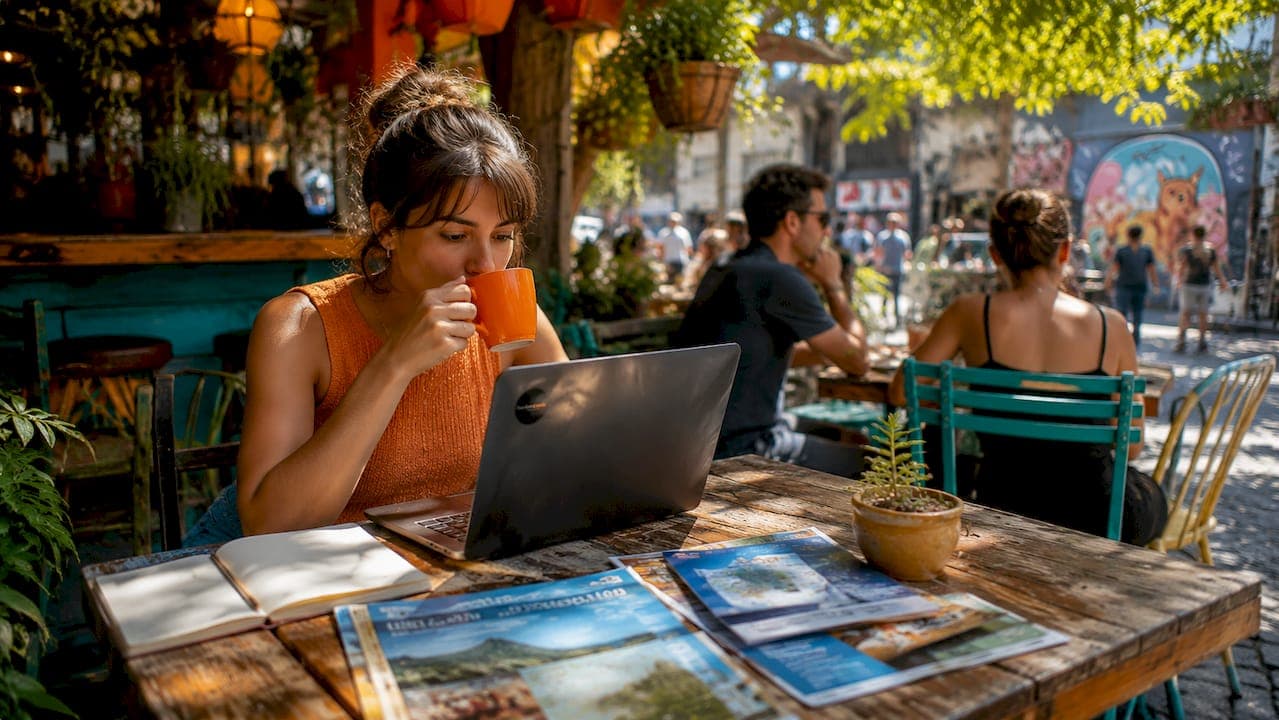
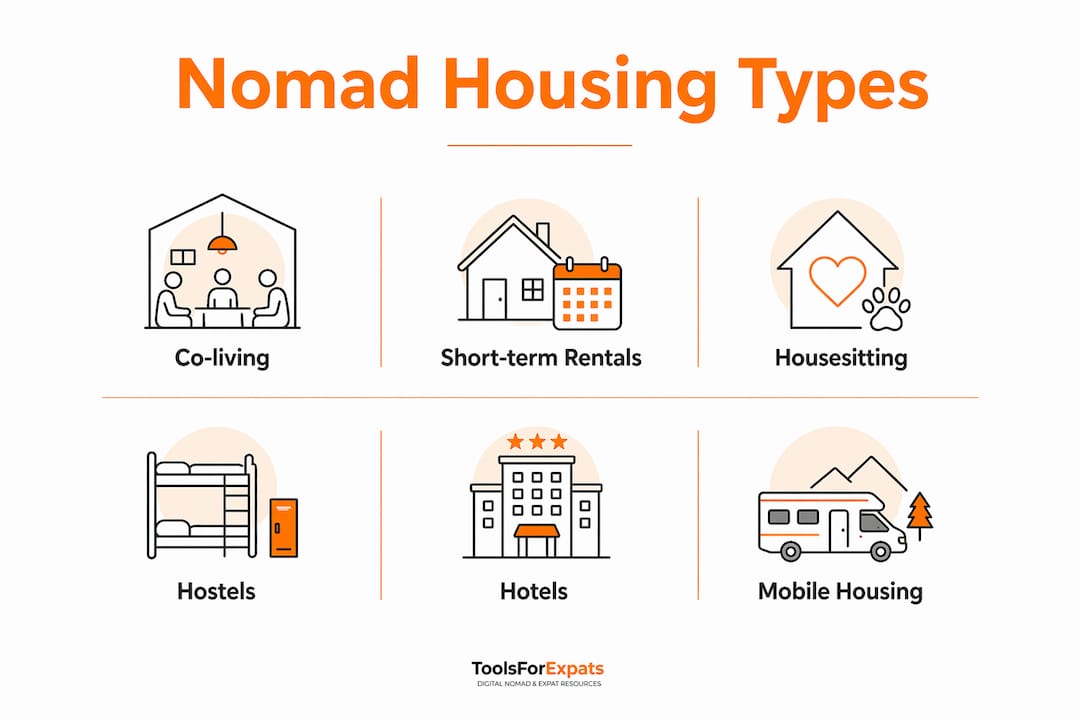
Digital nomad accommodation is defined as any housing arrangement that supports remote work through reliable internet, dedicated workspace, and flexible lease terms. The six primary nomad accommodation types are co-living spaces, furnished short-term rentals, housesitting, hostels, hotels or serviced apartments, and mobile housing. Each serves a different combination of budget, lifestyle, and work priorities. Platforms like Airbnb, TrustedHousesitters, and Selina have made booking these options faster and more accessible than ever. Understanding what is nomad accommodation types before you commit to a destination saves you money, protects your productivity, and shapes the quality of your daily life abroad.
What are the main types of nomad accommodation?
The three most popular categories are co-living spaces, furnished short-term rentals, and housesitting platforms. That pattern reflects a real logic: each type solves a different problem, and experienced nomads often rotate between all three within a single year.
Co-living spaces
Co-living spaces combine a private room with shared workspaces, communal kitchens, and organized social events. Think of them as a membership model for your living situation. Selina, Outsite, and Mokrin House are well-known operators, and average co-living costs run around $1,100 per month including utilities, coworking access, and cleaning. That price is higher than a solo apartment in many cities, but the built-in community and zero setup time justify it for nomads who are new to a destination or actively seeking professional connections.

Furnished short-term rentals
Furnished apartments rented through Airbnb or local platforms give you full control over your environment. You choose your neighborhood, your desk setup, and your daily schedule without anyone else's noise or schedule interfering. Monthly costs vary widely by city: Lisbon runs $800 to $1,000, Chiang Mai $300 to $500, and Mexico City $550 to $800 through local rental sites. The trade-off is that you must arrange coworking separately and verify internet quality before booking.
Housesitting
Housesitting means caring for someone's home and pets in exchange for free accommodation. TrustedHousesitters is the dominant platform, and a membership costs about $129 per year. The savings are significant: a nomad who housesits for three to four months annually can redirect hundreds of dollars per month toward travel or savings. The requirement is flexibility, since sits are tied to homeowner schedules, and you need a strong profile with reviews to land the best opportunities.
Hostels, hotels, and mobile housing
Hostels are the entry point for many new nomads because of their low nightly rates and social atmosphere. Nomad guides consistently recommend hostels only as short-term transition accommodations, not long-term bases, because noise and limited private workspace cause burnout quickly. Hotels and serviced apartments solve the privacy problem but at a cost that rarely makes sense beyond a week or two. Mobile housing, including converted camper vans and Class B or C RVs, offers geographic flexibility but demands a high upfront investment and real mechanical competence.
| Type | Avg. Monthly Cost | Best For | Main Drawback |
|---|---|---|---|
| Co-living | ~$1,100 | Community, networking | Higher cost, less privacy |
| Furnished rental | $300–$1,000+ | Productivity, privacy | Internet vetting required |
| Housesitting | ~$0 (platform fee only) | Budget travelers | Schedule dependency |
| Hostel | $400–$700 | Short stays, socializing | Noise, workspace limits |
| Hotel/serviced apt | $1,200–$2,500+ | Convenience, short trips | Expensive long-term |
| Mobile housing | Variable + upfront | Maximum mobility | High setup cost |
Pro Tip: Nomads who rotate roughly 3 to 4 months housesitting, 4 to 5 months in apartments, and 2 to 3 months in co-living spaces report the best balance of cost savings, productivity, and social connection across a full year.
How do lifestyle priorities shape your accommodation choice?
Accommodation decisions should be goal-driven: privacy and deep work call for apartments, while social needs justify co-living. That sounds obvious, but most nomads underestimate how much their housing choice affects their output and mental state week to week.
Here are the key lifestyle drivers that should guide your decision:
- Community first: Co-living spaces at operators like Selina or Outsite work best if you are new to a city, building a professional network, or prone to isolation when working alone.
- Deep work and productivity: Furnished apartments in quieter neighborhoods give you the controlled environment that long writing sessions, coding sprints, or client calls require.
- Budget as the primary constraint: Housesitting through TrustedHousesitters or staying in hostels for short stretches keeps monthly housing costs near zero or very low, freeing up budget for experiences or savings.
- Maximum mobility: Van or RV living suits nomads who want to move on their own timeline without booking windows or lease commitments.
- Low-stimulation creativity: Rural co-living spaces like Mokrin House in Serbia attract nomads who want community without the sensory overload of urban environments.
The less obvious insight here is that hostels often lead to burnout when used beyond a few weeks, not because of cost but because of noise and the absence of a real workspace. Many nomads discover this the hard way after a month in a Bali hostel dorm. Planning your accommodation type around your work demands, not just your social preferences, is the decision that separates productive nomads from frustrated ones.
Pro Tip: Before committing to any accommodation type for more than two weeks, spend three days honestly tracking when and how you do your best work. That data tells you whether you need silence, community, or just a reliable desk.
How to find and secure good nomad accommodation
Finding the right place is a process, not a single search. Follow these steps to avoid the most common mistakes:
- Define your non-negotiables first. Decide whether internet speed, private workspace, kitchen access, or proximity to a coworking space is your top requirement before opening any booking platform.
- Use the right platform for each type. Airbnb and local rental sites work for furnished apartments. TrustedHousesitters is the standard for housesitting. Selina, Outsite, and Co404 are reliable co-living operators with multiple locations.
- Verify internet before you book. Always request upload speed screenshots from hosts before committing to stays longer than a week. Many listings advertise "high-speed Wi-Fi" based on download speeds alone, which is insufficient for video calls or large file uploads.
- Negotiate for longer stays. Most Airbnb hosts and co-living operators offer 10 to 20 percent discounts for monthly bookings. Ask directly, even if no discount is listed.
- Book a trial stay first. For any stay longer than a month, book one week first to test the internet, noise levels, and neighborhood before committing.
- Tap community recommendations. Facebook groups like Digital Nomads Around the World and city-specific Slack communities surface vetted listings that never appear on mainstream platforms.
- Read the fine print on fees. Cleaning fees, security deposits, and utility caps can add $150 to $300 to a monthly Airbnb cost that looked affordable at first glance.
Pro Tip: On TrustedHousesitters, your first five reviews are everything. Apply for shorter, easier sits near your home country first to build your profile before targeting premium sits in Southeast Asia or Europe.
What does nomad accommodation actually cost?
Budgeting for nomadic lifestyle housing requires looking beyond the headline monthly rate. Utilities, coworking memberships, cleaning fees, and platform costs all affect your real monthly spend.
Here is a realistic cost breakdown by accommodation type, with example cities:
| Accommodation Type | Low Estimate | High Estimate | Notes |
|---|---|---|---|
| Co-living (Chiang Mai) | $700 | $1,200 | Includes coworking, utilities, cleaning |
| Furnished apartment (Lisbon) | $800 | $1,000 | Excludes coworking (~$150–$200/mo extra) |
| Furnished apartment (Chiang Mai) | $300 | $500 | Internet usually included |
| Housesitting (global) | $0 | $30 | Platform fee amortized monthly |
| Hostel (Medellín) | $400 | $700 | Dorm or private room, short stays |
| Mobile housing (USA) | $600 | $1,500 | Fuel, campsite fees, maintenance |
The hybrid rotation strategy used by experienced nomads, alternating between housesitting, apartments, and co-living, produces the most cost-efficient annual budget while preserving lifestyle quality. A nomad who housesits for four months, rents apartments for five months in lower-cost cities, and spends three months in co-living can keep annual housing costs well under $10,000 while maintaining a productive work environment throughout.
Mobile nomads in the United States face an additional planning layer: legal residency. South Dakota allows residency with just a one-night stay and no vehicle inspection, making it the most popular domicile state for full-time RV and van dwellers. Choosing the right residency state affects vehicle registration, insurance rates, and tax obligations, so it is worth researching before you hit the road.
Use the nomad cost calculator at ToolsForExpats to run city-specific housing estimates before you book. It factors in local rental averages, coworking costs, and utilities so your budget reflects reality, not wishful thinking.
Key takeaways
Experienced nomads who rotate between co-living, furnished apartments, and housesitting achieve the best balance of cost, productivity, and community across a full year.
| Point | Details |
|---|---|
| Six core accommodation types | Co-living, furnished rentals, housesitting, hostels, hotels, and mobile housing each serve different priorities. |
| Cost varies dramatically by city | Chiang Mai apartments cost $300 to $500/month; Lisbon runs $800 to $1,000 for comparable quality. |
| Internet verification is non-negotiable | Always request upload speed screenshots before booking stays longer than one week. |
| Rotation maximizes value | Alternating housesitting, apartments, and co-living keeps annual housing costs low without sacrificing lifestyle. |
| Lifestyle goals drive the choice | Deep work needs apartments; community needs justify co-living; maximum mobility points to van or RV living. |
What I've learned from watching nomads get their housing wrong
Most nomads I've observed make the same mistake: they pick accommodation based on what sounds exciting rather than what their work actually requires. A co-living space in Bali sounds ideal until you realize you spend half your day in communal areas because the social pull is too strong to resist. An apartment in Tbilisi sounds isolating until you discover you produce twice the work in a week of quiet focus.
My honest view is that the hybrid rotation model is not just a cost strategy. It is a mental health strategy. Spending three months in co-living gives you the social energy that sustains you through four months of solo apartment work. Housesitting in between resets your budget and often drops you into neighborhoods and lifestyles you would never have chosen deliberately, which is where the most interesting experiences happen.
The emerging trend worth watching in 2026 is the growth of rural co-living. Operators like Mokrin House are proving that nomads do not always want urban stimulation. Some of the most productive remote workers I know spend months in countryside co-living spaces with slow mornings, fast internet, and zero nightlife. That model is expanding fast, and it fills a real gap between the social intensity of city co-living and the isolation of a solo apartment.
One more thing: do not underestimate the administrative side of mobile housing. Van life looks freeing from the outside, but legal residency, mail forwarding, vehicle insurance, and maintenance scheduling are real jobs. Go in with a plan, not just a vibe.
— Ceyhun
Plan your nomad housing with free tools from ToolsForExpats
Choosing the right accommodation type is only half the equation. Knowing whether your target city fits your budget is the other half.
ToolsForExpats offers a suite of free nomad planning tools built specifically for remote workers making real housing decisions. Use the cost of living comparison tool to stack Chiang Mai against Lisbon against Medellín on a single screen, with housing costs broken out clearly. Take the best city quiz to match your lifestyle priorities, including accommodation preferences, to the destinations that actually fit. No account required, no paywalls, just the numbers you need to plan with confidence.
FAQ
What is the most affordable nomad accommodation type?
Housesitting through platforms like TrustedHousesitters is the most affordable option, with accommodation costs near zero after the $129 annual membership fee. Hostels are the next most affordable for short stays.
How much does co-living cost per month?
Co-living spaces average around $1,100 per month, including utilities, coworking access, and cleaning fees. Costs vary by city, with Southeast Asian locations running significantly lower than European ones.
Why is internet speed so important for nomad accommodation?
Reliable upload speed is critical for video calls, file sharing, and remote collaboration. Many listings advertise high download speeds that are still insufficient for professional video conferencing, so always request a speed test screenshot before booking.
Can you live full-time in a van or RV as a digital nomad?
Yes, but mobile housing requires upfront investment in a vehicle conversion, ongoing maintenance skills, and legal residency planning. In the United States, South Dakota is the most popular domicile state for full-time mobile nomads due to its minimal residency requirements.
How do experienced nomads combine accommodation types?
A common annual pattern is three to four months housesitting, four to five months in furnished apartments, and two to three months in co-living spaces. This rotation balances cost savings, productivity, and social connection across the year.