
A solid nomad relocation checklist covers five core areas: legal documents and visas, insurance and banking, tech and remote work gear, housing and arrival logistics, and settling in during your first month abroad. Miss any one of these, and you risk arriving without access to funds, housing, or the right to work legally. The good news is that with the right preparation timeline, starting well before departure, most of the complexity becomes manageable.
The most trusted financial tools for US digital nomads include Wise, Revolut, Charles Schwab, and N26 for multi-currency banking, and SafetyWing or World Nomads for international health coverage. These are not optional extras. They are the infrastructure your nomadic lifestyle runs on.
Pro Tip: Keep both physical copies and cloud backups of every critical document. As experienced nomads put it, "paperwork is freedom" when you are crossing borders and signing leases in a foreign country.
Here is a quick overview of the major checklist areas:
- Documents and legal: passport, visas, apostilles, criminal record, health records
- Insurance and finance: international health insurance, multi-currency accounts, emergency cash reserve
- Tech and work setup: laptop, eSIM, VPN, universal adapter, cloud storage
- Housing and arrival: pre-booked accommodation, local SIM, transport plan
- Settling in: local registration, bank account, language basics, reflection period
1. Documents and legal preparations before you move
Your legal paperwork is the foundation of everything else. Without the right documents, you cannot enter your destination country, sign a lease, or open a bank account. Start this process well in advance before departure to avoid being caught by consulate backlogs.
Passport and visa requirements
Your US passport must be valid beyond your planned stay according to your destination's requirements. Check the passport validity requirements for your specific destination, since some countries require even longer validity windows. If your passport is expiring soon, renew it before anything else.
Visa processing times vary widely. The Portuguese digital nomad visa, for example, can take several months when consulates are backlogged, and some residency permits can take extended periods to process. Start your application as early as possible. Use the digital nomad visa checker from ToolsForExpats to confirm which countries you are eligible for before committing to a destination.
Document authentication and storage
Many countries require apostilles on official documents like birth certificates, marriage certificates, and criminal record checks. A certified translator may also be needed if your destination country's official language is not English. Budget time and money for both.
| Document | When to prepare | Where to get it |
|---|---|---|
| Passport (6+ months validity) | 6 months before | US Passport Agency |
| Digital nomad or long-stay visa | 6 months before | Target country's consulate |
| Criminal record certificate | 3 months before | FBI or state authority |
| Birth/marriage certificate + apostille | 3 months before | State vital records office |
| Proof of income (3–6 months) | 1–2 months before | Bank statements, contracts |
| Vaccination records | 2 months before | CDC travel health or your doctor |
| Health insurance documentation | 1 month before | Your insurer |
Store digital copies in an encrypted cloud service like Google Drive or iCloud, and carry physical originals with you during travel.
- Renew passport if expiring within 18 months
- Apply for the correct visa type suitable for your work and stay duration
- Get apostilles on birth, marriage, and education certificates
- Obtain a criminal background check from the FBI
- Gather several months of bank statements and proof of income
- Book a travel health consultation and update vaccinations
- Register with the US Embassy in your destination country
2. Insurance, finance, and banking setup for digital nomads
Banking and housing create a frustrating cycle abroad. A local IBAN is often required to sign a lease or get a phone contract, but local banks typically require a local address to open an account. Multi-currency online banks like Wise and Revolut break this cycle by giving you a functional account before you arrive.

International health insurance
Standard US health insurance does not cover you abroad, and Medicare does not travel with you. You need a dedicated international policy before you leave. SafetyWing's Nomad Insurance operates on a subscription model you can pause or restart as your travel plans change, which makes it a practical fit for nomads who move frequently. World Nomads covers higher-risk activities and adventure travel, making it a better match if your lifestyle includes hiking, diving, or similar pursuits. Check the healthcare.gov guidance on losing domestic coverage before you cancel your US plan.
Pro Tip: Before purchasing any international health policy, verify that it covers remote work injuries, mental health care, and medical evacuation. Many base plans exclude these, and adding them later costs significantly more.
Multi-currency banking tools
- Wise: Holds and converts money in 40+ currencies at the mid-market rate, with a linked debit card. Ideal for paying rent and invoices in local currency.
- Revolut: Offers currency exchange, budgeting tools, and a virtual card for online payments. The free tier covers basic needs; paid plans add travel insurance perks.
- Charles Schwab: The Schwab High Yield Investor Checking account refunds all ATM fees worldwide, making it the best option for cash withdrawals in countries where card payments are limited.
- N26: A German digital bank with a clean mobile interface, useful if you are spending extended time in Europe and need a Euro-denominated account.
Additional financial checklist items
- Open at least two of the above accounts before departure
- Set up a cash reserve covering an adequate amount of living expenses
- Notify your US bank of your travel plans to prevent card freezes
- Purchase international health insurance (SafetyWing or World Nomads)
- Add travel insurance for trip cancellation and lost luggage
- Research your destination's tax treaty status with the US (more on this in the tax section)
3. Tech and remote work setup essentials
Your laptop is your office, so treat your tech kit with the same seriousness you would give a physical workspace. The goal is redundancy: if one piece of gear fails, you can keep working.
Core gear for your digital nomad packing list
- Laptop: Your primary work machine, ideally lightweight and with a long battery life
- Universal travel adapter: A single adapter that covers US, European, UK, and Australian outlets
- Power bank: A high-capacity model (20,000 mAh or above) for working in cafes or during travel days
- Noise-canceling headphones: Critical for video calls in loud coworking spaces or airports
- Portable laptop stand: Reduces neck strain during long work sessions
- Cable organizer: Keeps your bag from becoming a tangled mess
- External SSD or USB drive: For encrypted local backups of key documents
Connectivity and software
An eSIM is one of the most practical items on any travel checklist for nomads. Airalo, for example, covers 190+ countries and lets you purchase a data plan before you land, so you have internet access from the moment you clear customs. Activate your eSIM before departure to ensure connectivity upon arrival.
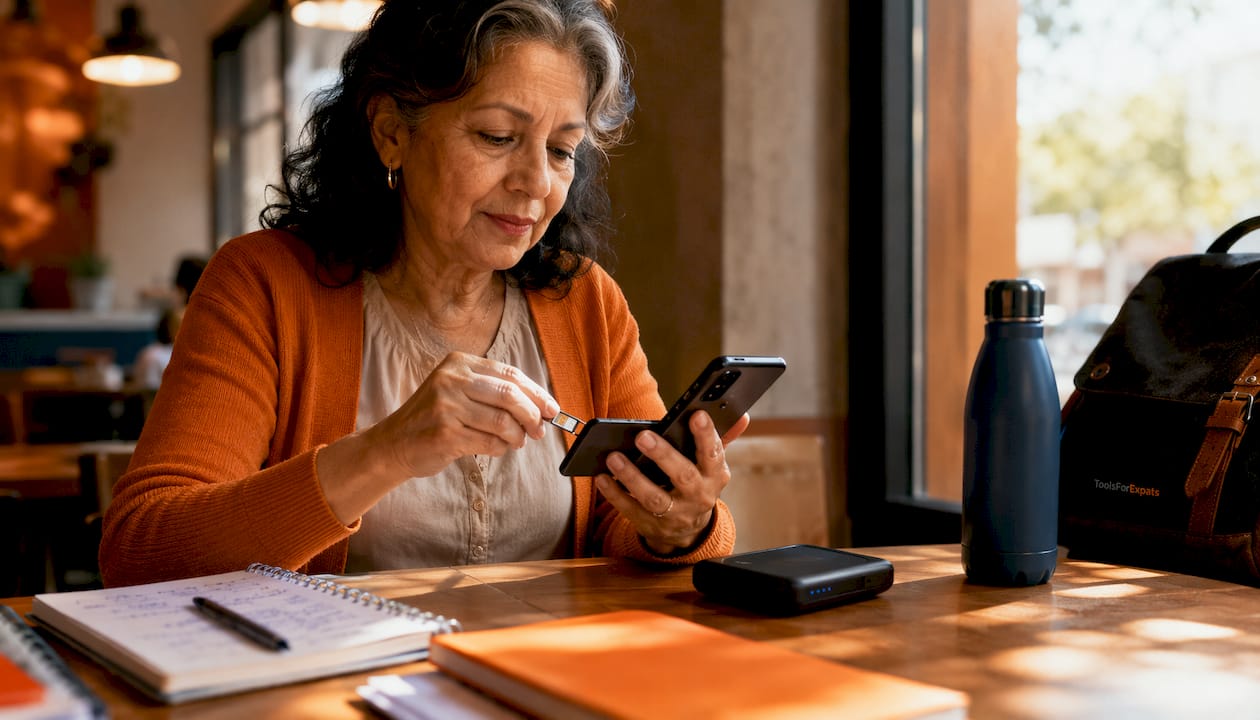
A VPN is non-negotiable for working on public Wi-Fi in cafes, hotels, and coworking spaces. It protects your client data and keeps your connection private. Use cloud storage (Google Drive, Dropbox, or iCloud) for all work files so you can access everything from any device.
Pro Tip: Pack a carry-on backpack of a size that fits most airline overhead bins as your primary bag. That size fits most airline overhead bins, avoids checked baggage fees, and forces you to pack only what you actually need.
4. How to handle housing and arrival logistics
Securing accommodation before you land removes the single biggest source of arrival stress. Even a two-week Airbnb booking gives you a stable base to find longer-term housing once you understand the local rental market.
Pre-arrival housing research
Research neighborhoods before you book. Proximity to coworking spaces, reliable internet infrastructure, and public transit all affect your daily productivity. Read expat forums and Facebook groups for your target city to get honest assessments of specific areas. For longer stays, platforms like Idealista (Spain and Portugal), Immowelt (Germany), or local Facebook rental groups often list apartments that never appear on international sites.
Documentation for leases varies by country, but you will typically need a passport copy, proof of income, and sometimes a local guarantor or a larger deposit in lieu of one. This is where having a Wise or Revolut account already set up pays off, since you can wire a deposit in local currency without paying conversion fees.
Arrival day checklist
- Keep all original documents in your carry-on bag
- Have your accommodation address written down (not just saved on your phone)
- Arrange airport transport in advance or research local taxi apps
- Purchase a local SIM card at the airport or a nearby phone store
- Confirm your internet provider options for your new address
- If shipping belongings, track your shipment and confirm delivery windows
5. Settling in: your first-month checklist
The first month abroad is a mix of administrative tasks and genuine discovery. Treat it as a testing phase rather than a permanent commitment. Research consistently shows that the decision to stay long-term is best made at the 30–90 day mark, not on arrival day.
Week-by-week priorities
Week 1:
- Register with the US Embassy or consulate in your destination country
- Complete any mandatory local registration (Spain's empadronamiento, Germany's Anmeldung, etc.)
- Get a local SIM card if you did not at the airport
- Locate the nearest pharmacy, hospital, and urgent care clinic
Week 2:
- Open a local bank account if required for your lease or employment
- Set up a local phone number for two-factor authentication and local services
- Begin researching language classes or apps if you need the local language for daily life
Weeks 3–4:
- Review your spending against your budget using a tool like the nomad cost calculator from ToolsForExpats
- Explore coworking spaces and establish a regular work routine
- Connect with local expat communities through Meetup, Internations, or Facebook groups
Pro Tip: At the 30-day mark, write down three things that are working well and three that are not. This simple exercise gives you a clear picture of whether the destination fits your lifestyle before you commit to a longer lease or visa extension.
6. Free tools from ToolsForExpats that support your relocation planning
Planning a move abroad involves dozens of variables: cost of living, visa eligibility, budget allocation, and destination fit. ToolsForExpats offers a suite of free calculators and tools designed specifically for this process, and none of them require you to create an account.
Here are the most useful resources for your relocation planning:
- Visa eligibility checker: Covers 20+ countries and tells you which digital nomad visas you qualify for based on your income and nationality
- Cost of living comparison tool: Compare living costs between your current city and your target destination side by side
- Moving abroad budget calculator: Input your specific situation and get a personalized budget estimate covering deposits, insurance, and moving costs
- Best nomad city quiz: Matches your lifestyle preferences and budget to the most suitable destinations worldwide
- Digital nomad budget guide: Breaks down every major expense category you will encounter as a nomad
These tools are free, require no account, and are updated for 2026. Use the visa checker before you start your document preparation, and run the budget calculator before you commit to a destination.
7. Cross-border tax implications and obligations
Tax is the most overlooked item on most moving abroad checklists, and the consequences of getting it wrong follow you for years. As a US citizen, you are taxed on your worldwide income regardless of where you live. The IRS requires you to file a US tax return every year, even if you owe nothing, because of credits like the Foreign Earned Income Exclusion (FEIE) and the Foreign Tax Credit.
Establishing tax residency in a new country does not automatically remove your US tax obligations. It adds a layer. You may owe taxes in both countries unless a tax treaty between the US and your destination country provides relief. The US has tax treaties with many popular nomad destinations, including Portugal, Germany, and Spain, but the specifics vary. Consult a cross-border tax professional before you move, not after your first year abroad.
Practical steps to take before departure:
- Notify the IRS of your change of address using Form 8822
- Research whether your destination country has a tax treaty with the US
- Understand the 183-day rule for establishing tax residency in most countries
- Keep records of every day you spend in each country
- File your US taxes annually, even from abroad, and consider hiring a CPA who specializes in expat tax returns
8. Emergency plans and contacts
Most nomads never need their emergency plan. But the ones who have one are glad they built it before they needed it. An emergency plan is not just about medical crises. It covers financial lockouts, natural disasters, political instability, and the simple reality of losing your wallet in a country where you do not speak the language.
Build your emergency contact list
- US Embassy or consulate in your destination country (find yours at usembassy.gov)
- Your international health insurer's 24-hour emergency hotline
- A trusted person back home with access to your financial accounts or power of attorney
- Your bank's international fraud and emergency line (Wise, Revolut, and Charles Schwab all have these)
- Local emergency numbers (police, ambulance, fire) for your specific city
Financial emergency preparedness
Keep at least one backup payment method that is physically separate from your primary wallet. A spare debit card stored in your luggage, a small amount of local cash, and access to a secondary account (like Charles Schwab for ATM withdrawals) gives you three layers of fallback. Store your emergency contact list both in your phone and as a printed card in your passport holder.
Review your health challenges guide before departure so you know what medical situations are most common in your destination region and how to access care quickly.
9. Financial tools for currency exchange and international payments
Paying rent, invoices, and daily expenses in a foreign currency without the right tools means losing money on every transaction. Traditional US banks charge foreign transaction fees of 1%–3% per purchase, plus unfavorable exchange rates. Over a year abroad, that adds up to a meaningful amount.
Choosing the right tool for each task
Wise is the strongest option for large transfers, such as paying rent or sending money to a foreign contractor, because it uses the mid-market exchange rate with a transparent, low fee. Revolut works well for everyday spending and budgeting, with real-time spending notifications and instant currency conversion. Charles Schwab's checking account is the best choice for ATM cash withdrawals since it refunds all fees globally. N26 fills a specific gap if you are based in Europe and want a Euro account with a local IBAN.
No single tool does everything perfectly. Most experienced nomads carry Wise and Charles Schwab as their core pair, with Revolut as a backup for spending analytics and virtual card payments.
Before you leave, set up:
- A Wise account with a linked multi-currency debit card
- A Charles Schwab checking account for fee-free ATM withdrawals
- Revolut for day-to-day spending and budgeting
- N26 if you plan to spend significant time in the Eurozone
- Automatic alerts on all accounts for unusual transactions
Plan your move with ToolsForExpats
Every item on this checklist becomes easier when you have the right numbers in front of you. ToolsForExpats offers a full suite of free expat tools covering visa eligibility, cost of living comparisons, and moving budget calculators, all without requiring an account. Whether you are still choosing a destination or already counting down the days to departure, these tools give you the data to make confident decisions.
Key Takeaways
A successful international relocation as a digital nomad requires starting legal and financial preparations at least 90 days before departure, using multi-currency tools like Wise and Charles Schwab, and treating the first 30–90 days abroad as a structured testing period.
| Point | Details |
|---|---|
| Start visa prep early | Visa processing can take from 6 weeks up to 18 months depending on the destination and type. Begin applications at least 6 months before departure. |
| Use multi-currency banking | Wise, Revolut, Charles Schwab, and N26 each solve different payment and withdrawal challenges abroad. |
| Build a cash buffer | Keep a reserve covering 3–6 months of living expenses to absorb transition costs. |
| Treat arrival as a trial | The 30–90 day window after arrival is the right time to decide on a long-term stay, not day one. |
| File US taxes from abroad | US citizens owe a tax return every year regardless of location; research the FEIE and applicable tax treaties before you move. |