
An eSIM is a digital SIM embedded directly in your device that lets you activate mobile data plans instantly, across multiple countries, without ever touching a physical SIM card. Digital nomads use eSIM cards because they eliminate roaming fees, remove the hassle of hunting down local SIM vendors, and let you store multiple carrier profiles on one device. The technical standard behind this is eUICC (Embedded Universal Integrated Circuit Card), which is now supported by most flagship smartphones. For anyone managing remote work across borders, the benefits of eSIM for travelers go well beyond convenience.
Why nomads use eSIM cards: the cost savings case
Traditional international roaming is expensive by design. Carriers charge $10 to $15 per day for roaming access, which adds up fast on a two-week trip. An eSIM connects directly to local networks and delivers data at local market prices. That difference can mean paying $3 for a week of data in Southeast Asia instead of $70 through your home carrier.
The savings go deeper than day rates. eSIM plans come in regional and global formats, so you can buy a single plan covering 30+ countries instead of purchasing separate SIMs at each destination. Regional plans work well for nomads doing a multi-country circuit through Europe or Latin America. Global plans suit those who hop between continents frequently.
Here is what the cost structure typically looks like:
- Short trips (under 2 weeks): eSIM data plans almost always beat roaming rates by a wide margin.
- Medium stays (2–8 weeks): Regional eSIM plans offer solid value with no physical SIM sourcing required.
- Long stays (over 60–90 days): A local physical SIM often becomes cheaper, with higher data allowances and faster speeds than reseller eSIM plans.
- Multi-destination trips: Global eSIM plans reduce the cost and complexity of managing separate plans per country.
The key insight is that eSIMs give you pricing flexibility that traditional roaming never did. You choose the plan that fits your trip length and destination, not the one your home carrier forces on you.
What practical advantages do eSIMs offer digital nomads?
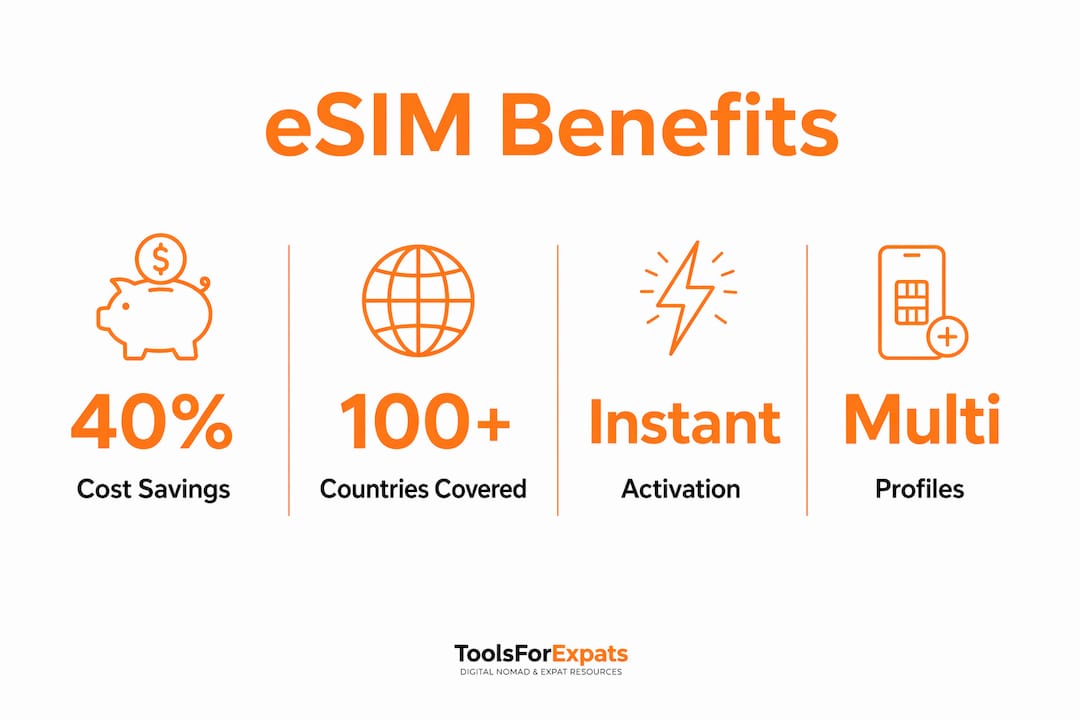
The most underrated benefit of eSIM technology is timing. Activating an eSIM before departure means you land with data already working. No searching for a SIM kiosk at the airport, no language barrier with a local vendor, no waiting 30 minutes for a card to activate.
Beyond activation speed, the profile management system changes how nomads handle multi-country travel entirely. Here is how it works in practice:
- Download multiple profiles. Modern smartphones store 8 or more eSIM profiles at once. You can pre-load plans for your next three destinations before you leave home.
- Keep dormant profiles ready. You do not need to delete a profile when you leave a country. Store it, and reactivate it without reinstalling when you return.
- Switch in seconds. Changing your active plan takes a few taps in your phone's settings. No SIM tool, no tiny card to lose.
- Manage everything from an app. Most eSIM providers let you top up data, check usage, and switch plans through a mobile app, which matters when you are working remotely and cannot afford downtime.
- Skip the plastic. eSIMs reduce plastic SIM card waste and eliminate the shipping emissions tied to mailing physical cards. For nomads who care about sustainable travel, this is a genuine benefit.
Pro Tip: Keep a dormant eSIM profile for every country you visit regularly. Reactivating a saved profile is faster and sometimes cheaper than buying a new plan each time you return.
The combination of pre-arrival activation, multi-profile storage, and app-based management makes eSIMs the most practical mobile solution for nomads who move frequently. You spend less time managing connectivity and more time working or exploring.
What security benefits do eSIMs bring to nomads?
Mobile security is a real concern for remote workers. Your phone holds banking apps, two-factor authentication codes, work email, and VPN credentials. Losing it in a foreign country is stressful enough without worrying about someone pulling out your SIM card.
eSIMs are embedded in the device's secure enclave and physically cannot be removed. A thief who grabs your phone cannot extract the SIM and use it in another device to intercept your 2FA messages or access your accounts. That protection matters most in high-traffic tourist areas where phone theft is common.
The security advantages stack up clearly:
- No physical SIM theft. There is no card to remove, clone, or swap into another device.
- Harder SIM-swap attacks. Fraudsters use SIM-swap fraud to hijack phone numbers. An embedded SIM raises the barrier significantly.
- Secure authentication stays tied to your device. Banking apps and work communication tools that rely on your mobile number stay protected.
- Remote management. If your device is lost, you can deactivate the eSIM profile remotely through your carrier's app or portal.
For digital nomads relying on mobile devices for eSIM security and authentication, an embedded SIM is a meaningful upgrade over a removable card that can be physically compromised.
Are there situations where a physical SIM is still better?
eSIMs are not the right tool for every situation. Knowing when to switch to a physical SIM saves you money and frustration.
The clearest case is long-term stays. For stays beyond 60–90 days, buying a local SIM card directly from a carrier typically delivers better data packages and faster speeds at a lower cost than any reseller eSIM plan. Local carriers offer unlimited plans, home network speeds, and customer service in the local language.
The second limitation is phone numbers. Most travel eSIMs are data-only and do not include a local phone number. That creates real problems when you need SMS verification for a local bank account, a government app, or a ride-sharing service that requires a local number.
| Situation | Best option | Why |
|---|---|---|
| Short trip, multiple countries | eSIM regional plan | No SIM swapping, instant activation |
| Stay over 60–90 days | Local physical SIM | Lower cost, higher data, local speeds |
| Need local phone number | Physical SIM or VoIP | eSIMs are mostly data-only |
| Locked or older device | Physical SIM | Many older phones lack eSIM support |
| Frequent return visits | eSIM dormant profile | Reactivate without buying a new plan |
Device compatibility is also worth checking before you commit. Older smartphones and some budget Android models do not support eSIM. Carrier-locked phones may block eSIM activation entirely. Confirm your device is unlocked and eSIM-compatible before your trip.
Pro Tip: Pair a data-only eSIM with a VoIP number from a service like Google Voice or Skype for SMS verification. This covers most local number requirements without needing a physical SIM.
How do nomads choose the right eSIM provider and plan?
Choosing an eSIM plan is not complicated once you know what to check. The process comes down to five factors:
- Device compatibility. Confirm your phone supports eSIM and is carrier-unlocked. Apple's support page lists compatible iPhone models. Android compatibility varies by manufacturer and region.
- Coverage and network quality. Check which local networks the eSIM provider partners with in your destination. A plan that uses a tier-one local network delivers better speeds than one routed through a secondary partner.
- Plan type. Regional plans cover multiple countries under one purchase. Local plans offer the best rates for a single country. Global plans suit nomads who cross multiple regions in one trip.
- Data limits and speeds. Some plans throttle speeds after a set data threshold. Read the fine print on fair-use policies before buying.
- Provider reliability. Look for providers with 24/7 customer support, a clear refund policy, and positive reviews from other travelers. Connectivity problems abroad are stressful. Good support makes the difference.
You can research destination-specific connectivity options and budget for mobile costs through the ToolsForExpats blog, which covers practical guides for nomads living and working overseas.
Key Takeaways
eSIM cards are the most practical mobile connectivity solution for digital nomads because they combine cost savings, instant activation, multi-profile flexibility, and embedded security in a single technology.
| Point | Details |
|---|---|
| Cost savings over roaming | eSIMs access local data rates, avoiding $10–$15 per day roaming charges. |
| Pre-arrival activation | Download and activate your plan before landing to skip airport SIM hunting. |
| Multi-profile management | Store 8+ profiles and reactivate dormant ones without repurchasing plans. |
| Embedded security | eSIMs cannot be physically removed, protecting 2FA and banking access. |
| Know the limits | Data-only plans and long stays over 60–90 days may still require a physical SIM. |
My honest take on eSIMs after years of nomadic travel
I switched to eSIMs after one too many airport SIM hunts that cost me an hour and a bad data plan. The difference was immediate. Landing in Lisbon with data already active felt like a small but genuinely meaningful upgrade to how I travel.
The multi-profile system is where eSIMs really earn their place. I keep dormant profiles for countries I return to regularly. Reactivating a saved profile takes 10 seconds. Buying a new SIM at a kiosk takes 45 minutes and a lot of pointing at a menu I cannot read.
That said, I have switched back to physical SIMs for longer stays. After two months in one city, a local SIM from a carrier store is almost always cheaper and faster. The eSIM is a travel tool, not a permanent replacement for local connectivity.
The security angle also matters more than most nomads realize. I use my phone for banking, client calls, and two-factor authentication every day. Knowing that SIM cannot be pulled out if my phone is stolen gives me real peace of mind. If you are new to eSIMs, start with a short trip and one regional plan. You will not go back to hunting for SIM cards.
— Jay
Plan your nomad budget with ToolsForExpats
Choosing the right eSIM plan is one piece of managing your costs abroad. The bigger picture includes housing, food, coworking spaces, and visa fees, all of which vary dramatically by city and country.
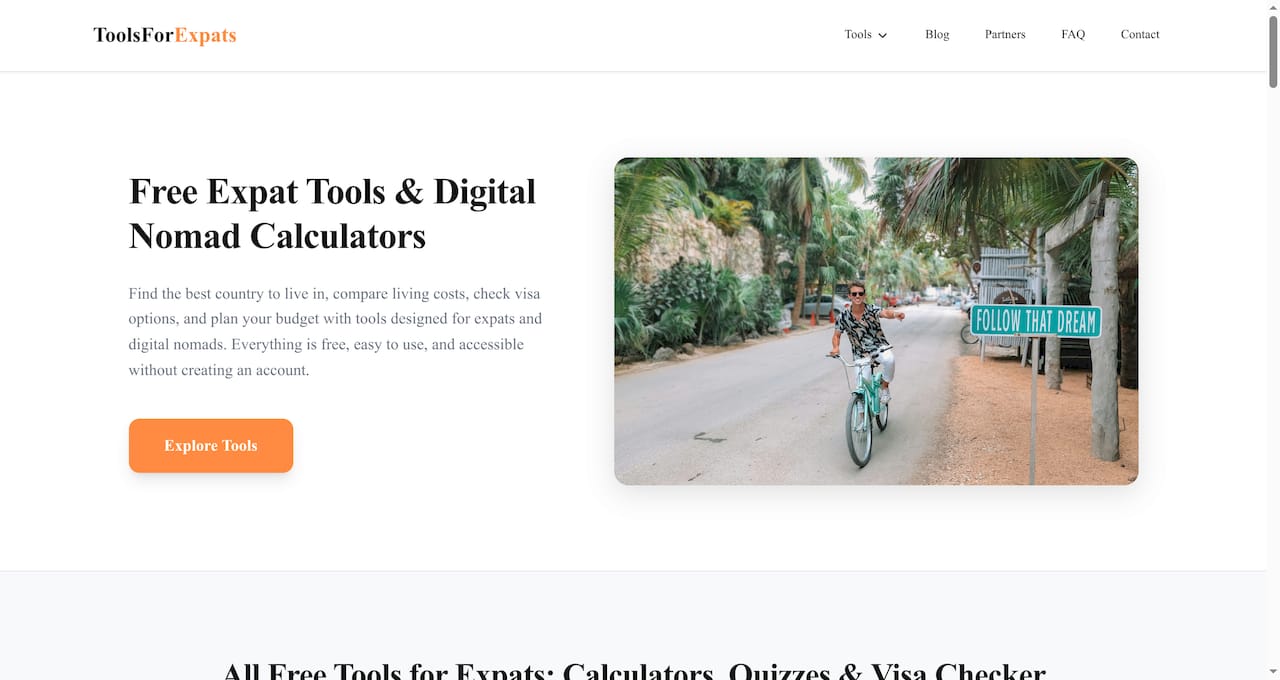
ToolsForExpats offers a full suite of free tools to help you plan that bigger picture. Use the nomad cost calculator to compare monthly living costs by city, including mobile connectivity. The cost comparison tool lets you stack two destinations side by side so you can see exactly where your money goes. Everything on ToolsForExpats is free and requires no account to use.
FAQ
What is an eSIM and how does it work for travel?
An eSIM is a digital SIM embedded in your device using the eUICC standard. It lets you download and activate carrier plans remotely without inserting a physical SIM card.
Do eSIMs work in every country?
eSIM coverage depends on the provider and their local network partnerships. Most major eSIM plans cover 100+ countries, but you should verify coverage for your specific destination before purchasing.
Can I use an eSIM for calls and texts, not just data?
Most travel eSIM plans are data-only and do not include a local phone number. For calls and SMS, pair your eSIM with a VoIP service or carry a secondary physical SIM.
When should I use a physical SIM instead of an eSIM?
For stays over 60–90 days, a local physical SIM typically offers better value, higher data allowances, and faster speeds than a travel eSIM plan.
Is my phone compatible with eSIM technology?
Most flagship smartphones released after 2018 support eSIM, including iPhone XS and later models. Check your device manufacturer's specifications and confirm your phone is carrier-unlocked before activating an eSIM abroad.