
If you've been hearing about nomad conferences and wondering whether they're worth your time, you're not alone. The phrase "what is nomad conference explained" gets searched by remote workers and location-independent professionals who suspect these events are more than a meetup with name tags. They're right. A nomad conference sits at the intersection of professional development, genuine community, and lifestyle immersion in a way that a typical industry conference simply doesn't. This article breaks down exactly what happens, who attends, what you gain, and how to show up prepared.
Table of Contents
- Key takeaways
- What is a nomad conference: definition and structure
- What happens at a nomad conference: daily schedule
- Benefits and purpose of attending a nomad conference
- Comparing popular nomad conferences
- Preparing to get the most from attending a nomad conference
- My honest take on nomad conferences
- Plan your conference trip with ToolsForExpats
- FAQ
Key takeaways
| Point | Details |
|---|---|
| More than networking | Nomad conferences blend keynotes, workshops, and social events into a multi-day immersive experience. |
| Community is the core value | The deepest connections and business opportunities form in informal, participant-led side events. |
| Events vary significantly | Bansko Nomad Fest and Nomad Summit differ in scale, setting, and professional focus. |
| Preparation multiplies your return | Setting clear goals and joining pre-event channels dramatically increases what you get out of attendance. |
| Pacing yourself matters | Social intensity is high; managing your energy across a 3 to 10 day event prevents burnout. |
What is a nomad conference: definition and structure
A nomad conference is an immersive, multi-day gathering specifically designed for remote workers, digital nomads, freelancers, and location-independent entrepreneurs. Unlike a standard industry conference, the format blends professional programming with social experiences and community rituals that reflect the nomadic lifestyle itself. You're not just attending sessions. You're temporarily living alongside hundreds of people who share your values.
These events typically run anywhere from three to ten days and draw attendees from across the globe. For context, Bansko Nomad Fest has hosted over 800 attendees from more than 40 countries in a single edition. That scale creates a density of perspectives and skill sets you rarely find in one place.
The structural components of a nomad conference generally include:
- Keynote sessions featuring experienced nomads, founders, and remote-work specialists sharing frameworks and real experiences
- Hands-on workshops covering topics like freelance pricing, SEO, tax optimization, and content creation
- Unconference segments where attendees propose and lead their own sessions based on real-time interests
- Coworking time built into the schedule so attendees can work alongside each other during the event
- Evening social programming including dinners, parties, bonfires, and community rituals
The attendee mix is genuinely diverse. You'll find first-time nomads sitting next to seven-figure agency owners, software engineers next to travel photographers, and coaches next to product managers. That variety is part of the design, not an accident.
What happens at a nomad conference: daily schedule
The daily rhythm of a nomad conference follows a loose but purposeful structure. Mornings typically open with keynote talks in a central venue, setting the intellectual tone for the day. Afternoons shift toward workshops, panels, and breakout discussions. A typical conference schedule includes 50-plus speakers across the full program, with workshops that cover both business and personal development topics.

What makes nomad conferences different from conventional events is what happens between and after those formal sessions. Unconference blocks let any attendee stand up and propose a topic, which means a spontaneous conversation about building a client base in Southeast Asia can become a standing-room session within minutes. The flexibility is real and valuable.
A typical day might look like this:
- Morning keynote: One or two main stage speakers sharing stories, strategies, or data with the full group
- Workshop block: Smaller, skill-based sessions with active participation rather than passive listening
- Lunch and coworking: Informal networking over food, often where the most honest conversations happen
- Afternoon panels or unconference: Either curated expert discussions or participant-led sessions on live topics
- Evening social event: Bonfires, pool parties, group hikes, or community dinners depending on the location
Pro Tip: Don't skip the lunches. The hour between sessions is when people are relaxed and open. You're far more likely to have a real conversation over food than during a formal networking slot.
The evening programming deserves special mention. These aren't optional add-ons. They're often where the most memorable exchanges and genuine friendships form. The best connections happen during spontaneous side gatherings like dinners and hikes, not from a stage.
Benefits and purpose of attending a nomad conference
The nomad conference purpose goes well beyond professional development, though that alone makes attendance worth considering. When you look at what attendees consistently report gaining, the benefits fall into four distinct categories.
- Business growth: Access to speakers and practitioners who share specific, tested strategies for freelancing, remote business, investing, and content monetization
- Strategic relationships: Meeting potential collaborators, clients, and partners in a context where trust builds faster because of shared lifestyle and values
- Emotional grounding: Finding community among people who genuinely understand the challenges of isolation, timezone juggling, and constant transitions
- Lifestyle inspiration: Hearing from people a few steps ahead of you on the nomadic path can reset your sense of what's possible
The emotional dimension is one that traditional professional conferences rarely address. Nomad events embody a freedom philosophy built on shared understanding. When you're surrounded by people who don't need you to explain why you work from Bali or why you don't have a permanent address, you stop spending energy on justification and start spending it on growth.
"The real measurable value of attendance is strategic networking that creates collaboration and business growth." — a consistent finding from nomad conference attendees across events
Understanding how to build and sustain this kind of community matters long after the event ends. Resources like this guide on how nomad communities form can help you maintain those relationships once you're back on the road.
Comparing popular nomad conferences
Not every nomad conference delivers the same experience. Choosing the right one for your goals requires understanding what makes each event distinct. Here's how two of the most prominent events compare:
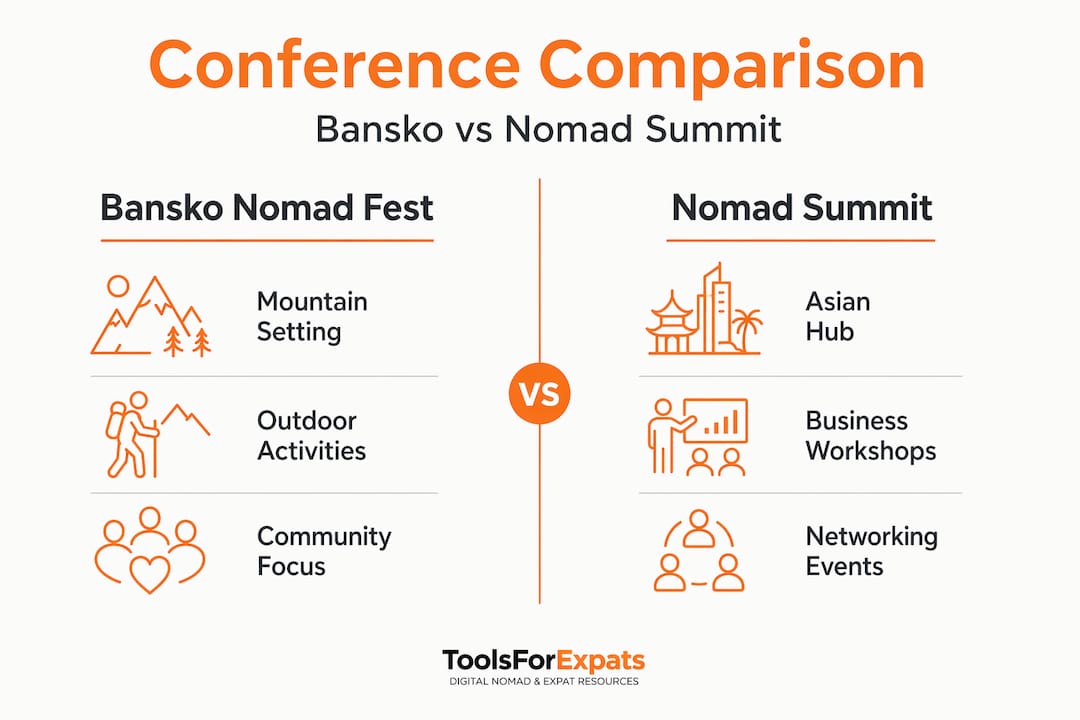
| Feature | Bansko Nomad Fest | Nomad Summit |
|---|---|---|
| Location | Bansko, Bulgaria (mountain) | Chiang Mai, Thailand |
| Scale | 800-plus attendees, 40+ countries | Smaller, curated attendance |
| Focus | Festival-style, outdoor, community | Business, founders, investors |
| Vibe | High-energy, social, diverse | Professional, focused, programmatic |
| Duration | 7-10 days | Shorter, more concentrated |
| Best for | First-timers, community seekers | Entrepreneurs, investors, founders |
Bansko Nomad Fest leans heavily into its mountain setting, with outdoor activities integrated into the conference itself. It's a strong fit if you want to meet a wide variety of people and experience the full social scope of nomad culture. Nomad Summit, held in Chiang Mai, is more tightly curated and attracts founders and investors who want concentrated business content.
If you're still deciding where to base yourself around these events, the best city quiz for digital nomads at ToolsForExpats can help you identify which destinations suit your lifestyle and working needs. And if you're considering European events, it's worth checking the 15 European countries offering digital nomad visas to understand your legal options before booking.
Preparing to get the most from attending a nomad conference
Showing up without a plan is the most common mistake first-time attendees make. The event will be stimulating regardless, but preparation is what turns attendance into high-impact investment. Here's how to prepare effectively:
- Define two or three clear goals before you register: a business outcome you want, a skill you want to develop, or a type of person you want to meet
- Join the pre-event community channels (usually Discord, Slack, or Facebook groups) to introduce yourself and identify people worth connecting with before day one
- Research the speakers and decide in advance which sessions align with your goals rather than trying to attend everything
- Plan your finances carefully since costs include registration, accommodation, flights, food, and activity fees. Early bird registration often starts around $95 USD but can climb significantly for premium packages. Use the cost of living calculator at ToolsForExpats to estimate your total trip budget by destination.
- Build in recovery time during the event itself by leaving one evening per week unscheduled
Pro Tip: Create a short "skillshare card" before the event: two things you can teach others and two things you want to learn. Skillshare mapping and pre-event planning dramatically increases the quality of conversations you attract from day one.
Many attendees face intense social calendars and FOMO is genuinely common. Veterans consistently advise newcomers to limit their evening commitments rather than trying to be everywhere. You will miss things. That's fine. The connections you make by being fully present in fewer conversations outweigh the ones you collect by rushing through many.
Post-event follow-up is where most attendees lose momentum. Send a short, specific message within 48 hours of meeting someone rather than a generic "great to meet you." Reference the actual conversation. That specificity is what turns a conference contact into a real professional relationship. For more on sustaining that balance between work and social life as a nomad, this guide on nomadic work-life balance covers strategies that apply directly to the post-conference recovery period.
My honest take on nomad conferences
I'll be straightforward: I was skeptical the first time I heard about these events. The marketing made them sound like expensive summer camps for people who wanted to feel good about their lifestyle choices. I was wrong.
What I didn't anticipate was the density of high-quality human connection compressed into just a few days. You meet people who are three steps ahead of you professionally, people who are exactly where you are and struggling with the same things, and people who have already solved problems you haven't encountered yet. That combination is genuinely rare.
The chaos is real, too. You will feel overwhelmed. The schedule is full, the social energy is intense, and there will be moments where you wonder why you paid to feel this exhausted. But within that chaos are unscheduled conversations at 11pm on a Tuesday where someone casually describes a business model that completely reframes how you think about your own work.
What I've learned over time is that the value of these events compounds. The people you meet at your first conference become the people who introduce you to opportunities at your second one. Showing up once is useful. Showing up repeatedly is where the real professional and personal return accumulates.
The nomad conference for digital nomads isn't a luxury or a social event dressed up as work. It's one of the few places where the lines between community, education, and real business opportunity genuinely blur in a productive way.
— Ceyhun
Plan your conference trip with ToolsForExpats
Deciding to attend a nomad conference is exciting. The logistics that follow, budgeting for flights, accommodation, registration fees, and daily expenses in an unfamiliar city, require actual planning. ToolsForExpats offers a full suite of free tools built specifically for this kind of preparation. Use the cost of living comparison tool to compare your destination city against your home base, or check whether you qualify for a digital nomad visa with the visa eligibility checker covering more than 20 countries. Everything on ToolsForExpats is free and requires no account to access. Plan smart, spend confidently, and show up ready.
FAQ
What is a nomad conference?
A nomad conference is a multi-day immersive event designed for digital nomads, remote workers, and location-independent professionals. It combines keynote talks, workshops, unconference sessions, and social events to create both professional development and genuine community.
How long do nomad conferences typically last?
Most nomad conferences run between three and ten days, depending on the event. Bansko Nomad Fest, for example, runs up to ten days and includes both formal programming and outdoor social activities.
What does it cost to attend a nomad conference?
Costs vary by event and registration timing. Early bird tickets can start around $95 USD, though total costs including accommodation, flights, and daily expenses vary significantly by location.
Are nomad conferences worth attending for business purposes?
Yes, particularly if you go in with clear goals. The most productive outcomes often come from informal side gatherings and unconference sessions rather than formal stages, where real collaboration and partnership conversations happen.
How do Bansko Nomad Fest and Nomad Summit differ?
Bansko Nomad Fest is a large, festival-style event in Bulgaria with a strong social and outdoor component. Nomad Summit in Chiang Mai focuses more on founders, investors, and curated business programming, making it better suited to entrepreneurs with specific growth goals.