
The fastest, lowest-risk way to plan your move abroad is to start with free country-compare and budget calculators, then follow a sequenced 12-month checklist. Use the ToolsForExpats Cost of Living Comparison Tool to shortlist destinations, the Moving Abroad Budget Calculator to build a realistic financial plan, and the Digital Nomad Visa Eligibility Checker to confirm your pathway before you commit to anything. All three are free and require no account.
Here's where to start:
- Compare destinations first: Run the cost comparison tool to see side-by-side monthly living costs across countries and cities.
Key Takeaways
Planning international living successfully comes down to sequencing: compare costs first, build a full budget with a 3–6 month contingency buffer, verify visa eligibility with official sources, and enroll in STEP after arrival.
| Point | Details |
|---|---|
| Start with cost comparison | Use the ToolsForExpats cost comparison tool to shortlist destinations before committing to any one country. |
| Build a full relocation budget | Include visa fees, movers, insurance, and a 3–6 month contingency fund using the moving budget calculator. |
| Verify visa eligibility early | Cross-check the visa checker results with official consulate pages; hire an immigration lawyer for complex cases. |
| Enroll in STEP after arrival | U.S. citizens should register with the State Department's STEP program for safety alerts and emergency contact. |
| ToolsForExpats tools are free | All calculators and quizzes require no account and are available at ToolsForExpats.com as your first planning step. |
What free tools does ToolsForExpats offer for international living?
ToolsForExpats provides four core tools, each designed for a specific stage of your planning timeline.
- Cost of Living Comparison Tool: Compare monthly expenses across multiple countries and cities side by side. Use this first, during the explore phase, when you're still deciding where to go. Data draws from sources like Numbeo and quality-of-life indexes, giving you a credible starting point for destination research.
- Best City for Digital Nomads Quiz: A short quiz that matches your lifestyle preferences, budget, and work needs to high-fit cities. Run it when you want a faster shortlist than manual research allows.
One important note: these tools provide planning estimates and starting points. Official government sites and embassy pages are the final authority on visa requirements, fees, and eligibility.
Your 15-step pre-move checklist with a recommended timeline
Family moves typically take 12–18 months to plan well; solo nomads can often compress that to 3–6 months. The sequence below follows a phase-based structure so nothing falls through the cracks.
| Phase | Timeline | Key Tasks |
|---|---|---|
| Research | 12–18 months out | Compare destinations, run cost tools, shortlist 2–3 countries |
| Visa & Docs | 12 months out | Check visa eligibility, start apostilles, gather financial records |
| Financial Prep | 6 months out | Open multi-currency account, consult expat accountant, set budget |
| Logistics | 3–6 months out | Book movers, get vaccinations, arrange health insurance |
| Final Prep | 1–3 months out | Book short-term landing housing, confirm school enrollment |
| Arrival | Day 1 | Get local SIM, register address, open local bank account |
| Settlement | 90 days | Enroll in health system, enroll in STEP, find local expat community |
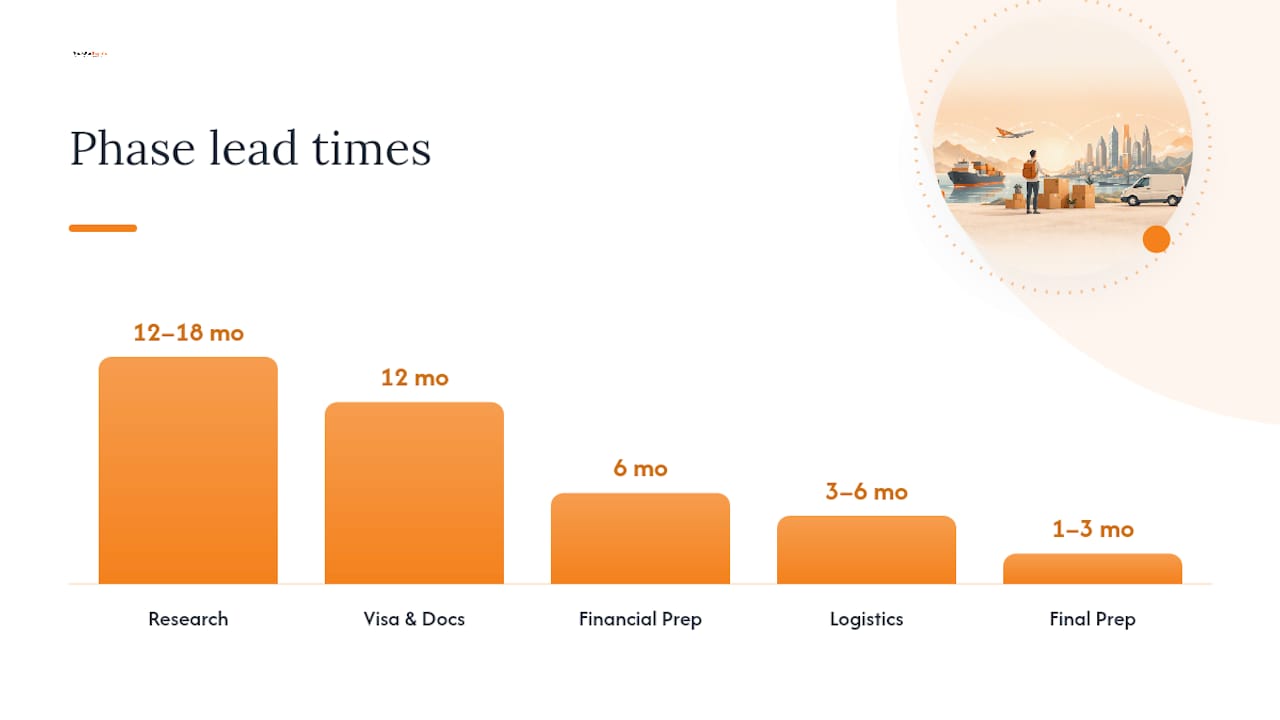
HowToExpatriate's phase-by-phase guidance highlights that tasks like police certificates and apostilles can take several weeks, so starting them early is critical. Travel + Leisure's 15-step pre-move process reinforces the same point: professional help from an immigration lawyer or accountant reduces risk significantly for complex cases.
Pro Tip: Book several weeks of short-term housing before you arrive. Sign a long-term lease only after you've walked the neighborhood in person. What looks great on a map can feel very different on the ground.
How to estimate a complete moving budget
A realistic moving budget covers more than flights and a deposit. Standard relocation cost categories include:
| Budget Item | Typical Range (USD) |
|---|---|
| Visa application fees | vary widely depending on destination and visa type |
| Immigration lawyer (if needed) | fees depend on case complexity and location |
| International movers / shipping | costs vary based on volume, distance, and services selected |
| Flights (one-way, family) | cost depends on origin, destination, and booking time |
| First month's rent + deposit | Varies by city |
| Temporary housing for several weeks | cost depends on location, type, and duration |
| International health insurance | premiums vary by coverage level, age, and destination |
| Travel vaccinations | cost depends on required immunizations and provider |
| Contingency fund | a reserve covering several months of living expenses is standard |
The ToolsForExpats Moving Abroad Budget Calculator lets you input household size, shipping volume, and destination to generate a personalized estimate. Pay attention to the contingency line: three to six months of living expenses is a standard buffer, and it's the item most first-time movers underestimate.
Pro Tip: Set up a multi-currency account (such as a fintech option that supports international transfers) before you move. Waiting until after arrival often means higher fees and slower verification.
How do you check visa eligibility and what documents do you need?
Start with the ToolsForExpats visa eligibility checker to identify which pathways you qualify for, then cross-reference with the official consulate or embassy website for your destination country. The checker gives you a fast filter; the consulate gives you the binding requirements.
Common documents consulates request include:
- Valid passport (typically 6+ months remaining validity)
- Apostilled birth certificate and marriage certificate (if applicable)
- Bank statements showing sufficient funds (usually 3–6 months)
- Proof of income or remote employment contract
- Police clearance certificate from every country you've lived in for 12+ months
- Proof of accommodation (lease agreement or hotel booking)
- International health insurance certificate
When to hire an immigration lawyer: Complex family reunification cases, investor visas, long-stay permits with unclear eligibility, and any prior visa denial are situations where professional guidance pays for itself. A lawyer also catches document inconsistencies before they reach a consulate officer.
Red flags that warrant professional help: conflicting information between the official site and third-party guides, missing biometrics instructions, or a tight timeline that leaves no room for resubmission. Travel + Leisure recommends consulting professionals for exactly these scenarios.
How do you arrange health insurance and handle prescriptions abroad?
Your visa type directly affects what local health services you can access. A tourist visa typically gives you no access to public health systems; a residency permit often opens enrollment. Plan your insurance accordingly.
- Short-term stays (under 6 months): Standard travel insurance with medical evacuation coverage usually suffices.
- Long-term expat policies: Cover ongoing care, specialist visits, and sometimes dental. Annual premiums vary widely based on age, destination, and coverage level. Nomad insurance options are worth comparing before you commit to a policy.
- Family coverage: Adds per-child premiums; some insurers require health declarations for pre-existing conditions.
Medication tip: Check the legal status of your prescription drugs in your destination country before you travel. Some common U.S. medications are controlled or banned elsewhere. Bring a 90-day supply if possible, carry a translated prescription, and keep your medical records in both digital and printed form.
Pro Tip: On arrival, register for a local health card as soon as your residency status allows. Locate an English-speaking GP within your first two weeks, before you actually need one.
What are your U.S. tax and banking obligations when living abroad?
U.S. citizens must file federal tax returns regardless of where they live. Two items catch most first-time expats off guard.
Key U.S. tax obligations abroad: The Foreign Earned Income Exclusion (FEIE) lets qualifying expats exclude a portion of foreign-earned income from U.S. federal tax. Separately, if your foreign financial accounts exceed $10,000 at any point during the year, you must file an FBAR (FinCEN Form 114) with the U.S. Treasury. Missing the FBAR deadline carries significant penalties. Consult a licensed expat accountant for your specific situation.
For banking, the recommended approach has two parts:
- Keep your U.S. account open. Closing it damages your credit history and complicates billing for U.S.-based subscriptions and taxes.
- Open a multi-currency account before you leave. HSBC Expat's moving guide recommends researching destination banking early and notes that some visas are required before a local bank will open an account for you.
NestPaths also recommends supplementing your home account with a multi-currency fintech option to reduce transfer fees. For practical guidance on international banking for remote workers, that resource covers account structures and common pitfalls.
How do you find housing when you arrive abroad?
Book 4–8 weeks of short-term housing before you land. Furnished apartments, extended-stay hotels, and serviced residences all work. The goal is to give yourself time to explore neighborhoods without the pressure of a signed lease.
Once you're on the ground:
- Walk your shortlisted neighborhoods at different times of day.
- Check local rental platforms and expat Facebook groups for listings.
- Verify what documents landlords require: passport, proof of income, local bank account details, and sometimes a local guarantor.
- Confirm deposit norms for your region (one to three months is common in most of Europe and Southeast Asia).
Pro Tip: Bring key documents in both digital and printed form for rental applications. A paperless document system makes it easy to share files instantly with landlords or agents.
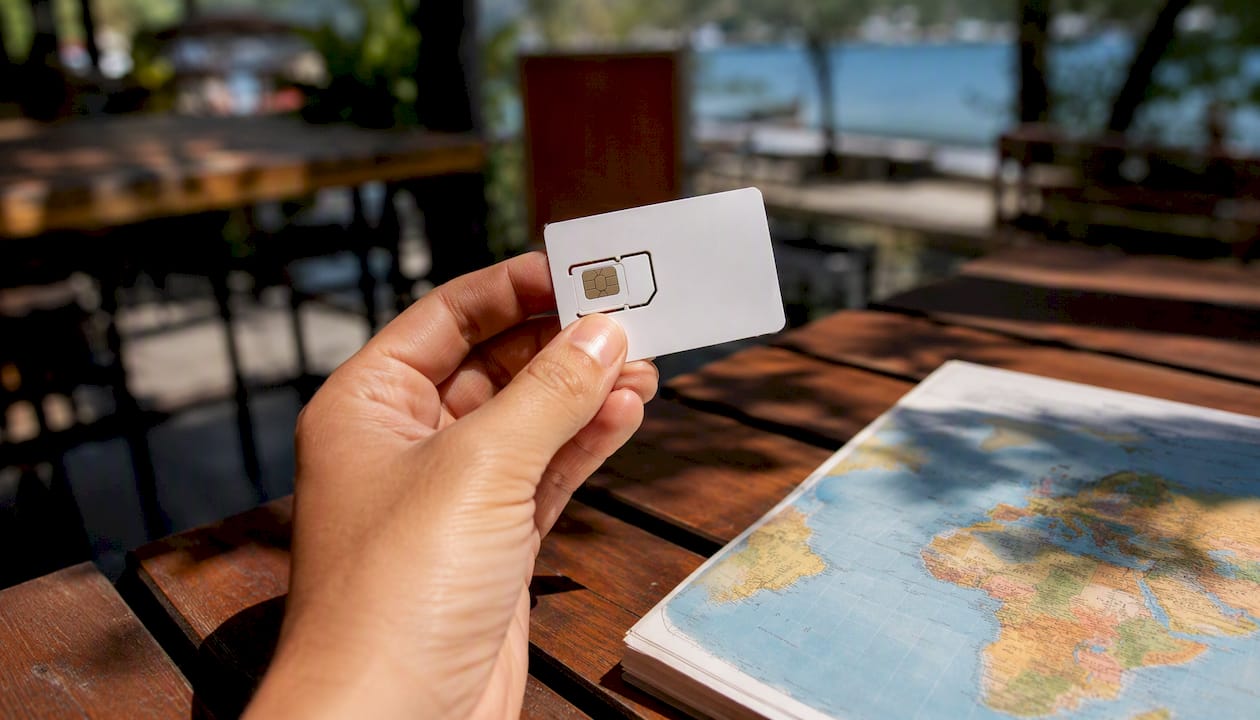
Arrival-week priorities beyond housing: pick up a local SIM or eSIM data plan on day one, register your address with local authorities if required, and open a local bank account as soon as your visa status permits.
Where do you find expat communities and vetted local professionals?
Local expat groups are one of the most underused resources for practical referrals. City-based Facebook groups, Meetup events, and local expat associations give you access to people who've already solved the problems you're about to face.
- Search Facebook for "[City name] expats" or "[City name] Americans abroad" to find active groups.
- Use Meetup for language exchange events and professional networking.
- Ask group members directly for accountant and lawyer referrals, not just Google searches. Personal recommendations from people in your situation carry far more signal.
- When vetting a professional, ask for credentials, a sample invoice, and two client references.
For cultural adaptation, start with basic language study before you arrive. Even 200 words of the local language changes how locals respond to you. Spend your first few weeks observing neighborhood rhythms before committing to a long-term lease or social circle.
How does ToolsForExpats source its data, and what about privacy?
Accuracy note: ToolsForExpats calculators and quizzes provide planning estimates based on aggregated data sources including Numbeo and crowdsourced cost-of-living indexes. They are designed to support decision-making, not replace official legal or visa determinations. Always confirm visa eligibility, fees, and requirements with the relevant consulate or government immigration authority.
Key points on data and privacy:
- All tools are free and require no account creation. You don't need to register or provide personal information to use any calculator or quiz.
- Cost data draws from established indexes like Numbeo and InterNations, which NestPaths also cites as credible sources for cost and quality-of-life planning.
- Results reflect general averages and should be validated against current local listings and official government sources before you make financial commitments.
What most people get wrong about planning a move abroad
The tools-first approach works because it replaces guesswork with data early in the process, when changing your mind is still cheap. Most people who struggle with international living didn't fail at the logistics. They failed at the sequencing: they signed a lease before checking visa eligibility, or they budgeted for flights and rent but forgot the contingency fund.
The single highest-leverage habit is to keep a return-option buffer. Not because you'll use it, but because knowing it exists removes the decision paralysis that stops people from committing fully once they arrive. Understanding why people become expats often reveals that the fear of no exit is what delays the move more than any practical obstacle. Plan the exit, then stop thinking about it.
Your next step: run the free ToolsForExpats tools in sequence
ToolsForExpats gives you a complete planning toolkit at no cost and with no account required. Start with the cost comparison tool to shortlist destinations, then run the moving budget calculator to build a number you can actually plan around. Check your visa options with the visa eligibility checker, and take the city quiz if you want a faster shortlist based on your lifestyle preferences.
The full suite, including the nomad cost calculator and city quiz, lives at Toolsforexpats. Run the tools in sequence today, and you'll have a destination shortlist, a realistic budget, and a confirmed visa pathway before you book a single flight.
Sources
- How to move abroad in 2026: complete step-by-step guide (15 steps)
- Guide To Moving Abroad – Moving Overseas | HSBC Expat
- How to move abroad in 2026: complete step-by-step guide (12-month timeline + checklist)
- Moving abroad: the complete pre-departure checklist
- Global Living Resources & Tools - ReadyPaths
This article is general information, not a substitute for advice from a qualified lawyer. Consult a qualified legal professional about your own circumstances before acting on anything here.