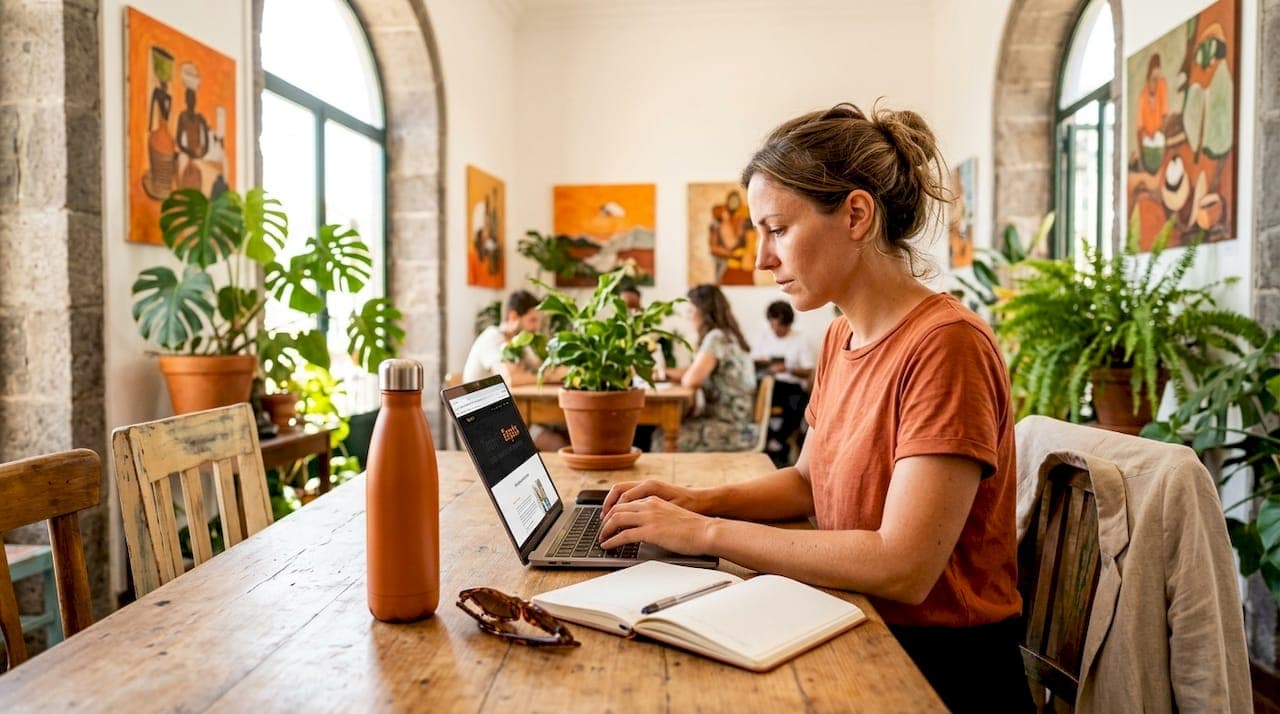
If you've been searching for what is Madeira Digital Nomad Village, you've probably seen conflicting descriptions. Some sources call it a coworking space. Others describe it as a remote work program or a tourist initiative. None of those labels capture the full picture. The Madeira Digital Nomad Village is a government-backed community experiment, deliberately designed to attract remote workers to a small Atlantic town called Ponta do Sol. It's one of the few places in the world where a regional government actively built the infrastructure, community management, and social integration you need to actually settle in and work well.
Table of Contents
- Key Takeaways
- What is Madeira Digital Nomad Village: origins and concept
- Infrastructure and community features
- Living and working in Ponta do Sol: lifestyle and costs
- How Madeira compares to other remote work destinations
- My honest take on what makes this village work
- Plan your move with the right tools
- FAQ
Key Takeaways
| Point | Details |
|---|---|
| Government-designed initiative | Madeira's village was intentionally created in 2021, not an organic nomad cluster that grew on its own. |
| Free coworking with structure | Registration unlocks a free coworking hub, onboarding tools, Slack groups, and a calendar of events. |
| Active community management | Dedicated community managers organize weekly dinners, workshops, and outdoor activities to help you connect. |
| Cost is mid-range for nomads | Living comfortably costs under 3,000 EUR/month, more than Southeast Asia but backed by real infrastructure. |
| Participation drives results | Regular attendance matters more here than in bigger cities because the permanent nomad base is small and tight-knit. |
What is Madeira Digital Nomad Village: origins and concept
Most nomad hotspots happen by accident. Bali, Chiang Mai, and Lisbon each attracted remote workers organically over years as word spread about cheap coffee, fast internet, and good weather. Ponta do Sol took a completely different route.
The Madeira Digital Nomad Village launched in 2021 as a deliberate initiative backed by the Regional Government of Madeira and coordinated through Startup Madeira, the island's innovation and entrepreneurship agency. The goal was clear from the start: use remote workers to breathe economic life into a quiet town of roughly 8,000 people while creating a real community rather than a revolving door of tourists.
Here's what made this approach different from the beginning:
- Strategic location. Ponta do Sol sits on Madeira's south coast, about 30 minutes west of Funchal. It's small, walkable, and far enough from the capital to feel like a real town rather than a tourist strip.
- Dedicated infrastructure investment. The regional government invested in the coworking facility, connectivity upgrades, and community staffing before nomads arrived.
- Dual purpose. The initiative revitalized the local economy by bringing in spending, skills, and cultural exchange alongside the jobs it supported for local community managers.
- Structured onboarding. Arriving nomads don't show up and figure it out alone. There's a registration platform, a welcome process, and active community tools from day one.
- Long-term vision. This was never designed as a pop-up. The goal was permanent repopulation of Ponta do Sol with people who could work from anywhere.
Pro Tip: When you research the Madeira Digital Nomad Village, look beyond "Madeira coworking" in your searches. That framing will only show you desk options. The village is a full ecosystem with registration, events, and onboarding built in.
Infrastructure and community features
Knowing what you get in practice makes it much easier to decide whether Ponta do Sol fits your working style. The setup is more organized than most nomad hubs, and that organization is genuinely useful.
The coworking space itself is housed at the Centro Cultural John dos Passos, a modern facility with ocean views, fast internet, dedicated desks, and meeting rooms. It's open weekdays from 9:00 to 17:30. Depending on the season, you'll share it with anywhere from 30 to 80 other nomads, which is a meaningful range. Peak season fills the room with energy and easier connections; quieter months give you more focus and space.
Access is not simply walk-in. Here's how the process works:
- Register on the Digital Nomads Madeira Islands platform. This is the official portal that unlocks coworking access, visa guidance, and community resources in one place.
- Complete the onboarding steps. You'll get added to the Slack and WhatsApp groups where nomads share tips, organize meetups, and ask practical questions about living in Madeira village.
- Review the event calendar. Community events are scheduled regularly and include weekly communal dinners, hiking and outdoor activities, professional skill-sharing workshops, and local cultural experiences.
- Show up at the coworking space. Once registered, you can use the space during operating hours with no daily fee.
- Connect with community managers. These are paid staff whose job is to help you settle in, find accommodation, and meet the right people. They're not volunteers. They're there specifically to make your integration work.
The community managers actively organize events that range from professional to social. This matters because organic networking in a small town is much harder than in a city. Having someone facilitate the first introduction often makes the difference between staying two weeks and staying six months.
Pro Tip: Join the Slack community before you arrive. Nomads regularly post about accommodation openings, activities, and local knowledge that saves you significant research time on the ground.
Living and working in Ponta do Sol: lifestyle and costs
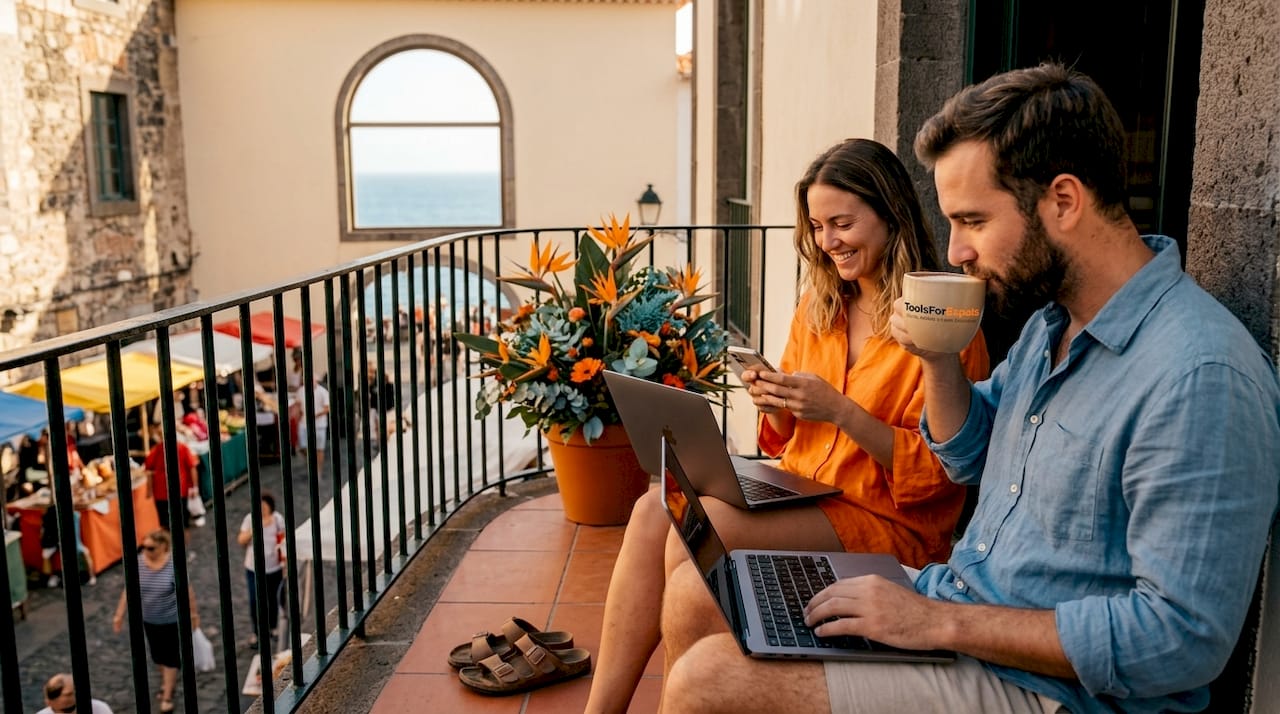
Understanding the day-to-day reality of the Madeira digital nomad lifestyle helps you set accurate expectations. Ponta do Sol is not Lisbon. It's not Funchal either. It's a small Atlantic village with a permanent population and a steady flow of remote workers layered on top.
| Feature | Ponta do Sol (Nomad Village) | Typical Southeast Asian Hub |
|---|---|---|
| Monthly budget | Under 3,000 EUR comfortable | Under 1,500 USD comfortable |
| Community structure | Managed, with events and onboarding | Organic, self-organized |
| Coworking cost | Free with registration | Paid, typically 100-200 USD/month |
| Internet reliability | Strong, government-invested | Variable |
| Permanent nomad base | 80-100 residents | Often transient |
Between February 2021 and February 2022, the initiative hosted over 4,600 digital nomads. Today, the permanent core sits at around 80 to 100 people living in Ponta do Sol at any given time. That number sounds small, but it creates something most nomad hubs lack: a stable social fabric. You see the same people week after week. Relationships deepen. Collaboration actually happens.
The cost of living in Madeira falls into a mid-range category for remote workers. You can live comfortably under 3,000 EUR monthly, which includes rent, food, transport, and leisure. That's higher than Bali or Tbilisi but lower than most Western European capitals. What you get in return goes beyond the numbers.
Here's what working remotely in Madeira actually looks like day to day:
- Mornings at the coworking space with ocean light and reliable internet
- Lunch at one of the local cafes where staff recognize regulars quickly
- Afternoons that might include a levada walk or a swim, depending on your deadline load
- Evenings with a community dinner, workshop, or simply a meal with people you've gotten to know over weeks
The nomad demographic tends to skew toward European remote workers, freelancers, and entrepreneurs, particularly from northern and central Europe. English is widely spoken within the community. Integration with local Portuguese culture takes more deliberate effort but is absolutely possible, especially for those who stay longer. The community and local businesses collaborate on events and skill-sharing that give nomads real contact with Madeiran life rather than a bubble existence.
How Madeira compares to other remote work destinations
You have choices. Funchal is just 30 minutes away and offers far more restaurants, nightlife, gyms, and urban amenities. Plenty of nomads choose urban options for anonymity and variety. For understanding how nomad communities form and what makes them sustainable, Ponta do Sol is a useful case study precisely because the community is managed rather than accidental.
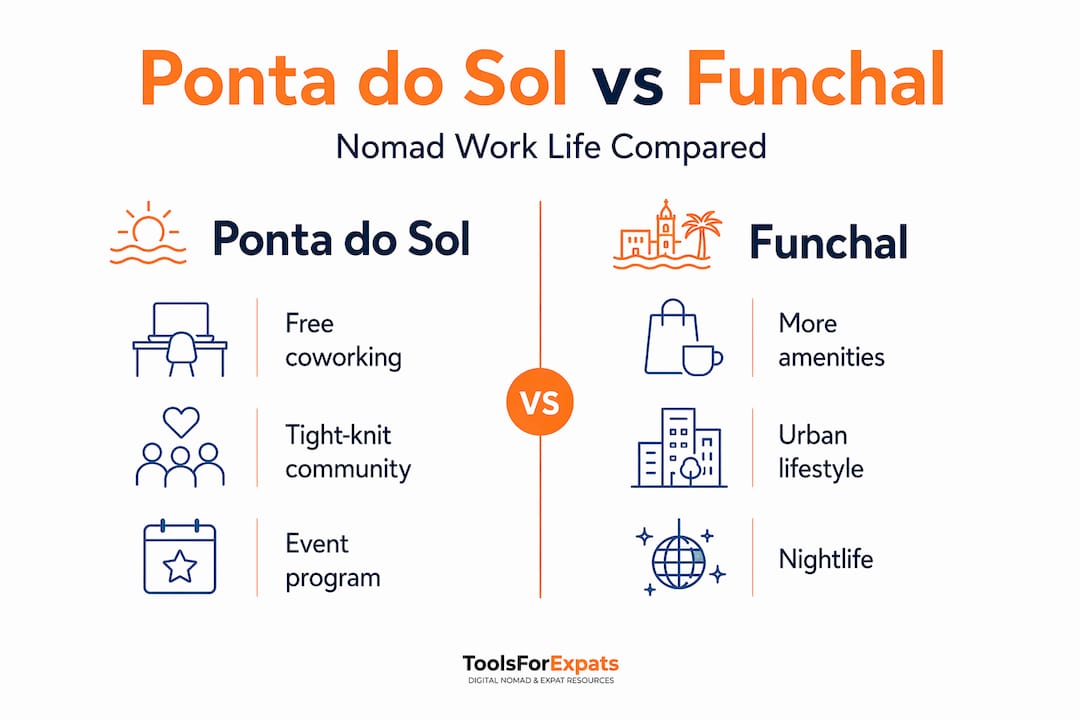
The trade-off is straightforward. Ponta do Sol gives you tight-knit networking opportunities that bigger locations simply can't replicate. When the coworking room holds 50 people who all went to the same dinner last Thursday, conversations go deeper faster. Relationships form at a pace that city coworking spaces rarely achieve. The downside is that Ponta do Sol lacks the variety of Funchal. Fewer restaurant options, no real nightlife, and limited shopping mean you'll appreciate the community all the more because the scenery and people become your main entertainment.
Seasonality is worth planning around. The space runs at 30 to 80 users depending on season, with winter months drawing the largest crowds from northern Europe. If community density and event frequency matter to you, winter and early spring in Ponta do Sol will be more rewarding than a summer stay. Summer is quieter but still functional, and you'll benefit from more direct attention from community managers.
Compared to the many cities around the world now marketing themselves to remote workers, Madeira's approach remains genuinely differentiated. Government-backed infrastructure, free workspace, and active community management are a combination that most competing destinations describe but don't actually deliver.
My honest take on what makes this village work
I've followed a lot of digital nomad initiatives over the years, and most of them amount to a city putting "nomad-friendly" on a website and calling it a day. What Ponta do Sol built is different, and I think it comes down to one thing most people miss when they first research it.
The community managers are not optional extras. They're the engine. In my experience, the difference between a nomad hub that creates real connections and one that produces lonely coffee shop workers is almost always whether someone is actively organizing the room. Ponta do Sol made that a job, not a volunteer task. That changes everything about the social dynamics.
What I see newcomers get wrong most often is treating the village like a tourist stop. They arrive for two weeks, use the coworking space during the day, and spend evenings exploring alone. That approach delivers about 20% of what's available. The real value is in the scheduled activities and regular attendance that build familiarity over time. You won't feel the depth of the community in week one. You'll feel it in week four.
My advice: plan a minimum of three weeks. Register before you arrive. Say yes to the first three social invitations even if you're tired. The people who get the most out of Ponta do Sol are not the ones with the best remote job or the highest budget. They're the ones who show up consistently.
— Ceyhun
Plan your move with the right tools
If Ponta do Sol sounds like your kind of setup, the next step is making sure your budget, visa situation, and logistics are sorted before you land. That's where ToolsForExpats makes your life easier.
ToolsForExpats offers a free nomad cost calculator to estimate exactly what living in Madeira will cost based on your lifestyle, so there are no surprises when rent and groceries hit your account. You can also use the free visa eligibility checker to assess whether Portugal's digital nomad visa is the right path for your nationality and income level. All tools at ToolsForExpats are free, require no account, and are built specifically for people making exactly the kind of move you're planning.
FAQ
What exactly is the Madeira Digital Nomad Village?
It's a government-backed initiative launched in 2021, centered in Ponta do Sol, that provides remote workers with free coworking, community management, and structured social events through a registration-based platform.
Is the coworking space in Ponta do Sol really free?
Yes. The Centro Cultural John dos Passos coworking hub is free to registered members and is open weekdays from 9:00 to 17:30, with modern desks, fast internet, and meeting rooms included.
How do I register for the Madeira Digital Nomad Village?
Register through the Digital Nomads Madeira Islands official platform. Registration unlocks coworking access, onboarding resources, Slack and WhatsApp community groups, and the event calendar.
How does Ponta do Sol compare to Funchal for remote workers?
Ponta do Sol offers free coworking, active community management, and a tight-knit nomad base. Funchal provides more urban amenities and variety but lacks the structured community integration that defines the village experience.
What does it cost to live in the Madeira Digital Nomad Village?
Most nomads live comfortably in Ponta do Sol for under 3,000 EUR per month, covering rent, food, transport, and leisure. It costs more than Asian hubs but comes with infrastructure, safety, and a European lifestyle.